Key takeaways
- Sleep-mode sound floor: Anything above roughly 25 dB starts intruding on light sleep stages. Look for a dedicated sleep mode that dims or kills the display entirely — blue AQI lights are a genuine circadian nuisance in a dark room.
- Coverage with headroom: Match the rating to at least twice your room’s square footage. A purifier sized generously can run on its lowest, quietest setting all night and still turn the air over four or five times per hour.
- What’s actually washable: The pre-filter is rinseable; the H13 or True HEPA layer almost never is. Confirm replacement filter pricing and availability before you buy, because that’s your real long-term cost.
- Auto mode you can trust: A laser particle sensor with a PM2.5 readout lets the unit respond to real conditions. Poorly tuned auto modes surge unpredictably — check that you can lock the fan speed manually at night.
- Placement and footprint: Bedside is ideal, roughly two to three feet from your head with clear space around the intake. Slim tower designs suit nightstands; wider units belong on the floor with breathing room on all sides.
What's inside
Most people shopping for an air purifier aren’t chasing a spec sheet — they’re chasing a better night’s sleep. Waking with a scratchy throat, a stuffed nose, or that dull 3 a.m. headache is often less about your mattress and more about the two thousand or so breaths you take between lights-out and sunrise. Bedrooms are closed boxes where dander, dust mite debris, pollen tracked in on clothing, and off-gassing from furniture and bedding all settle and concentrate. And the filter you paid good money for? It clogs quietly, month by month, until airflow drops and the unit becomes expensive white noise.
That’s where a washable pre-filter earns its place. By catching hair, lint, and coarse dust before it reaches the HEPA media, it extends the life of the expensive filter and keeps clean-air delivery consistent — which matters enormously overnight, when you need steady, quiet airflow rather than a machine ramping up and down. This guide covers what to look for in 2026, then reviews the units currently worth your money, judged on sleep-mode noise, coverage, filter economics, and how easy they actually are to maintain.
As an Amazon Associate we earn from qualifying purchases.




How to Choose a Washable Filter Air Purifier (2026)
- Sleep-mode sound floor: Anything above roughly 25 dB starts intruding on light sleep stages. Look for a dedicated sleep mode that dims or kills the display entirely — blue AQI lights are a genuine circadian nuisance in a dark room.
- Coverage with headroom: Match the rating to at least twice your room’s square footage. A purifier sized generously can run on its lowest, quietest setting all night and still turn the air over four or five times per hour.
- What’s actually washable: The pre-filter is rinseable; the H13 or True HEPA layer almost never is. Confirm replacement filter pricing and availability before you buy, because that’s your real long-term cost.
- Auto mode you can trust: A laser particle sensor with a PM2.5 readout lets the unit respond to real conditions. Poorly tuned auto modes surge unpredictably — check that you can lock the fan speed manually at night.
- Placement and footprint: Bedside is ideal, roughly two to three feet from your head with clear space around the intake. Slim tower designs suit nightstands; wider units belong on the floor with breathing room on all sides.
The Best Washable Filter Air Purifiers (2026), Reviewed
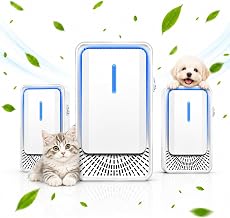
VEWIOR 2-Pack H13 HEPA Air Purifier
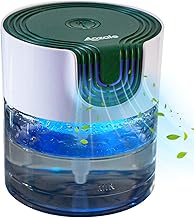
The most sensible value play here: two units covering up to 1,200 ft² between them, so you can treat a bedroom and a living room without buying twice. The washable pre-filter is genuinely easy to pull and rinse, and while the aromatherapy pad is a nice touch, I’d skip essential oils in a sleeping space and let the H13 media do its job undiluted.
MOOKA KJ190H True HEPA Purifier
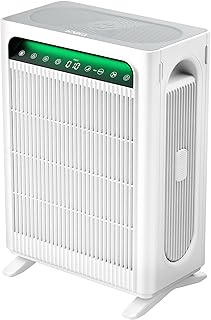
With coverage claimed to 2,200 ft², this is the pick for open-plan bedrooms or larger primary suites where smaller units run out of breath. Sleep mode is impressively restrained, and the onboard air quality monitor gives you a useful feedback loop for spotting whether your overnight congestion is environmental or something else.
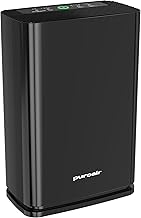
PuroAir 240 HEPA Purifier (2-Pack)
PuroAir’s CarbonTech layer is the differentiator — it handles odors and gaseous irritants far better than the thin carbon mesh in budget units, which matters if pets sleep in the room. Rated to 1,000 ft² per unit, the pair is well suited to a bedroom-plus-office setup where you want fast cleanup rather than continuous background filtration.
KNKA APH4000 (White)
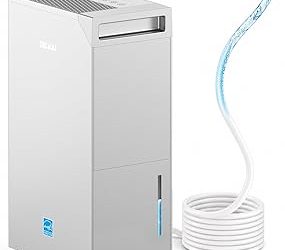
The AHAM-verified rating is the reason this one stands out: independently confirmed performance to 1,695 ft² in an hour, rather than a marketing figure. The washable pre-filter, dedicated pet mode, and dimmable AQI display make it my default recommendation for allergy sufferers who want documented numbers behind the claims.
KNKA APH4000 (Black)
Mechanically identical to the white version, so the choice is purely about how it sits in your room. The black finish disappears more completely in a dark bedroom — a small thing that matters if you’re sensitive to visual clutter and stray light while falling asleep.
Frequently Asked Questions
How often should I wash the pre-filter?
Every two to four weeks in a typical home, and every two weeks if you have shedding pets. Rinse it in cool water, let it dry completely — at least 24 hours — and never reinstall it damp, which invites mold inside the housing.
Does a washable pre-filter mean I never replace filters?
No. The pre-filter is reusable, but the HEPA and carbon layers behind it are consumable and typically need replacing every 6 to 12 months depending on runtime and air quality.
Should I run it all night or only before bed?
All night, on a low or sleep setting. Particle levels rebuild within an hour or two once filtration stops, and continuous low-speed operation is both quieter and more effective than intermittent high-speed bursts.
Will an air purifier help with snoring or sleep apnea?
It can reduce nasal congestion that worsens snoring, but it does not treat sleep apnea. If you snore loudly, wake gasping, or feel unrefreshed despite adequate hours in bed, see a physician for evaluation.
Final Thoughts
For most bedrooms, the KNKA APH4000 is the strongest all-round choice — verified coverage, a truly quiet sleep mode, and a dimmable display, in whichever finish suits your room. Larger or open-plan spaces are better served by the MOOKA KJ190H, while the VEWIOR two-pack remains the smartest way to cover a bedroom and a second room without doubling your spend.