Key takeaways
- Carbon, not fragrance: Litter odor is largely ammonia and sulfur compounds. Only activated carbon or a comparable sorbent removes those molecules; scent pods simply layer something pleasant on top, which your nose adapts to within days.
- Noise floor under 25 dB: For a bedroom, check the lowest fan setting rather than the maximum. A sleep mode in the low twenties reads as room tone; anything above roughly 35 dB becomes a sound you track instead of ignore.
- Coverage with headroom: Match the rated area to your room, then size up. A unit running gently at 30% in a large space outperforms a small one straining at full tilt, and it costs you far less in perceived noise.
- Skip ozone in occupied rooms: Ozone genuinely destroys odor molecules, but it’s a respiratory irritant for people and cats alike. If you buy an ozone-capable device, run it only in an empty, closed room and ventilate thoroughly before anyone returns.
- Washable pre-filter and honest filter math: Cat hair clogs the first stage fast. A rinsable pre-filter extends the life of the expensive HEPA layer behind it, so price the replacement cartridges before you commit.
What's inside
Cat owners tend to notice it first at night. The house is quiet, the HVAC has cycled off, and the ammonia note drifting from the litter box becomes the most interesting thing in the room. Because the olfactory system doesn’t fully switch off during sleep, low-grade odor exposure can nudge you into lighter sleep stages, prompt more position changes, and leave you feeling like you slept eight hours but rested for five. Add dander and litter dust to the mix, and congestion-related snoring often follows.
As someone who spends a great deal of time helping people troubleshoot their bedrooms, I treat air quality as furniture-adjacent: it belongs in the same conversation as your mattress, your curtains, and where you put the nightstand. This guide covers what actually neutralizes litter odor versus what merely masks it, which specifications matter for a sleeping space, and six well-reviewed options spanning compact plug-ins and full-room HEPA units.
As an Amazon Associate we earn from qualifying purchases.


How to Choose a/an Air Purifier For Cat Litter Smells (2026)
- Carbon, not fragrance: Litter odor is largely ammonia and sulfur compounds. Only activated carbon or a comparable sorbent removes those molecules; scent pods simply layer something pleasant on top, which your nose adapts to within days.
- Noise floor under 25 dB: For a bedroom, check the lowest fan setting rather than the maximum. A sleep mode in the low twenties reads as room tone; anything above roughly 35 dB becomes a sound you track instead of ignore.
- Coverage with headroom: Match the rated area to your room, then size up. A unit running gently at 30% in a large space outperforms a small one straining at full tilt, and it costs you far less in perceived noise.
- Skip ozone in occupied rooms: Ozone genuinely destroys odor molecules, but it’s a respiratory irritant for people and cats alike. If you buy an ozone-capable device, run it only in an empty, closed room and ventilate thoroughly before anyone returns.
- Washable pre-filter and honest filter math: Cat hair clogs the first stage fast. A rinsable pre-filter extends the life of the expensive HEPA layer behind it, so price the replacement cartridges before you commit.
The Best Air Purifier For Cat Litter Smells (2026)s Reviewed
LEVOIT Vital 100S-P
This is the sensible default for a bedroom that also houses a litter box: genuine HEPA filtration, a washable pre-filter built for pet hair, and a sleep mode quiet enough to disappear behind a ceiling fan. Coverage up to roughly 1,073 sq ft means it can idle on low overnight and still clear the room, which is exactly the behavior you want from a device running eight hours a night.
uahpet Pet Air Purifier
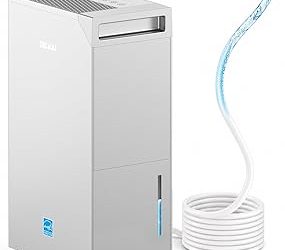
Designed around pet households specifically, with H13 HEPA media, a washable pre-filter, and a rated ceiling near 2,100 sq ft — useful for open-plan homes where the litter box sits in a hallway or laundry nook rather than a sealed room. The air quality monitor is more than a novelty here; watching readings spike after a litter visit tells you whether your placement is right.
AIRROMI A2005
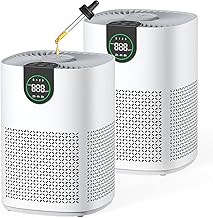
A compact 360-degree intake unit that draws air from all sides, so it tolerates being tucked beside a dresser better than most rectangular purifiers. The optional scent feature is best left empty in a sleeping space — let the carbon stage do the work and keep your bedroom olfactorily neutral.
Plug-In Ionizer Deodorizer (3-Pack)
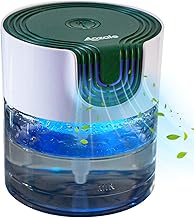
Filterless plug-in ionizers are a supplement, not a solution, but three of them let you treat the litter closet, the entryway, and a bathroom without cluttering outlets with bulky hardware. They are silent, which is their strongest argument for nighttime use.
Plug-In Negative Ion Deodorizer (2-Pack)
The same category in a two-pack, suited to a smaller apartment where one unit covers the litter area and the second handles a closet or mudroom. Expect meaningful improvement in enclosed, low-airflow spots and modest results in an open room.
Frequently Asked Questions
Where should I place the purifier relative to the litter box?
Roughly three to six feet away, at the same height or slightly above, with the intake facing the box and nothing blocking the exhaust. Directly beside it invites litter dust into the pre-filter.
Will running it all night cost much?
Most HEPA units draw between 5 and 25 watts on low. Overnight operation typically adds a dollar or two per month, which is cheap relative to the sleep quality you get back.
Are ozone or ionizing deodorizers safe around cats?
Negative ion output at consumer levels is generally considered low-risk, though it can produce trace ozone. True ozone generators should never run in a space your cat occupies — feline respiratory tracts are small and sensitive.
Do I still need to scoop daily?
Yes. A purifier removes airborne molecules; it cannot address the source. Daily scooping plus a full litter change weekly does more for your air than any device.
Final Thoughts
For most bedrooms, the LEVOIT Vital 100S-P is the balanced choice — quiet, properly filtered, and sized generously. Larger or open-plan homes should step up to the uahpet, while the AIRROMI A2005 suits tight corners where a slim 360-degree footprint matters more than raw coverage. Treat the plug-in ionizers as reinforcements for closets and litter nooks, not as your primary defense.