Key takeaways
- Frame metallurgy: Marine-grade aluminum is the default choice within ten miles of salt water — it simply cannot rust. Steel frames need a flawless powder coat, and any chip becomes a rust bloom within a season. If you go with resin wicker, confirm the strands are HDPE over an aluminum core rather than PVC over steel.
- Cushion drainage over cushion loft: Thick foam that traps water is worse than thinner foam that sheds it. Look for reticulated or quick-dry cores, solution-dyed acrylic or performance fabrics like Nuvella, and zippered covers you can remove and machine wash when the pollen and mildew inevitably settle in.
- Real UV resistance: Florida sun bleaches dye from the top down. Solution-dyed fabric carries color through the fiber itself, so fading is gradual and even instead of blotchy. Deep saturated tones like peacock blue and graphite hold up visually far better than pale neutrals.
- Storm-season weight: Ultralight sets become projectiles. Choose pieces heavy enough to stay put in a squall but modular enough that two people can carry them inside before a named storm. Bundled waterproof covers are a meaningful bonus, not marketing filler.
- Seat depth and back angle: If you want the lanai to function as a wind-down space, you need at least 26 inches of seat depth and a reclined back. Shallow, upright seating reads as a waiting room and won’t get used after dinner.
What's inside
Florida’s porch season never really ends, and that’s precisely the problem. Furniture here doesn’t get a winter of rest in a garage — it sits through August humidity that behaves like a slow steam bath, salt drift off the coast, sixty-mile-an-hour squall lines in July, and UV exposure that fades pigment faster than almost anywhere in the continental U.S. Buyers usually discover this in year two, when the powder coat blisters, the cushion cores stay damp for a week after a storm, and the whole set starts to smell faintly of a basement. What looked like a bargain in March becomes bulk trash by the following spring.
I come at outdoor furniture from an unusual angle: I spend most of my professional time on sleep and recovery, and the screened lanai is one of the most underrated recovery spaces in a Florida home. Morning light exposure on a deep-seated sofa does more for circadian timing than most supplements, and an evening wind-down outdoors — away from screens, in falling light — reliably shortens the time it takes people to fall asleep. That only works if the seat is genuinely restful and doesn’t feel clammy. So this guide evaluates the sets below on two axes at once: whether they survive the Gulf Coast climate, and whether they’re comfortable enough that you’ll actually rest in them.
As an Amazon Associate we earn from qualifying purchases.



How to Choose a Patio Furniture For Florida (2026)
- Frame metallurgy: Marine-grade aluminum is the default choice within ten miles of salt water — it simply cannot rust. Steel frames need a flawless powder coat, and any chip becomes a rust bloom within a season. If you go with resin wicker, confirm the strands are HDPE over an aluminum core rather than PVC over steel.
- Cushion drainage over cushion loft: Thick foam that traps water is worse than thinner foam that sheds it. Look for reticulated or quick-dry cores, solution-dyed acrylic or performance fabrics like Nuvella, and zippered covers you can remove and machine wash when the pollen and mildew inevitably settle in.
- Real UV resistance: Florida sun bleaches dye from the top down. Solution-dyed fabric carries color through the fiber itself, so fading is gradual and even instead of blotchy. Deep saturated tones like peacock blue and graphite hold up visually far better than pale neutrals.
- Storm-season weight: Ultralight sets become projectiles. Choose pieces heavy enough to stay put in a squall but modular enough that two people can carry them inside before a named storm. Bundled waterproof covers are a meaningful bonus, not marketing filler.
- Seat depth and back angle: If you want the lanai to function as a wind-down space, you need at least 26 inches of seat depth and a reclined back. Shallow, upright seating reads as a waiting room and won’t get used after dinner.
The Best Patio Furniture for Florida (2026), Reviewed
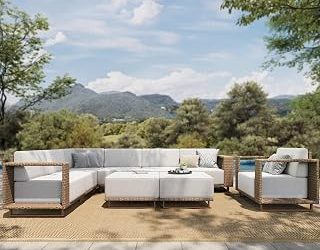
Aoxun Aluminum 7-Seat Oversized Sectional
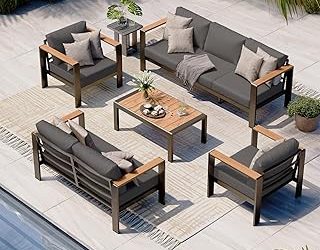
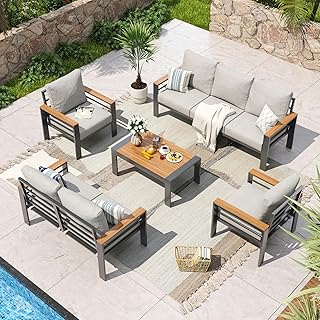
This is my top recommendation for coastal homes: an oversized aluminum sectional with washable thick cushions, which means the two most common Florida failure points — frame corrosion and mildewed foam — are both addressed structurally rather than with a disclaimer. The generous seat depth makes it genuinely usable for an hour of evening decompression, not just a coffee.
Aluminum 5-Piece Conversation Set, Graphite
A smarter pick for balconies and narrow lanais, where oversized sectionals overwhelm the space and block airflow. The graphite finish hides pollen and rain spotting between cleanings, and the washable cushion covers mean you can reset the whole set in an afternoon.
Signature Design by Ashley Clare View Eucalyptus Sofa
The only wood option I’d put on a Florida patio without hesitation, thanks to a five-step weather-shielded eucalyptus finish and stain-resistant Nuvella fabric. Its deep three-person frame and four accent pillows make it the most nap-friendly piece here — keep it under cover and refresh the finish annually.
Rattaner 6-Piece Set with Waterproof Covers
The anti-slip cushions solve a small but constant irritation: seat pads that creep forward every time you shift. Bundled waterproof covers make short work of hurricane prep, and the peacock blue is a solution-dyed tone that resists the chalky fade cheap wicker sets develop by their second July.
Aoxun 7-Piece Wicker Sectional with Waterproof Cover
Strong value for larger families who want a full conversation layout without stepping up to aluminum pricing. Store the cushions indoors during the wettest months and use the included cover religiously — treated that way, this set holds up well.
Frequently Asked Questions
How long should patio furniture last in Florida?
Budget steel-and-PVC sets often fail in two to three seasons. A well-chosen aluminum or HDPE set, covered during storm season and rinsed monthly, should reach eight to ten years with cushion replacement somewhere around year five.
Do I really need to cover furniture that’s already waterproof?
Yes. “Waterproof” describes the fabric shell, not the foam beneath it or the fasteners holding the frame together. Covers mainly buy you UV protection and keep debris out of seams where mildew starts.
What’s the fastest way to remove mildew spots?
Diluted white vinegar or a mild oxygen-based cleaner, applied with a soft brush and rinsed thoroughly, then dried in direct sun. Avoid chlorine bleach on solution-dyed acrylic — it degrades the fibers and voids most warranties.
Can outdoor lounging actually improve sleep?
Bright morning light anchors your circadian rhythm, and dim, screen-free evening light supports natural melatonin release. Twenty unhurried minutes outdoors at each end of the day is one of the cheapest sleep interventions available.
Final Thoughts
If you live near salt water and want one purchase to last, the Aoxun Aluminum 7-Seat Oversized Sectional is the most durable pick on this list. Tight lanais and balconies are best served by the Aluminum 5-Piece Graphite set, and if what you really want is a place to fall asleep with a book, the Ashley Clare View Eucalyptus Sofa is worth the upkeep it asks for.