Key takeaways
- Wipe the drip tray daily with a dry cloth; standing water there seeds everything above it.
- Front-load your water intake — aim for most of your daily volume before 7pm to protect sleep continuity.
- Keep dispensers out of direct sunlight, which accelerates microbial growth in translucent reservoirs.
- Replace the bottle probe on bottom-load coolers every two to three years; the seals degrade invisibly.
What's inside
Most people think about their water dispenser in terms of thirst. As someone who spends their working life helping clients repair broken sleep, I’ve learned to think about it in terms of the last two hours before bed — the stretch where a glass of cool water either becomes part of a calming wind-down ritual or a source of low-grade unease. If the spout smells faintly sour, if there’s a pale film ringing the reservoir, if the tray beneath the taps has gone tacky, that glass stops being restorative. And the nightly bathroom trip that follows poor hydration timing is one of the quietest sleep disruptors I see in intake questionnaires.
Dispensers are warm, dark, perpetually damp environments — precisely the conditions biofilm prefers. Left alone, that slick invisible layer coats internal tubing and changes how water tastes long before anything looks wrong. This guide walks through a full cleaning method that works for pitcher-style filters, bottom-load coolers, and countertop units alike: how to dismantle safely, what to descale with, how to reach the parts your hands can’t, and how often the whole ritual needs repeating. Below are the tools I keep recommending to clients who want this done properly rather than approximately.
As an Amazon Associate we earn from qualifying purchases.




Start by Emptying and Disconnecting — Properly
Unplug the unit and give it twenty minutes if it has a hot tank. Rushing this step is how people scald themselves. Drain everything: the cold reservoir, the hot reservoir via its rear valve, and the drip tray. On a bottom-load model like the Brio 520, lift out the bottle probe assembly and set it on a clean towel — that probe sits in standing water constantly and is usually the grimiest component in the machine. Pitcher owners have it easier: separate the lid, upper chamber, and lower jug on a Brita Metro or a Waterdrop WFD-22L, and park the filter cartridge somewhere dry rather than letting it sit in a puddle.
Descale Before You Sanitize
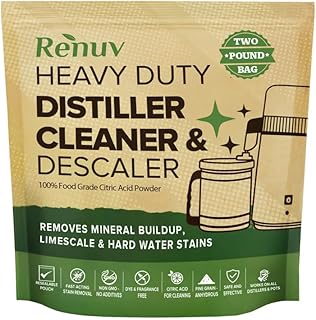
Sequence matters here, and most people get it backwards. Mineral scale forms a rough, porous crust that shelters bacteria from any sanitizer you pour over it. Dissolve the scale first, then disinfect the clean surface underneath. Food-grade citric acid is the right tool — a bulk product like Renuv Citric Acid handles far more than one machine, covering kettles, distillers, and coffee equipment on the same shelf. Mix roughly two tablespoons per litre of warm water, fill the reservoir, and let it stand for thirty to sixty minutes. You’ll hear a faint fizz as carbonate deposits break down. Circulate the solution through the taps so the internal lines get treated too, then flush with fresh water at least three times.
Sanitize the Reservoir and Lines
With scale gone, move to a purpose-built sanitizer. A dedicated Water Cooler Cleaning Kit is worth the small outlay because it’s formulated for potable-water equipment and rinses clean without leaving a chemical aftertaste — which matters enormously if you’re drinking this water at 10pm and want nothing to jolt your senses. Follow the dwell time on the label rather than eyeballing it; contact duration is what kills biofilm, not concentration. Bleach is a common improvisation and a poor one: residual chlorine taste lingers in plastic for weeks.
Reach the Places Your Hands Can’t
This is where most cleaning attempts quietly fail. Spouts, faucet stems, and the narrow channels between chambers hold biofilm no amount of soaking will shift, because biofilm is mechanically adhesive — it has to be scrubbed off. A long-handled set like the Holikme Bottle Brush Tube Cleaning Lab Set gives you graduated widths for tap interiors, drain holes, and the tight corners of a Waterdrop pitcher’s upper chamber. Work each surface for a slow ten-count. If a brush comes out with visible slime, repeat until it doesn’t.
Reassemble, Flush, and Reset Your Schedule
Air-dry every removable part fully before reassembly — trapped moisture in a sealed unit undoes your work within days. Reinstall filters, plug in, and discard the first full reservoir. Then write the date somewhere you’ll actually see it. Deep-clean quarterly for coolers and monthly for pitchers, and let the SmartLight indicator on a Brita Metro handle filter timing so you’re not guessing.
Tips
- Wipe the drip tray daily with a dry cloth; standing water there seeds everything above it.
- Front-load your water intake — aim for most of your daily volume before 7pm to protect sleep continuity.
- Keep dispensers out of direct sunlight, which accelerates microbial growth in translucent reservoirs.
- Replace the bottle probe on bottom-load coolers every two to three years; the seals degrade invisibly.
Frequently Asked Questions
How often should I really deep-clean?
Every three months for bottled coolers, monthly for filter pitchers, and immediately after any period of disuse longer than a week.
Can I put pitcher components in the dishwasher?
Lower racks only, and only if the manufacturer confirms it. Heat warps thin plastic and can compromise lid seals permanently.
Does vinegar work instead of citric acid?
It descales adequately but leaves a stubborn odour in plastic. Citric acid is more effective per unit and rinses away neutral.
Why does clean water still taste stale?
Usually an expired filter or a reservoir left standing too long. Refresh water every 48 hours regardless of filtration.
Conclusion
A clean dispenser is unglamorous infrastructure for good sleep — it removes one small reason to hesitate before that evening glass, and it keeps hydration where it belongs, in your routine rather than in your worries. Descale, sanitize, scrub what you can’t see, and put the next date on the calendar before you forget.