Key takeaways
- Central, not cornered: Position the unit near the middle of the space or in a doorway-adjacent open area so it draws from the whole room. Tucking it against a wall starves the intake and creates a dry pocket while the far side stays damp.
- Clearance on all sides: Leave roughly 12 inches around the intake and exhaust, and never drape laundry over the top. Restricted airflow forces longer run cycles, which raises both energy use and noise exposure.
- Follow the moisture source: Put the machine where water actually enters — the base of basement stairs, outside a bathroom door, beside a crawlspace hatch — rather than where it looks tidiest. Humid air moves toward cooler surfaces, so intercept it early.
- Plan the drainage before you plug in: Continuous gravity drainage only works when the outlet sits above the floor drain or sink. If your only spot is level with the drain, choose a tank model you’ll empty daily, or add a pump.
- Respect the sleep zone: In a bedroom, place the unit at least six feet from the headboard, aim the vent away from the bed to avoid a cool draft, and require a sleep mode that dims or kills the display. Light and intermittent noise are two of the most common causes of fragmented sleep I see.
What's inside
Most people buy a dehumidifier because of something they noticed — a musty basement stairwell, a window that fogs by morning, a pillow that never quite feels dry. What almost nobody considers is that where the unit sits matters nearly as much as which one you bought. I’ve assessed hundreds of bedrooms as a sleep-wellness consultant, and I regularly find capable machines shoved into corners behind laundry baskets, pulling air from a dead pocket of the room while the closet three feet away keeps growing mildew. Poor placement doesn’t just slow moisture removal; it also puts a compressor humming directly beside someone’s ear for eight hours a night.
This guide covers the placement fundamentals that actually change results — airflow clearance, room-level versus whole-floor coverage, drainage height, and the sound and light considerations that determine whether a unit belongs in a sleeping space at all. Then I review the models below, each chosen because its size, drainage style, and nighttime behavior suit a specific spot in the home rather than a generic “any room” promise.
As an Amazon Associate we earn from qualifying purchases.


How to Choose a Place To Place A Dehumidifier (2026)
- Central, not cornered: Position the unit near the middle of the space or in a doorway-adjacent open area so it draws from the whole room. Tucking it against a wall starves the intake and creates a dry pocket while the far side stays damp.
- Clearance on all sides: Leave roughly 12 inches around the intake and exhaust, and never drape laundry over the top. Restricted airflow forces longer run cycles, which raises both energy use and noise exposure.
- Follow the moisture source: Put the machine where water actually enters — the base of basement stairs, outside a bathroom door, beside a crawlspace hatch — rather than where it looks tidiest. Humid air moves toward cooler surfaces, so intercept it early.
- Plan the drainage before you plug in: Continuous gravity drainage only works when the outlet sits above the floor drain or sink. If your only spot is level with the drain, choose a tank model you’ll empty daily, or add a pump.
- Respect the sleep zone: In a bedroom, place the unit at least six feet from the headboard, aim the vent away from the bed to avoid a cool draft, and require a sleep mode that dims or kills the display. Light and intermittent noise are two of the most common causes of fragmented sleep I see.
The Best Place To Place A Dehumidifier (2026) Picks, Reviewed
95OZ Dehumidifier for Home, 1000 sq ft (Black)
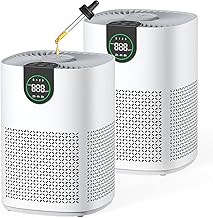
A compact 1,000 sq ft unit with a genuinely quiet cycle, making it my default recommendation for a nightstand-adjacent floor spot in a small bedroom. The seven-color ambient light is optional rather than mandatory, which matters — leave it off if you’re serious about melatonin timing.
ToLife 1000 Sq Ft Dehumidifier with Sleep Mode
The dedicated sleep mode is the differentiator here: it slows the fan and dims the panel, so the unit can live in an occupied room without becoming a light source. Its 95 oz tank comfortably handles an overnight run in a mildly damp bedroom or ensuite.
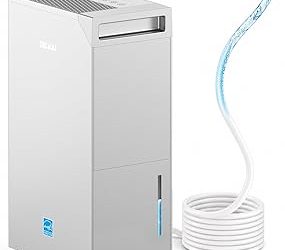
1000 Sq.Ft Dehumidifier with 95oz Tank (Grey)
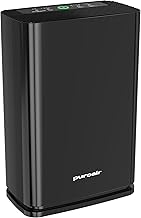
Functionally similar to the models above but with a more neutral finish that disappears in a hallway, nursery, or home office corner. Good pick when you want the unit centrally placed and visually unobtrusive rather than hidden in a closet.
KNKA Energy Star 4500 Sq.Ft Dehumidifier
This is the one for a finished basement or open lower level, where a small tank unit would simply lose the fight. The included drain hose and smart humidity control let you set it near a floor drain, dial in a target, and stop thinking about it.
Waykar 80 Pints, 5000 Sq. Ft Energy Star Dehumidifier
The 90° auto swing genuinely widens its effective reach, which is why it earns a central placement in a large, awkwardly shaped basement rather than a corner. Continuous drainage and auto-defrost make it the strongest candidate for cool, year-round spaces.
Frequently Asked Questions
Can I sleep in the same room as a dehumidifier?
Yes, and in a damp bedroom it’s often beneficial — dust mites and mold thrive above roughly 55% relative humidity. Use a model with a sleep mode, place it several feet from your head, and target 45–50% RH.
Should the dehumidifier sit on the floor or elevated?
Floor level is fine and often better, since cool humid air pools low. Elevate only if you need gravity drainage into a nearby sink or drain, and make sure the surface is stable and level.
Does closing the door help?
Considerably. A dehumidifier sized for one room will struggle endlessly against an open hallway. Close doors and windows in the treated space, and treat basements as a single sealed zone.
How far from the wall does it need to be?
Aim for about a foot of clearance on the intake and exhaust sides, more if the manual specifies it. Crowding the unit reduces capacity and can cause it to cycle noisily.
Final Thoughts
For a bedroom you actually sleep in, the ToLife 1000 Sq Ft with Sleep Mode is the easiest unit to place well, with the 95OZ 1000 sq ft model in black a close second for smaller rooms. For a basement or open lower floor, put the Waykar 80 Pint near a floor drain in the middle of the space and let continuous drainage do the work — it’s the placement-and-product pairing that solves the most problems at once.