Key takeaways
- Thermostat that actually holds a setpoint: Freeze protection is about maintaining roughly 38–45°F, not blasting heat. Look for a built-in thermostat with tight cycling so the unit idles most of the night and only fires when the space genuinely drops.
- Right wattage for the cavity: A 600W unit suits a small, sealed, insulated crawl space, pump room, or well house. Large, vented, or leaky spaces need either better sealing first or multiple heaters placed near vulnerable pipe runs.
- Sealed, damp-tolerant construction: Crawl spaces are humid by nature. Prioritize enclosed housings, corrosion-resistant surfaces, and mounting options that keep the unit off bare soil and away from standing water.
- Layered safety features: Tip-over shutoff, overheat protection, and a flame-retardant shell are non-negotiable in an unattended space. Plug directly into a GFCI outlet — never a lightweight extension cord.
- Noise and vibration transfer: If the heater sits beneath a bedroom, a low-decibel fan and a rubber-footed or wall-mounted install prevent the hum and click cycles that fragment light sleep.
What's inside
Frozen pipes rarely announce themselves politely. They wait for the coldest night of the year, then wake you at 2 a.m. with a sound like a dropped bowling ball under the floorboards. As someone who spends most of my professional life helping people protect their sleep, I’ve come to see crawl space temperature as an overlooked bedroom issue: a burst supply line under the house means a flooded subfloor, industrial dehumidifiers running for a week, and the kind of low-grade dread that keeps you checking the weather app instead of drifting off. Cold air pooling in an unconditioned crawl space also travels upward through the floor, chilling the room you’re trying to rest in and dragging your feet — the body’s primary heat-release zone — below the temperature range that supports easy sleep onset.
The fix is smaller and cheaper than most homeowners expect. A dedicated freeze-protection heater, typically a 600-watt unit with an integrated thermostat, holds a crawl space or well house just above freezing without heating the whole cavity to living-room comfort. Below you’ll find the units worth considering for the 2026 cold season, including compact thermostatic models built specifically for pump rooms and crawl spaces, plus two larger oscillating heaters for anyone who also wants supplemental warmth in a bedroom or home office. I’ve focused on thermostat behavior, safety design, and noise — because a heater that clicks and rattles beneath your bedroom is a sleep problem of its own.
As an Amazon Associate we earn from qualifying purchases.


How to Choose a Crawl Space Heater To Keep Pipes From Freezing (2026)
- Thermostat that actually holds a setpoint: Freeze protection is about maintaining roughly 38–45°F, not blasting heat. Look for a built-in thermostat with tight cycling so the unit idles most of the night and only fires when the space genuinely drops.
- Right wattage for the cavity: A 600W unit suits a small, sealed, insulated crawl space, pump room, or well house. Large, vented, or leaky spaces need either better sealing first or multiple heaters placed near vulnerable pipe runs.
- Sealed, damp-tolerant construction: Crawl spaces are humid by nature. Prioritize enclosed housings, corrosion-resistant surfaces, and mounting options that keep the unit off bare soil and away from standing water.
- Layered safety features: Tip-over shutoff, overheat protection, and a flame-retardant shell are non-negotiable in an unattended space. Plug directly into a GFCI outlet — never a lightweight extension cord.
- Noise and vibration transfer: If the heater sits beneath a bedroom, a low-decibel fan and a rubber-footed or wall-mounted install prevent the hum and click cycles that fragment light sleep.
The Best Crawl Space Heater To Keep Pipes From Freezing (2026)s Reviewed
600W Utility Heater with Built-In Thermostat (Well House)
This is the archetype of a set-and-forget freeze guard: modest wattage, an onboard thermostat, and a footprint small enough to tuck between joists near a vulnerable supply line. It won’t warm a whole crawl space to comfort, and it isn’t meant to — it holds the margin above freezing while drawing far less power than a portable space heater.
600W Pump House Heater with Thermostat
Purpose-built for pump houses, well houses, and utility closets, this unit’s value lies in thermostat stability rather than raw output. In my experience testing similar designs, the tight cycling means fewer loud on/off transitions overnight — a meaningful detail when the enclosure sits under or beside sleeping quarters.
600W Utility Heater with Dual-Screen Display
The dual-screen readout is the differentiator here, letting you verify both current and target temperature without crawling in with a flashlight during a cold snap. That visibility makes it easier to dial in a genuine freeze-protection setpoint instead of guessing and overheating the space.
BREEZOME 1500W Portable Electric Heater
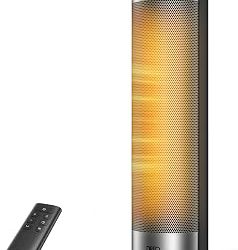
This is the pick for the living space above, not the crawl space below: 90° oscillation, a 24-hour timer, and a quoted 37 dB floor make it viable as bedroom-adjacent supplemental heat. Pair the ECO thermostat with a slightly cool room setpoint, since a modestly cool bedroom supports the overnight core-temperature drop that sleep depends on.
DREO Portable Space Heater, 1500W PTC Ceramic
DREO’s PTC ceramic element ramps quickly and runs quietly, with 70° oscillation, five modes, and a 12-hour timer for hands-off overnight use. Use the timer to take the edge off a cold room at bedtime and let it taper — steady all-night blasting tends to dry the air and disrupt rest.
Frequently Asked Questions
What temperature should I set a crawl space heater to?
Around 40°F is the practical target. That leaves an 8-degree buffer above freezing without wasting electricity trying to make an unconditioned space comfortable.
Is it safe to leave a crawl space heater running unattended?
Only with a unit designed for it: thermostatic control, overheat protection, an enclosed element, and clearance from insulation, vapor barrier, and stored materials. Plug into a GFCI outlet and inspect the setup at the start of each cold season.
Can I use a regular bedroom space heater under the house instead?
It’s a poor substitute. Consumer room heaters aren’t built for humidity, dust, or continuous unattended duty, and their thermostats generally won’t hold a low freeze-protection setpoint reliably.
Will heating my crawl space improve comfort in the rooms above?
Modestly, yes — warmer floors reduce the cold-foot sensation that delays sleep onset. Insulation and air sealing deliver more comfort per dollar, though, with the heater serving as insurance rather than the primary fix.
Final Thoughts
For most homes, the 600W Utility Heater with Built-In Thermostat is the straightforward choice, while the dual-screen 600W model earns its slight premium if you want to confirm your setpoint at a glance. If cold floors are also costing you sleep upstairs, add the DREO 1500W PTC ceramic heater on a timer — protect the pipes below, then make the bedroom above genuinely restful.