Key takeaways
- Compare the best electric planers for trimming doors, flattening boards, and chamfering edges, with guidance on cut width, depth control, and dust ports.
An electric planer does the jobs a belt sander is too slow for and a hand plane is too tiring for. It shaves a door edge until the door swings freely, levels a high spot on a board in a few passes, and cuts a clean chamfer along a shelf. All five tools here share the familiar handheld format: a motor spinning a cutter head under a flat shoe, with a front knob that sets how much wood each pass removes.
This guide compares five corded planers from five different makers: a light all-rounder with a carry case, a single-blade model with a fence that mounts on either side, a value pick with many depth stops and a dust bag, a heavier-duty kit for hardwoods and framing edges, and a long-shoe model with chamfer grooves for controlled finish work.
Disclosure: As an Amazon Associate, I earn from qualifying purchases.
1. Makita KP0800K 3-1/4-Inch Planer with Tool Case

The Makita KP0800K is the balanced all-rounder of this group. Its motor drives a two-blade cutter head fast enough for quick stock removal, yet the tool stays light enough for overhead door work and repeated passes. Rubberized front and rear grips help you keep the shoe flat as you enter and leave a cut, which is where most planer mistakes happen.
Depth changes come from the front knob with clear click stops, so you can move from a heavy trimming pass to a thin finishing pass in repeatable steps. It cuts a useful rabbet along an edge and accepts double-edge carbide blades that you simply flip when one edge dulls. A blade gauge, wrench, guide rule, and blade set come in the case, so blade changes stay accurate away from the workbench. For a first serious planer covering doors, framing lumber, and fine woodworking, this is the easiest model here to recommend.
Specs
- Brand: Makita
- Model: KP0800K
- Type: Corded handheld planer with tool case
- Motor: 6.5 amps
- Cutter Head Speed: 17,000 RPM
- Planing Width: 3-1/4 inches
- Max Depth per Pass: 3/32 inch
- Rabbet Depth: 11/32 inch
- Weight: 5.7 pounds
- ASIN: B0033WSK5O
2. Bosch PL1632 6.5 Amp Hand Planer
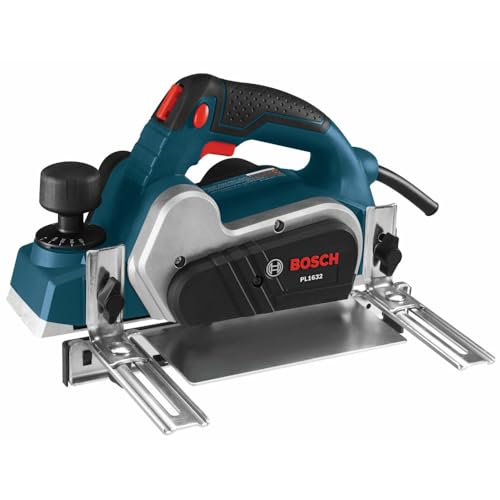
The Bosch PL1632 takes a simpler cutting approach, using a single reversible carbide blade instead of a pair. A single blade means quicker changes and less fuss when you nick an edge on a hidden staple or a gritty board. The motor output matches the strongest tools in this roundup, so the single-blade head still removes stock briskly on pine, oak, and common door materials when you keep the depth sensible.
What sets this model apart is control hardware. The guide fence mounts on either side, which helps when you plane toward a wall or keep a rabbet consistent from the opposite direction. A lock-off release works with the lock-on button, guarding against accidental starts while reducing finger fatigue on long runs. The included shavings bag keeps the cut line visible, and a protective overshoe guards the blade when you set the tool down. Choose this one if simple blade care and a flexible fence matter more than maximum depth per pass.
Specs
- Brand: Bosch
- Model: PL1632
- Type: Corded handheld planer
- Motor: 6.5 amps
- Cutter Head Speed: 16,500 RPM
- Planing Width: 3-1/4 inches
- Max Depth per Pass: 1/16 inch
- Blade System: Single reversible carbide blade
- Fence: Dual-mount guide fence
- ASIN: B00UVXYU84
3. WEN 6530 6-Amp Electric Hand Planer
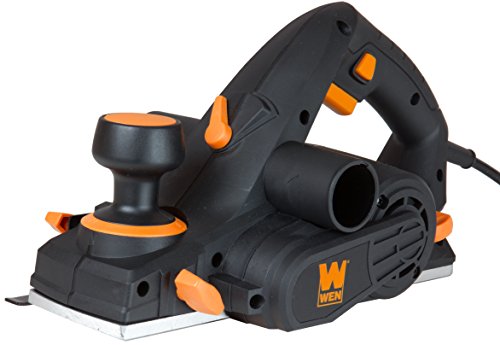
The WEN 6530 is the value pick that still covers the features home woodworkers actually use. Its cutter head turns fast enough to produce tens of thousands of cuts per minute, which leaves a smoother surface than the modest motor size might suggest, especially on softwoods, trim stock, and door edges. The front depth knob offers many distinct stops, so small adjustments feel precise rather than guessy when you are sneaking up on a fit.
A kickstand lifts the blade off the work between passes, protecting both the edge and your bench top. The dust bag collects a good share of shavings on short jobs, onboard wrench storage keeps the blade-swap tool with the planer, and it cuts rabbets along board edges for simple joinery. If you plane a few doors a year and flatten project boards, this model fits that brief well.
Specs
- Brand: WEN
- Model: 6530
- Type: Corded handheld planer
- Motor: 6 amps
- Cutter Head Speed: 17,000 RPM
- Cuts per Minute: 34,000
- Planing Width: 3-1/4 inches
- Depth Control: Multi-stop front knob
- Includes: Dust bag and kickstand
- ASIN: B00OW5AJTG
4. DEWALT DW680K 3-1/4-Inch Planer Kit

The DEWALT DW680K is the heavy-duty kit in this group, built around the strongest motor here. That extra output shows up in hardwoods and on wide edging work, where weaker planers slow down and leave a rougher finish. It takes a deeper bite per pass than most handheld models, so dimensioning a proud door edge or straightening framing stock takes fewer passes, while the calibrated depth knob still lets you back off to fine increments for finish work.
Versatility comes from blade choice. The tool accepts large resharpenable high-speed steel blades for straight edging and framing, and reversible carbide blades for cleaner detailed cuts and longer edge life. A rabbeting fence, depth setting gauge, and rugged case are part of the kit, suiting carpenters who move between job sites. The two-finger trigger suits extended sessions, and a poly-V drive belt is fitted for durability. Pick this planer if your work leans toward hardwoods and frequent heavy passes rather than occasional light trimming.
Specs
- Brand: DEWALT
- Model: DW680K
- Type: Corded handheld planer kit with case
- Motor: 7 amps
- Cutter Head Speed: 15,000 RPM
- Planing Width: 3-1/4 inches
- Max Depth per Pass: 3/32 inch
- Tool Weight: 6.2 pounds
- Blades: Reversible carbide and resharpenable steel options
- ASIN: B00005NMRI
5. PORTER-CABLE PC60THP 6-Amp Hand Planer

The PORTER-CABLE PC60THP is built around control on finishing passes. Its maximum depth per pass is the shallowest in this group, which sounds like a drawback until you are fitting a door or cleaning up a visible edge, where small, predictable cuts prevent tear-out and overshooting your line. The overmold depth knob turns through a series of positive stops, so the setting you choose is the setting you keep for the whole board.
A long cast aluminum shoe helps the tool track straight and resist tipping at the start and end of a cut, and three chamfering grooves give ready-made guides for easing edges at different widths. Dust ports on both sides let you connect the bag or a vacuum on whichever side suits your stance. Both high-speed steel and carbide blade sets are included. For remodelers who value tidy, controlled cuts over raw removal speed, this is a thoughtful, complete package.
Specs
- Brand: PORTER-CABLE
- Model: PC60THP
- Type: Corded handheld planer
- Motor: 6 amps
- Cutter Head Speed: 16,500 RPM
- Planing Width: 3-1/4 inches
- Max Depth per Pass: 5/64 inch
- Shoe: 11.5-inch cast aluminum with 3 chamfer grooves
- Dust Extraction: Dual side ports
- ASIN: B00PSPUWV4
How to Choose the Best Electric Planers for Your Work
Start with the work you do most. Door hanging and trim fitting reward light weight and fine depth steps, while flattening rough boards rewards motor output and a deeper cut per pass. All five tools here share the same planing width, which covers a standard door edge in one pass, so width alone should not drive your decision.
Next, look at depth control. A knob with many positive stops makes repeatable, shallow finishing passes easy, and a calibrated scale helps when you remove a known amount across several boards. Deeper settings remove stock fast but raise the risk of tear-out and snipe, and most finish work happens well below the maximum anyway.
Then consider blades and dust. Reversible carbide blades hold an edge in dirty or abrasive wood, while resharpenable steel blades can cut very cleanly in clear stock. For dust, a bag is fine for short jobs, but a vacuum port keeps the cut line visible on long sessions. Small details add up too: a kickstand protects blades between passes, a fence that mounts on both sides helps in tight rooms, and a case matters if the tool travels.
Frequently Asked Questions
Q: How deep should each pass be when planing a door?
Take shallow passes and check the fit often. Remove a small amount at a time, keep the shoe flat through the whole stroke, and press on the front shoe at the start and the rear shoe at the end to avoid rounding the edge. Deep settings are for rough stock removal, not for final fitting.
Q: Can an electric planer replace a thickness planer?
No. A handheld planer levels high spots, trims edges, and flattens small areas, but it follows the surface under its short shoe, so it cannot bring a whole board to a uniform thickness the way a benchtop thickness planer does. Use the handheld tool for fitting and spot work, and a thickness planer or jointer for dimensioning lumber.
Q: When should I flip or change the blades?
Flip reversible blades when cuts start to tear instead of slice, when the motor sounds strained at settings that used to feel easy, or when you see a raised line along the board from a nicked edge. Work with the tool unplugged, use the included gauge to set both blades level, and keep a spare set on hand so a dull edge never stops a job.
Q: How do I avoid snipe at the ends of a board?
Snipe happens when the shoe tips as only part of it rests on the wood. Keep pressure on the supported shoe section, feed at an even pace, and support long boards so they do not sag. Several light passes hide minor marks far better than one deep pass.
Conclusion
The best electric planers make fitting and flattening feel routine instead of risky. Choose the Makita for light, balanced all-round work with a complete case kit, the Bosch for simple single-blade care and a fence that mounts on either side, the WEN for strong value with many depth stops and a dust bag, the DEWALT for the strongest motor and deep, fast passes in hard stock, or the PORTER-CABLE for a long shoe and shallow, controlled finishing cuts. Match the tool to your mix of doors, boards, and trim, keep the blades sharp, and take light passes, and clean fits will follow.
More from Amazon
Programs that pair well with the guide above. Offers and eligibility are set by Amazon and may change.
Collect the home and kitchen items you want in one registry that guests can shop from.
Create a wedding registrySet up recurring deliveries of everyday items on eligible products. Terms and savings are set by Amazon.
Explore Subscribe & SaveFree shipping on eligible items, Prime Video and more. Eligible new members can start with a free trial.
Start a Prime free trialAudiobooks and podcasts to listen to on the go. Eligible new members can start with a free trial.
Try Audible freeAs an Amazon Associate we earn from qualifying purchases.