Key takeaways
- Downrod length and blade clearance: Target roughly 8 to 9 feet between the floor and the blades. A rough rule: subtract 9 from your ceiling height in feet, then multiply the remainder by 12 to get downrod inches. Keep blades at least 18 inches from walls and 10 inches below the ceiling so the fan can draw air properly.
- Sleep-grade sound, not just “quiet”: DC motors run meaningfully quieter than AC, and a longer downrod isolates motor vibration from the joist. Anything above a soft, broadband whoosh at low speed will register in a bedroom; tonal hums and clicking are the ones that wake you.
- CFM matched to the room, then dialed down: Buy headroom and run it slow. A high-CFM fan at speed one or two delivers the drift you want overnight, while an undersized fan forced to full speed creates noise and a draft strong enough to dry your throat and sinuses.
- Light temperature and dimming: Selectable CCT is a genuine sleep feature. A 2700K–3000K setting dimmed low in the two hours before bed limits melatonin suppression; save 5000K for morning and task work. Fans with a lights-off mode let you run air movement without any light at all.
- Location rating and mount type: Damp rating is the minimum for covered porches, wet rating for exposed installs. Confirm the canopy handles your sloped-ceiling angle, and verify the box is fan-rated — long downrods amplify any wobble at the mount, and a swaying fan is both a noise source and a safety issue.
What's inside
Vaulted ceilings look magnificent and sleep terribly. When your ceiling sits 11, 14, or 20 feet above the mattress, a flush-mounted fan stirs the air near the rafters and leaves the breathing zone stagnant — which matters more than most shoppers realize. Core body temperature has to drop roughly one to two degrees for sleep onset to happen cleanly, and gentle moving air across the skin is one of the cheapest, quietest ways to help that happen. Mount the fan too high and you lose the effect entirely; you also lose the light output, since a ceiling-hugging fixture 14 feet up washes the room in glare instead of usable illumination.
That is what a long downrod solves. By dropping the fan body 12, 24, 36 inches or more, you place the blades in the range where airflow actually reaches people, restore the pressure differential that makes a fan feel cooling, and bring any integrated light down to a workable height. This guide covers the long-downrod fans worth buying in 2026 — indoor bedroom models, damp-rated outdoor and patio fans, and oversized industrial units for barns, shops, and great rooms — plus the sizing, sound, and light-temperature details that decide whether you sleep better or lie awake listening to a hum.
As an Amazon Associate we earn from qualifying purchases.




How to Choose a Ceiling Fan With Long Downrod (2026)
- Downrod length and blade clearance: Target roughly 8 to 9 feet between the floor and the blades. A rough rule: subtract 9 from your ceiling height in feet, then multiply the remainder by 12 to get downrod inches. Keep blades at least 18 inches from walls and 10 inches below the ceiling so the fan can draw air properly.
- Sleep-grade sound, not just “quiet”: DC motors run meaningfully quieter than AC, and a longer downrod isolates motor vibration from the joist. Anything above a soft, broadband whoosh at low speed will register in a bedroom; tonal hums and clicking are the ones that wake you.
- CFM matched to the room, then dialed down: Buy headroom and run it slow. A high-CFM fan at speed one or two delivers the drift you want overnight, while an undersized fan forced to full speed creates noise and a draft strong enough to dry your throat and sinuses.
- Light temperature and dimming: Selectable CCT is a genuine sleep feature. A 2700K–3000K setting dimmed low in the two hours before bed limits melatonin suppression; save 5000K for morning and task work. Fans with a lights-off mode let you run air movement without any light at all.
- Location rating and mount type: Damp rating is the minimum for covered porches, wet rating for exposed installs. Confirm the canopy handles your sloped-ceiling angle, and verify the box is fan-rated — long downrods amplify any wobble at the mount, and a swaying fan is both a noise source and a safety issue.
The Best Ceiling Fans With Long Downrods (2026), Reviewed
60″ Outdoor Ceiling Fan, Black & Gold, 8299 CFM
A strong pick for covered patios and sleeping porches: 8,299 CFM from a reversible DC motor means you can leave it on the lowest setting all night and still feel it. The ABS blades resist humidity warping, and the black-and-gold finish reads as furniture rather than hardware.
96″ Smart Aluminum Ceiling Fan, 10,000+ CFM
An 8-foot span pushing over 10,000 CFM is the right tool for barns, shops, and double-height great rooms where smaller fans simply stall out. DOE certification and Alexa control are welcome, though the real value is the enormous low-speed air volume — high displacement at low RPM is the quietest way to move a big room.
Sevenine 52″ Downrod Ceiling Fan, White
The most bedroom-appropriate fan here: six speeds for genuine fine control, three color temperatures, and a 3-level timer so the fan can taper off after you’ve fallen asleep instead of chilling you at 4 a.m. ETL listed and rated for covered outdoor use.
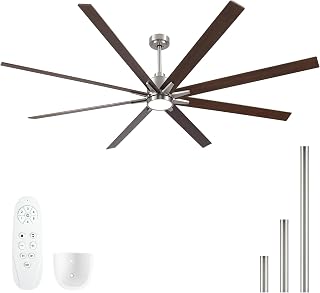
Rayqueen 84″ Brushed Nickel Fan, Walnut Blades
Ships with 5.9, 11.8, and 23.6-inch downrods, which covers most standard-to-vaulted installs without a separate parts order. The walnut blades and nickel motor housing suit finished living spaces, and the dimmable tri-color LED handles both evening wind-down and daytime brightness.
ZMISHIBO 96″ Industrial Ceiling Fan, No Light
Eight aluminum blades, three downrods, damp rating, and flat or sloped mounting make this the pragmatic choice for garages, warehouses, and workshops. Skipping the light fixture is a feature when you already have overhead lighting and just need serious air movement.
Frequently Asked Questions
How long a downrod do I actually need?
Subtract 9 from your ceiling height in feet and multiply by 12. A 12-foot ceiling wants about a 36-inch rod; a 20-foot ceiling wants roughly 132 inches. Sloped ceilings need extra length so the blades clear the high side.
Does sleeping with a fan on dry out your sinuses?
It can, if the air is aimed directly at your face at high speed. Run the lowest setting that still feels cool, angle circulation across the room rather than onto the bed, and add a humidifier if you wake with a dry throat in winter.
Can I run the fan in reverse during winter?
Yes, and with a long downrod it’s especially effective — reverse mode at low speed pulls warm air down off a vaulted ceiling without creating a perceptible draft, which can make a cool bedroom feel comfortable at a lower thermostat setting.
Will a longer downrod make the fan wobble more?
Only if the mount or balance is off. A fan-rated electrical box, a fully tightened downrod pin and set screws, and a blade-balancing kit eliminate almost all wobble. Never hang a long-downrod fan from a standard lighting box.
Final Thoughts
For bedrooms and vaulted living spaces, the Sevenine 52-inch is the best sleep-focused choice thanks to its six speeds, warm-to-cool CCT options, and sleep timer, while the Rayqueen 84-inch offers the widest downrod flexibility for tricky ceiling heights in a finished room. If your problem is volume rather than nuance — a barn, shop, or two-story great room — the 96-inch Smart Aluminum fan’s 10,000+ CFM at low RPM will out-cool anything smaller while staying comfortably quiet.