Key takeaways
- Match the tilt to your pitch: Dedicated sloped housings are pre-angled (typically for 2:12 through 6:12 roofs), while gimbal trims swivel manually, usually 30 to 35 degrees. Measure your ceiling angle before ordering — a 45-degree cathedral slope will defeat most standard gimbals.
- Prioritize deep-regressed optics: On a slope you view fixtures from below at an oblique angle, so the diode is far easier to see. Look for recessed or baffled lens designs rated for low unified glare; your eyes and your melatonin onset will both benefit.
- Demand a true 2700K option: Selectable-CCT fixtures let you run 4000K in a kitchen and 2700K in a bedroom or loft. Anything cooler than 3000K after sunset delivers more short-wavelength content than a sleep-friendly space should have.
- Verify the dimmer pairing: Smooth dimming below 10 percent is what makes a bedroom usable at night. Check the manufacturer’s compatibility list rather than assuming your existing wall dimmer will behave — flicker at low output is both irritating and physiologically disruptive.
- Confirm IC rating and airtightness: Sloped ceilings are almost always insulated roof assemblies. IC-rated, airtight canless units can sit in direct contact with insulation safely and won’t leak conditioned air into your attic space.
What's inside
Vaulted and cathedral ceilings do wonderful things for a room’s proportions and terrible things for its lighting. Angle a fixture designed for a flat plane against a 30-degree pitch and you get two problems at once: a beam that fires sideways into the wall instead of down onto the floor, and a bare diode edge sitting exposed in your line of sight. From a sleep-health perspective that second issue matters more than most buyers realize. Glare in the upper visual field keeps the retina’s non-visual photoreceptors stimulated long after you’ve dimmed the room, which is precisely the wrong signal to be sending your circadian system at 10 p.m.
This guide approaches sloped-ceiling lighting the way I approach a client’s bedroom audit: beam direction first, glare control second, color temperature third, and fixture aesthetics last. Below you’ll find purpose-built sloped downlights, adjustable gimbal wafers for retrofits, and one semi-flush option for stairwells and entries where a recessed can isn’t practical. Each pick was assessed for tilt range, anti-glare shielding, dimming behavior at low output, and whether its warmest color setting is actually warm enough for evening use.
As an Amazon Associate we earn from qualifying purchases.


How to Choose a Light For Sloped Ceiling (2026)
- Match the tilt to your pitch: Dedicated sloped housings are pre-angled (typically for 2:12 through 6:12 roofs), while gimbal trims swivel manually, usually 30 to 35 degrees. Measure your ceiling angle before ordering — a 45-degree cathedral slope will defeat most standard gimbals.
- Prioritize deep-regressed optics: On a slope you view fixtures from below at an oblique angle, so the diode is far easier to see. Look for recessed or baffled lens designs rated for low unified glare; your eyes and your melatonin onset will both benefit.
- Demand a true 2700K option: Selectable-CCT fixtures let you run 4000K in a kitchen and 2700K in a bedroom or loft. Anything cooler than 3000K after sunset delivers more short-wavelength content than a sleep-friendly space should have.
- Verify the dimmer pairing: Smooth dimming below 10 percent is what makes a bedroom usable at night. Check the manufacturer’s compatibility list rather than assuming your existing wall dimmer will behave — flicker at low output is both irritating and physiologically disruptive.
- Confirm IC rating and airtightness: Sloped ceilings are almost always insulated roof assemblies. IC-rated, airtight canless units can sit in direct contact with insulation safely and won’t leak conditioned air into your attic space.
The Best Lights For Sloped Ceilings Reviewed (2026)
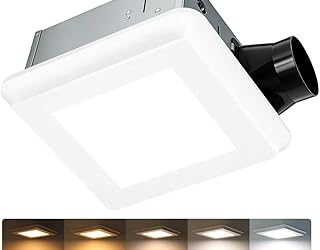
Maxxima 4″ Canless Sloped Anti-Glare LED Downlight
This is the one I recommend most often for bedrooms, because the deeply regressed anti-glare optic genuinely disappears when you’re lying down and looking up. Ninety CRI and five selectable color temperatures mean you can dial in 2700K for sleeping quarters without sacrificing skin-tone accuracy, and 1000 lumens from a 4-inch aperture is ample for an 8-foot spacing layout.
HALO RLS 6 in Adjustable Canless LED Recessed Light
Halo’s adjustable canless platform is the safest bet when you want a large-aperture wash of light and reliable dimmer compatibility across common residential controls. At 1600 lumens it’s better suited to great rooms and vaulted kitchens than bedside positions, where I’d step down to the 4-inch class.
WAC Lighting Lotos 4in Adjustable Recessed Light
The specification-grade choice: airtight, 2-hour fire rated, universal 120-277V input, and a build tolerance that shows when you install two dozen of them in a row. Worth the premium on a whole-home vaulted ceiling project where consistent aiming and fixture alignment will be visible from every angle.
6 Inch Black Gimbal LED Recessed Wafer Lights (6 Pack)
Black trims read as intentional shadow rather than bright rings against a white slope, which subtly lowers perceived glare in the periphery. The swivel gimbal lets you correct beam angle after installation — invaluable when the ceiling pitch isn’t quite what the plans claimed.
12 Pack 6 inch Black Gimbal LED Recessed Wafer Lights
Functionally the same fixture in a larger quantity, and the sensible buy for a full loft, finished attic, or open-plan vaulted living area. Buying one batch keeps color binning consistent, so your 3000K setting looks identical from the first can to the last.
Frequently Asked Questions
Can I use standard recessed lights on a sloped ceiling?
Not well. A fixed downlight aims perpendicular to the ceiling plane, so on a slope it throws light at the wall and points its bright aperture directly at seated or reclining occupants. Use a sloped housing or an adjustable gimbal instead.
What color temperature should I choose for a vaulted bedroom?
Set selectable fixtures to 2700K. Warm light after dusk carries less blue content, which supports natural melatonin release, and it flatters the wood and plaster finishes common in vaulted spaces.
How far apart should sloped downlights be spaced?
A useful starting point is ceiling height divided by two, measured at the average height of the slope. On a pitched ceiling, keep rows parallel to the ridge and aim each fixture slightly downslope for even floor coverage.
Are semi-flush fixtures acceptable on an angled ceiling?
Yes, provided the canopy is designed to compensate for the pitch. An industrial-style two-light semi-flush works nicely in a sloped hallway or entry where recessing isn’t feasible, though check the maximum rated slope angle first.
Final Thoughts
For bedrooms and any space where evening wind-down matters, the Maxxima 4″ sloped anti-glare downlight is the strongest overall pick thanks to its regressed optic and high color fidelity. Choose the WAC Lotos when you need specification-grade consistency across a large vaulted installation, and reach for the black gimbal wafer packs when you’re retrofitting an existing ceiling on a budget and want post-install aiming flexibility.