Key takeaways
- Match lumens to the room, not the spec sheet: A two-car garage is well served by 10,000–14,000 lumens. Reserve 21,000 lumens and up for open exteriors, framing work, or ceilings above ten feet — otherwise you’re just buying glare you’ll have to bounce off a wall.
- Prioritize adjustable color temperature: Lights with a 3000K–6000K range let you run cool white for detail work during the day and drop to warm white in the evening. This matters more than most buyers realize, since heavy blue-white exposure after dark delays melatonin release and pushes sleep onset later.
- Look for a tripod that actually locks: Check the height range (48″–72″ is the practical sweet spot) and whether the legs splay wide. A tall light on a narrow base is a tipping hazard the moment someone brushes the cord.
- Treat IP66 as the baseline outdoors: That rating means sealed against dust and pressurized water spray. Anything less belongs indoors permanently, regardless of what the listing photo shows.
- Count the cord feet: A 16-foot cord is the difference between working freely and hunting for an extension reel. Also confirm each head rotates independently — aimability beats raw output every time.
What's inside
Bad lighting doesn’t just make a job harder — it makes you feel worse. As someone who spends most of my professional life talking to people about light and sleep, I hear the same complaint constantly: the garage project that ran until midnight under a single flickering bulb, the basement renovation lit by a phone flashlight, the eye strain that turns into a headache that turns into a restless night. Dim, uneven, badly aimed light forces your eyes to work overtime, and it quietly nudges your body clock in whatever direction the color temperature happens to point.
The good news is that 2026’s crop of LED work lights finally gives you real control — over brightness, over beam placement, and increasingly over color temperature, which is the variable most buyers overlook. This guide covers what actually matters when you’re choosing a work light for a home workshop, garage, or job site: lumen output versus usable coverage, tripod stability, weather sealing, cord length, and how to pick a light that won’t wreck your evening. Below are the models worth your attention, followed by a buyer’s checklist and answers to the questions I get asked most.
As an Amazon Associate we earn from qualifying purchases.


How to Choose a Led Work Light (2026)
- Match lumens to the room, not the spec sheet: A two-car garage is well served by 10,000–14,000 lumens. Reserve 21,000 lumens and up for open exteriors, framing work, or ceilings above ten feet — otherwise you’re just buying glare you’ll have to bounce off a wall.
- Prioritize adjustable color temperature: Lights with a 3000K–6000K range let you run cool white for detail work during the day and drop to warm white in the evening. This matters more than most buyers realize, since heavy blue-white exposure after dark delays melatonin release and pushes sleep onset later.
- Look for a tripod that actually locks: Check the height range (48″–72″ is the practical sweet spot) and whether the legs splay wide. A tall light on a narrow base is a tipping hazard the moment someone brushes the cord.
- Treat IP66 as the baseline outdoors: That rating means sealed against dust and pressurized water spray. Anything less belongs indoors permanently, regardless of what the listing photo shows.
- Count the cord feet: A 16-foot cord is the difference between working freely and hunting for an extension reel. Also confirm each head rotates independently — aimability beats raw output every time.
The Best Led Work Light (2026)s Reviewed
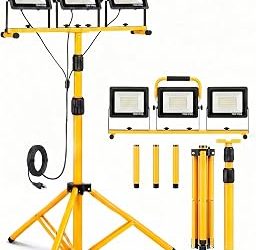
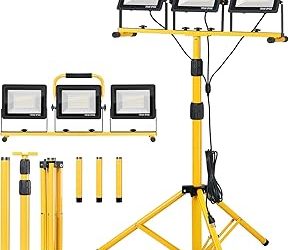
Zetunlo 21000-Lumen 3-Head Tripod Work Light
Three independently rotating heads and a 16-foot cord make this the most flexible option here for large, awkward spaces where you need to kill shadows from multiple angles. The IP66 sealing and sturdy tripod mean it handles a driveway or unfinished basement without complaint.
14000-Lumen 2-Head Foldable Tripod Work Light
My default recommendation for a home garage or single-room renovation: bright enough to work comfortably without turning the space into an interrogation room. The foldable tripod stores flat, which matters if your storage is a wall hook rather than a shelf.
32000-Lumen 4-Head Work Light with Remote and 3000K–6000K Adjustment
This is the one I point sleep-conscious buyers toward. The tunable 3000K–6000K range plus remote control let you shift to warmer, lower-intensity light as the evening wears on — and at 280W across four heads, it has more than enough reach for serious construction work.
21000-Lumen 3-Head Tripod Worklight, 48″–72″ Adjustable
The generous 48″–72″ height range and 360° head rotation give you genuinely precise placement, which is the whole point of a tripod light. IP66 rated and stable underfoot, it’s a dependable pick for job-site use.
Magnetic Rechargeable LED Work Light, 2-Pack
Not a replacement for a tripod light, but indispensable alongside one: all-aluminum build, magnetic mount, 1500 lumens, seven modes, and a digital battery readout. Perfect for engine bays, crawl spaces, and anywhere a cord won’t follow.
Frequently Asked Questions
Does working under bright LED light at night affect my sleep?
It can. Intense cool-white light in the hours before bed suppresses melatonin and can delay sleep onset by a meaningful margin. If you work late regularly, choose a light with adjustable color temperature and dial it toward 3000K after sunset.
How many lumens do I really need?
For a standard two-car garage, 10,000–14,000 lumens is ample. Larger workshops and outdoor sites benefit from 21,000 and up, but aim the heads at ceilings or walls to diffuse the output rather than staring into it directly.
What does IP66 mean in practice?
It certifies the housing is fully dust-tight and resistant to high-pressure water jets. In real terms: safe in rain, safe around sawdust, and safe for a quick hose-down.
Are rechargeable work lights bright enough on their own?
Handhelds in the 1500-lumen range excel at close, targeted tasks but can’t light a room. Pair one with a corded tripod model — most professionals I speak with carry both.
Final Thoughts
If you want one light that covers nearly everything, the 32000-Lumen 4-Head model with remote and 3000K–6000K adjustment is the smartest buy in this group — the tunable color temperature protects your sleep as effectively as the output protects your eyes. For a typical home garage, the 14000-Lumen 2-Head foldable tripod hits the right balance of brightness and footprint, and the 2-pack of magnetic rechargeable lights is a small investment that pays off the first time you’re working under a hood.