Key takeaways
- Standard 8-foot ceilings: a pole extending to around 48 inches is plenty, such as the DRQ or SetSail models.
- 9-foot ceilings: look for the 13-to-49.7-inch adjustable option or the FONUNO duster, which extends to 50 inches with a gray low-lint sleeve.
- Vaulted or stairwell fans: step up to a dedicated 6-foot/72-inch extension pole duster, which also handles crown molding and cobwebs.
What's inside
Most people think of a ceiling fan as a comfort appliance. From a sleep-wellness perspective, it’s closer to a piece of respiratory equipment that runs six to nine hours a night directly above your face. Cool, moving air helps your core temperature drop on schedule — the physiological trigger that ushers in deep sleep — but that same airflow lifts whatever has settled on the blades and disperses it into your breathing zone. Dust on a fan blade isn’t inert fuzz. It’s a composite of skin cells, textile fibers, pet dander, dust mite waste, and pollen tracked in from outdoors. When the blades spin, that mixture becomes an aerosol you inhale for the entire night.
The result is often mistaken for something else: a stuffy nose at 3 a.m., a scratchy throat on waking, a lingering morning headache, or a child who suddenly starts coughing only in bed. This guide walks through a repeatable cleaning method that actually removes the buildup instead of relocating it, explains how to choose the right tool for your ceiling height, and lays out a maintenance rhythm that keeps your bedroom air clean without turning into another chore you dread. No ladders required for most homes.
As an Amazon Associate we earn from qualifying purchases.


Why Dry Dusting Beats Wet Wiping (At First)
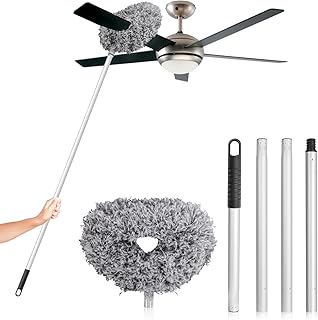
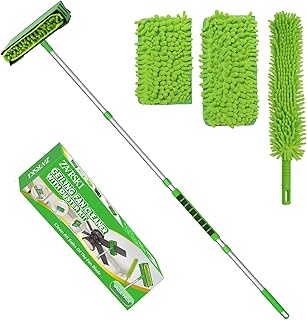
The instinct is to grab a damp cloth, but moisture on a heavily loaded blade creates a gray slurry that smears into the wood grain and drips onto your mattress. Always begin dry. A dense microfiber sleeve traps particles electrostatically and holds them rather than flinging them airborne — which matters enormously if you’re cleaning in the room where you sleep. Sleeve-style tools like the DRQ Ceiling Fan Cleaner Duster and the SetSail Ceiling Fan Duster are built around this principle: the U-shaped head slides over the blade and grips both surfaces simultaneously, so the top face is captured in the same pass as the bottom. Only after the loose layer is gone should you follow with a lightly dampened cloth for the film that remains.
Match Pole Reach To Your Ceiling, Not Your Height
The single biggest reason people skip this task is that the tool doesn’t comfortably reach, so cleaning becomes a ladder project. Measure from the floor to the underside of your blades, then subtract your comfortable overhead arm reach — roughly 24 inches above your head. That’s your minimum pole length.
- Standard 8-foot ceilings: a pole extending to around 48 inches is plenty, such as the DRQ or SetSail models.
- 9-foot ceilings: look for the 13-to-49.7-inch adjustable option or the FONUNO duster, which extends to 50 inches with a gray low-lint sleeve.
- Vaulted or stairwell fans: step up to a dedicated 6-foot/72-inch extension pole duster, which also handles crown molding and cobwebs.
Work In A Sequence That Contains The Mess
Order of operations determines whether you’re cleaning or redistributing. Strip the bedding and remove pillows first, or drape an old sheet across the mattress — anything you’ll be lying on for eight hours shouldn’t collect fallout. Switch the fan off and let the blades come to a complete stop. Clean one blade fully from the motor housing outward toward the tip, following the natural direction of the airflow. Then rotate the blade assembly by hand to bring the next one into position, which spares you from walking around the bed. Finish with the motor housing and the pull chains, which collect surprising amounts of grime from hands.
Don’t Forget The Awkward Geometry
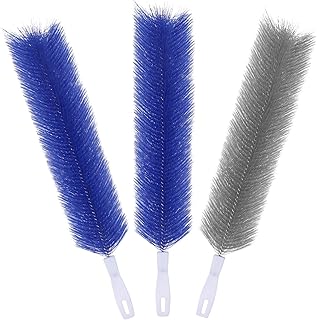
Flat sleeve dusters excel on standard paddle blades but struggle with the tight curves of a bladeless tower fan, a caged floor fan, or the recessed edge where a blade meets its bracket. A set of bendable cobweb brushes — like the 3-piece flexible microfiber set — solves this by letting you shape the head to the obstacle. These are also the right tool for the ceiling vent register near the bed, which is often a larger contributor to nighttime congestion than the fan itself.
Tips
- Clean the fan in the morning, not at bedtime — give any disturbed particles several hours to settle before you lie down beneath them.
- Machine wash microfiber sleeves separately with no fabric softener; softener coats the fibers and destroys their grabbing ability permanently.
- Set a recurring reminder tied to something you already do, like changing your HVAC filter, so it never becomes a “someday” job.
- If you run the fan year-round, dust every two to three weeks; seasonal users can stretch to monthly and do a deep clean when they first switch it on.
Frequently Asked Questions
How often should bedroom fan blades be cleaned?
Every two to three weeks for a fan in nightly use. Bedrooms generate more airborne skin and fabric fiber than any other room, so buildup accelerates there faster than in a living room.
Can dusty fan blades really affect sleep quality?
Indirectly but meaningfully. Airborne allergens trigger nasal inflammation, and nasal congestion fragments sleep architecture by forcing mouth breathing and increasing micro-arousals. Reducing the particle load overhead is a low-effort lever on sleep continuity.
Is a damp cloth necessary, or is dusting enough?
Dusting suffices for routine upkeep. Add a lightly damp pass two or three times a year to lift the sticky residue that dry microfiber leaves behind, especially in kitchens or humid climates.
Why do my blades wobble more after cleaning?
Uneven dust acts as ballast. Removing it can reveal a pre-existing imbalance, usually fixed by tightening the blade bracket screws or fitting an inexpensive balancing clip.
Conclusion
Cleaning ceiling fan blades takes under ten minutes with the right extendable microfiber duster, and it’s one of the few home maintenance tasks with a direct, measurable payoff in how you feel at 6 a.m. Choose a pole that reaches your ceiling without a ladder, always dust dry before you dampen, and build the habit into an existing routine — your airway will register the difference long before your eyes notice the blades are clean.