Key takeaways
- Motor type: Insist on a DC motor. It draws substantially less power than an older AC unit, runs noticeably quieter at low speeds, and typically offers six speeds instead of three — which matters enormously when you want gentle overnight circulation rather than a wind tunnel.
- Blade span vs. room size: A 52-inch fan suits most bedrooms and mid-sized living rooms. Reach for 60 inches only if your space exceeds roughly 400 square feet; oversizing a small room creates turbulence and a fan you’ll never run above speed two.
- Selectable color temperature: A 3CCT fan lets you keep the light around 2700K in the evening and switch to a cooler tone for daytime tasks. Warm, dim light in the hours before bed supports your natural melatonin rhythm — a genuinely useful feature, not a spec-sheet gimmick.
- Mounting clearance: Blades should sit at least seven feet off the floor with eight to ten inches of clearance above them. Ceilings under nine feet call for a flush-mount or low-profile design; anything taller benefits from a downrod to bring air into the occupied zone.
- Control method: Remotes are standard now. App and voice control add real convenience if you want scheduled ramp-downs or the ability to shut the fan off without leaving the bed — just confirm the fan retains its last settings after a power cut.
What's inside
Most people shop for a ceiling fan the way they shop for a lightbulb — grab something that fits the budget, screw it in, forget about it. Then July arrives, the bedroom sits at 76°F at midnight, and that bargain fan turns out to hum at a frequency that lives rent-free in your skull at 2 a.m. From a sleep-wellness perspective this is a genuine problem: core body temperature has to drop roughly one to two degrees for sleep to consolidate, and air movement is the cheapest way to help that happen. A fan that’s too loud, too dim to be useful, or too weak to move air across a bed undermines the one job you bought it for.
This guide looks at value-priced ceiling fans through that lens — quiet operation, tunable light color, and enough airflow to matter — rather than just chasing the lowest sticker. Below you’ll find the models worth your attention, followed by a short buying framework, individual assessments, and answers to the questions that actually determine whether you’ll be happy with your purchase a year from now.
As an Amazon Associate we earn from qualifying purchases.



How to Choose a Price Ceiling Fan (2026)
- Motor type: Insist on a DC motor. It draws substantially less power than an older AC unit, runs noticeably quieter at low speeds, and typically offers six speeds instead of three — which matters enormously when you want gentle overnight circulation rather than a wind tunnel.
- Blade span vs. room size: A 52-inch fan suits most bedrooms and mid-sized living rooms. Reach for 60 inches only if your space exceeds roughly 400 square feet; oversizing a small room creates turbulence and a fan you’ll never run above speed two.
- Selectable color temperature: A 3CCT fan lets you keep the light around 2700K in the evening and switch to a cooler tone for daytime tasks. Warm, dim light in the hours before bed supports your natural melatonin rhythm — a genuinely useful feature, not a spec-sheet gimmick.
- Mounting clearance: Blades should sit at least seven feet off the floor with eight to ten inches of clearance above them. Ceilings under nine feet call for a flush-mount or low-profile design; anything taller benefits from a downrod to bring air into the occupied zone.
- Control method: Remotes are standard now. App and voice control add real convenience if you want scheduled ramp-downs or the ability to shut the fan off without leaving the bed — just confirm the fan retains its last settings after a power cut.
The Best Price Ceiling Fan (2026)s Reviewed
52″ Modern Ceiling Fan with Lights and Remote
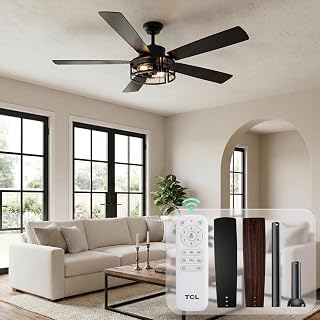
This is the sensible default: a 52-inch span, reversible DC motor, 3CCT lighting, and a remote, with nothing exotic to fail. It’s the model I’d point a first-time buyer toward for a bedroom or apartment living room, since the low speeds are genuinely quiet enough to sleep beneath.
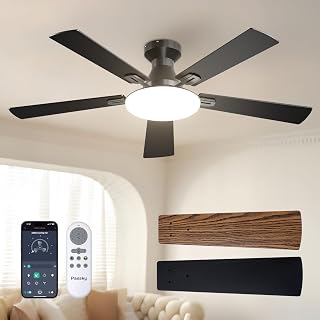
Passky 52″ Black Low Profile Flush Mount
Built for eight-foot ceilings, where a downrod fan would loom over the room and clip taller heads. The dimmable three-color light and app control make it easy to dial in a warm, low-output setting for the evening, and the memory function means you aren’t resetting it every time the breaker trips.
VONLUCE 52″ Wood Ceiling Fan, Nickel
Three solid wood blades and a brushed nickel housing give this one a warmer look than the usual matte-black offerings, and the full-spectrum light source is unusually pleasant at this price. Six speeds plus a timer make it a strong overnight performer — set it to shut off before the pre-dawn temperature dip.
60″ Walnut Farmhouse Ceiling Fan
The right choice for larger, open rooms where a 52-inch fan simply can’t reach the corners. Walnut-finish blades and a quiet DC motor deliver farmhouse styling without the rattle that afflicts cheaper five-blade designs.
52″ Smart Outdoor Ceiling Fan, Dark Walnut
Damp-rated construction and full Alexa, Google, and Wi-Fi support make this the pick for a covered porch or screened sleeping area. Voice control earns its keep outdoors, where you’re rarely holding the remote.
Frequently Asked Questions
Is sleeping with a ceiling fan on bad for you?
For most people, no. Moving air aids the overnight drop in body temperature that sleep depends on. If you wake with a dry throat or stiff neck, don’t switch the fan off — lower the speed, angle airflow away from your head, or use the timer to stop it a few hours in.
Which direction should the blades turn?
Counterclockwise in summer, pushing air downward for a cooling breeze. Clockwise on low in winter, drawing air up and redistributing warm air pooled near the ceiling. Every fan here reverses from the remote.
Are wood blades better than plastic?
Solid wood blades tend to be stiffer and less prone to flutter, and they look considerably better. The practical difference in airflow is modest — motor quality and blade pitch matter more.
Can I install one myself?
If your ceiling has a fan-rated electrical box and you’re comfortable working with the power off, yes — most of these ship with bracket systems designed for solo installation. If the existing box only supports a light fixture, hire an electrician.
Final Thoughts
For most bedrooms, the 52″ Modern Ceiling Fan with Lights and Remote covers the essentials at the lowest cost of entry. The VONLUCE 52″ Wood Ceiling Fan is worth the small step up for its better light quality and timer, while low-ceiling rooms are best served by the Passky 52″ Low Profile — a flush mount you’ll actually run every night rather than a fan you’ll learn to duck around.