Key takeaways
- Dimming range, not just “dimmable”: A knob dimmer that only drops to 40% still reads as “awake” light. Look for fixtures with a continuous dimmer or stepless control so you can get down to a candle-like glow for the last stretch of the evening.
- Color temperature under 3000K at night: Warm white (2200K–2700K) is the target for the hour before sleep. Tunable models let you run cooler light for morning reading and dial it amber after dark, which is the more flexible setup for a bedroom that doubles as a workspace.
- Shade material and beam direction: Fabric and frosted or amber glass soften output and keep the bulb filament out of your direct line of sight. Bare-bulb or clear-glass designs look great in photos but create glare at eye level when you’re lying down.
- Switch placement and cord length: An inline cord switch is easy to find in the dark; a body-mounted knob requires reaching up. Measure from the sconce location to your outlet and add slack — 5 to 6 feet is typical, and a short cord forces awkward placement.
- Mounting height and adjustability: Aim for the light source roughly 4 to 5 feet off the floor beside a bed, or about 12 to 18 inches above the mattress. Swing arms and adjustable heads let you aim light onto a page instead of into your partner’s face.
What's inside
Anyone who has tried to read in bed under a ceiling fixture knows the compromise: the light is either directly overhead and glaring, or the room is so dim that your book turns into a chore. And if your bedside table has no outlet-adjacent lamp space — or you’re renting and can’t touch the wiring — the usual advice to “install a sconce” is useless. That’s the gap plug-in wall sconces fill, and it’s a bigger deal for sleep than most people realize. Bright, blue-heavy overhead light in the final hour before bed suppresses melatonin and pushes your internal clock later; warm, low-mounted, low-intensity light does the opposite.
This guide looks at plug-in sconces through a sleep-wellness lens rather than a purely decorative one. I’ve prioritized fixtures with genuine dimming range, warm or tunable color temperature, shade materials that diffuse rather than throw hot spots, and switches you can actually reach without sitting up. Below you’ll find the current standouts, followed by a short buying framework and answers to the questions that come up most often.
As an Amazon Associate we earn from qualifying purchases.


How to Choose a Plug-In Wall Sconce (2026)
- Dimming range, not just “dimmable”: A knob dimmer that only drops to 40% still reads as “awake” light. Look for fixtures with a continuous dimmer or stepless control so you can get down to a candle-like glow for the last stretch of the evening.
- Color temperature under 3000K at night: Warm white (2200K–2700K) is the target for the hour before sleep. Tunable models let you run cooler light for morning reading and dial it amber after dark, which is the more flexible setup for a bedroom that doubles as a workspace.
- Shade material and beam direction: Fabric and frosted or amber glass soften output and keep the bulb filament out of your direct line of sight. Bare-bulb or clear-glass designs look great in photos but create glare at eye level when you’re lying down.
- Switch placement and cord length: An inline cord switch is easy to find in the dark; a body-mounted knob requires reaching up. Measure from the sconce location to your outlet and add slack — 5 to 6 feet is typical, and a short cord forces awkward placement.
- Mounting height and adjustability: Aim for the light source roughly 4 to 5 feet off the floor beside a bed, or about 12 to 18 inches above the mattress. Swing arms and adjustable heads let you aim light onto a page instead of into your partner’s face.
The Best Plug-In Wall Sconces (2026), Reviewed
Yunaking Plug-In Wall Sconces, Set of Two
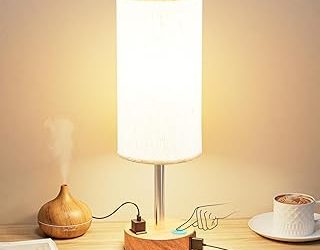
The stepless color temperature control is the standout feature here, letting you slide from a crisp working white down to a genuinely warm amber without swapping bulbs. Paired with a linen shade that diffuses evenly and an on/off cord switch, it’s the most sleep-friendly pick for a bedroom that has to work all day and wind down at night.
VATONI Dimmable Sconces, Gold (2-Pack)
The adjustable-angle head is the differentiator: you can tilt light down onto a book and away from a sleeping partner, which solves the single most common complaint about fixed sconces. The knob dimmer gives smooth low-end control, and the gold finish stays understated enough for most bedside setups.
Yisuro Oil-Rubbed Bronze Sconce with Amber Glass
Amber glass does a lot of quiet work here, shifting the perceived light warmer and taking the edge off the filament even at higher output. It’s the best single choice for people sensitive to glare, and the rustic bronze body suits hallways and bathrooms where you want visibility without a jolt of brightness at 2 a.m.
VATONI Swing Arm Sconces, Brushed Brass
A true swing arm means you can pull the light in for reading and push it flat against the wall when you’re done — the most functional option for narrow bedsides with no table surface. The globe diffuser keeps output soft, and the included bulbs pair well with the dimmer knob.
Dimmable Sconces, White Fabric Shade, Antique Brass
A clean, unfussy pair with the two things that matter most: real dimming and a fabric shade that produces no hot spots. The included LED bulbs are a nice touch, though check their color temperature and swap to 2700K if you want a warmer nighttime read.
Lomoky Vintage Wood Sconces, Set of Two
The 5.25-foot switched cord gives you more placement freedom than most, and the wood-and-metal body reads warm rather than industrial. Best treated as ambient or accent lighting — pair it with a low-lumen warm bulb rather than expecting task-level brightness.
Frequently Asked Questions
Are plug-in sconces bright enough to read by?
Yes, provided you choose the right bulb. Most of these fixtures accept standard E26 bulbs, so 450–800 lumens at 2700K gives comfortable page-level light without overwhelming a small bedroom. The fixture determines diffusion and aim; the bulb determines output.
How do I hide the cord?
Paintable adhesive cord channels are the cleanest renter-friendly option, and most sconces in this category ship with cord clips. Running the cord straight down behind a nightstand or headboard usually conceals it entirely with no hardware at all.
Will they damage the wall?
Standard mounting uses two small screws with drywall anchors, leaving holes that patch in minutes. Lighter fixtures can sometimes be hung on heavy-duty adhesive strips, though check the fixture weight against the strip rating first.
Does warm light actually improve sleep?
Light intensity and spectrum in the evening both influence melatonin timing, and lower, warmer light is consistently the better choice before bed. A dimmable warm sconce won’t fix insomnia on its own, but it removes one common obstacle to falling asleep easily.
Final Thoughts
For most bedrooms, the Yunaking set is the strongest all-around pick thanks to its stepless color temperature control — the single most useful feature for aligning your lighting with your sleep schedule. If your priority is aiming light precisely, the VATONI swing arm model earns its place, and the Yisuro amber-glass sconce remains the best answer for anyone who finds conventional bedside lamps too harsh.