Key takeaways
- Fuel source and hookup reality: If you’re plugged into a 30-amp pedestal, a 1500W electric ceramic heater is the simplest, driest, most sleep-friendly option. If you’re dry camping off battery and solar, electric resistance heat is a non-starter — a single night would drain most lithium banks. That’s where propane radiant heaters earn their place.
- Oxygen depletion and CO protection: Any combustion heater in a camper needs a low-oxygen sensor (ODS) and cracked-window ventilation, plus a working carbon monoxide alarm mounted at sleeping height. Treat this as non-negotiable rather than cautious advice. Many experienced RVers run propane heat only while awake and switch to electric or heavy bedding overnight.
- Thermostat precision over raw wattage: A heater that holds within a degree or two of setpoint protects sleep far better than one with more BTUs. Look for PTC ceramic elements with a real digital thermostat and ECO mode, which modulates output instead of blasting and stalling.
- Noise floor and light pollution: Campers amplify sound. Aim for units rated in the low 40 dB range, and check whether the display can be dimmed or shut off. A bright blue LED two feet from your pillow suppresses melatonin as effectively as a phone screen.
- Tip-over and overheat cutoffs plus a low center of gravity: Floors flex, dogs move, and rigs shift. Choose a wide, stable base with dual safety shutoffs and keep a clear perimeter from bedding, curtains, and upholstery.
What's inside
Ask anyone who has spent a February night in a camper and they’ll describe the same broken sleep: the 3 a.m. wake-up when the furnace cycles off, the shivering half-hour spent deciding whether it’s worth leaving the sleeping bag, the condensation beading on the window inches from your face. Cold isn’t just uncomfortable in a small space — it fragments sleep architecture. Your body needs a stable ambient temperature to hold onto deep, slow-wave sleep, and an RV’s thin walls and single-pane glass shed heat far faster than a bedroom at home. A propane furnace that roars on and off all night, or a cheap heater that swings ten degrees between cycles, keeps pulling you toward the surface of sleep even when you never fully wake.
This guide looks at camper heating specifically through the lens of rest quality: how steadily a unit holds temperature, how much noise it adds to an already echo-prone space, what it does to humidity, and — most importantly — how safely it can run in a sealed sleeping area. We cover both electric ceramic models for shore power or generator use and vented-safe propane radiant heaters for boondocking, plus the trade-offs that matter when your bed is six feet from the heat source.
As an Amazon Associate we earn from qualifying purchases.



How to Choose a Space Heater For Camper (2026)
- Fuel source and hookup reality: If you’re plugged into a 30-amp pedestal, a 1500W electric ceramic heater is the simplest, driest, most sleep-friendly option. If you’re dry camping off battery and solar, electric resistance heat is a non-starter — a single night would drain most lithium banks. That’s where propane radiant heaters earn their place.
- Oxygen depletion and CO protection: Any combustion heater in a camper needs a low-oxygen sensor (ODS) and cracked-window ventilation, plus a working carbon monoxide alarm mounted at sleeping height. Treat this as non-negotiable rather than cautious advice. Many experienced RVers run propane heat only while awake and switch to electric or heavy bedding overnight.
- Thermostat precision over raw wattage: A heater that holds within a degree or two of setpoint protects sleep far better than one with more BTUs. Look for PTC ceramic elements with a real digital thermostat and ECO mode, which modulates output instead of blasting and stalling.
- Noise floor and light pollution: Campers amplify sound. Aim for units rated in the low 40 dB range, and check whether the display can be dimmed or shut off. A bright blue LED two feet from your pillow suppresses melatonin as effectively as a phone screen.
- Tip-over and overheat cutoffs plus a low center of gravity: Floors flex, dogs move, and rigs shift. Choose a wide, stable base with dual safety shutoffs and keep a clear perimeter from bedding, curtains, and upholstery.
The Best Space Heater For Camper (2026)s Reviewed
Xtreme Heaters Boat Cabin RV Heater
Purpose-built for marine cabins and RV interiors, this low-profile unit draws air from the top rather than the floor, which keeps dust and debris out and lets it sit flush against a wall or under a dinette bench. The 750W setting is the standout for overnight use — quiet, steady, and enough to take the bite out of a small camper without tripping a shared circuit.
DREO Space Heater with Oscillation
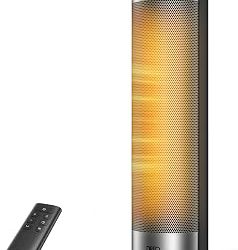
The 70-degree oscillation solves a genuine camper problem: distributing warmth down a narrow galley instead of roasting one bunk. Its ECO mode and 12-hour timer make it the most set-and-forget option here, and the remote means you never have to leave the covers to make an adjustment.
VOCRS 1500W PTC Heater with Thermostat
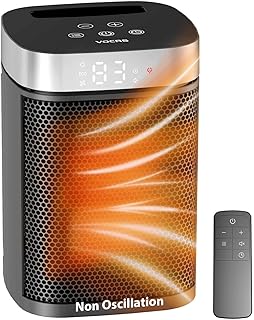
A compact, no-drama ceramic heater with a genuinely usable thermostat and separate fan mode, which doubles as air circulation in shoulder-season heat. The small footprint suits teardrops and vans where floor space is measured in inches.
JIBUFI Oscillating Portable Heater
Very close in capability to the DREO, with five modes and rapid PTC warm-up that takes a chilled camper from unpleasant to livable in ten to fifteen minutes. Choose it if you want oscillation and a slightly lower price point without giving up thermostat control.
Mr. Heater 9,000 BTU Portable Buddy
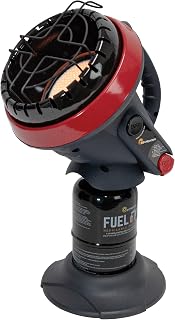
The benchmark for off-grid warmth: radiant propane heat that runs on a one-pound cylinder, with an oxygen depletion sensor and tip-over shutoff. Use it to warm the rig before bed with a window cracked, then shut it down — it’s superb evening heat, not overnight heat.
Frequently Asked Questions
Can I safely sleep with a heater running in my camper?
With a modern electric ceramic heater on a stable surface, dual safety cutoffs, and clearance from fabrics, most people do so routinely. Combustion heaters are a different category — the accepted practice is to run them while awake and ventilated, never unattended overnight.
What temperature is best for sleep in an RV?
Roughly 60 to 67°F suits most sleepers, because core body temperature needs to drop slightly to initiate sleep. Chasing 72°F in a camper wastes power and often makes rest worse, not better.
Will an electric heater trip my campground breaker?
A 1500W heater pulls about 12.5 amps. On a 30-amp hookup you can usually run one alongside modest loads, but not simultaneously with an air conditioner, microwave, or a second heater. The 750W setting is your friend.
Do these heaters help with condensation?
Electric heaters add no moisture and, by raising surface temperatures, meaningfully reduce window condensation. Unvented propane heaters release water vapor as they burn, so pair them with active ventilation or expect damp bedding.
Final Thoughts
For plugged-in campers where sleep quality is the priority, the Xtreme Heaters RV unit is the most thoughtfully engineered choice, with the DREO oscillating heater a close and more affordable second thanks to its thermostat precision and quiet operation. If you spend your nights off-grid, keep a Mr. Heater Portable Buddy aboard for pre-bed warmth — used with ventilation and a CO alarm, it’s the difference between a miserable evening and a comfortable one.