Key takeaways
- Rechargeable bars — mount magnetically in seconds, no drilling, no cords, and can move to a closet, pantry, or stair landing. Battery life means periodic recharging. The MCGOR 10inch 2 Pack and the RUIKORING 8.5″ 6 Pack sit here; the six-pack is the efficient answer if you’re lighting several small zones at once.
- Wired kits — plug-in or hardwired, always on when you want them, and considerably brighter. The 12-inch 6-bar kit at 2000 lumens is genuinely task-grade output for chopping and reading recipes, and it can be hardwired for a finished look.
What's inside
Most of us choose kitchen lighting the way we choose a countertop — for looks, for brightness, for how it photographs. But as someone who spends their working life untangling why people can’t fall asleep, I’d argue that the little strip of light under your upper cabinets does more for your circadian rhythm than almost any other fixture in the house. It’s the light you use at 6 a.m. filling the kettle, and the light you use at 11 p.m. rinsing a glass. Those two moments ask completely opposite things of your nervous system, and a single harsh overhead panel can’t serve both.
This guide looks at under-cabinet lighting through that lens: color temperature and why it matters after dark, the practical split between rechargeable pucks and wired strips, how motion sensing keeps you from flooding your eyes with light at 2 a.m., and where dimming genuinely earns its keep. You’ll also get installation notes, four tips I give clients, and answers to the questions that come up most. Below are the picks I keep coming back to when people ask what to actually buy.
As an Amazon Associate we earn from qualifying purchases.


Start With Color Temperature, Not Brightness
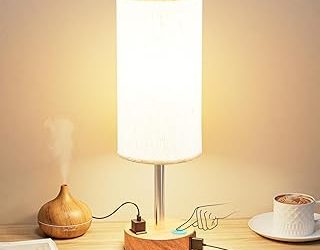
Kelvin rating is the single most consequential spec on the box, and it’s the one shoppers skim past. Cooler light in the 5000–6500K range is rich in short-wavelength blue, which is exactly what suppresses melatonin and signals “daytime” to the suprachiasmatic nucleus. That’s wonderful at breakfast and counterproductive at midnight. Warm light around 2700K carries far less of that signal. If your under-cabinet lights are the last thing you’ll switch on before bed, prioritize warmth: the WOBANE Under Cabinet LED Lighting Kit commits fully to a hidden 2700K warm white, which makes it a comfortable evening companion. If you want flexibility instead, tunable units like the Gritin 10.2inch Rechargeable pack three color temperatures, so you can run cool and crisp during prep and switch to amber for the wind-down hours.
Rechargeable Pucks Versus Wired Strips
These are two different products solving two different problems, and confusing them causes most buyer’s remorse.
- Rechargeable bars — mount magnetically in seconds, no drilling, no cords, and can move to a closet, pantry, or stair landing. Battery life means periodic recharging. The MCGOR 10inch 2 Pack and the RUIKORING 8.5″ 6 Pack sit here; the six-pack is the efficient answer if you’re lighting several small zones at once.
- Wired kits — plug-in or hardwired, always on when you want them, and considerably brighter. The 12-inch 6-bar kit at 2000 lumens is genuinely task-grade output for chopping and reading recipes, and it can be hardwired for a finished look.
Motion Sensing Is a Sleep Feature
This sounds like a convenience spec. It isn’t. The worst thing you can do to a half-asleep body is walk into a dark kitchen and hit a ceiling switch — a blast of overhead light through dilated pupils fragments your return to sleep and can push your rhythm later over time. A low, warm strip that wakes when you approach and shuts off on its own gives you enough light to navigate without that jolt. Both the MCGOR bars and the 3-Pack Wireless Motion Sensor lights handle this well, and the latter’s power display saves you from discovering a dead battery at the exact moment you needed it.
Dimming, Beam Placement, and Glare
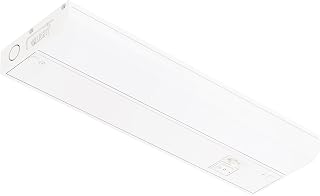
Five-level dimming, offered on the MCGOR, Gritin, and RUIKORING units, is not a gimmick — it’s how one fixture serves both a bright morning and a dim night. Equally important is where the light lands. Mount bars toward the front edge of the cabinet underside so the beam falls on the counter rather than reflecting off a glossy backsplash into your eyes. Diffused or recessed housings, like WOBANE’s hidden-profile design, prevent the visible dot-glare that makes a kitchen feel like a workshop. If you can see the LED itself from a standing position, the light is mounted wrong.
Installation and Control
Magnetic and adhesive units need a clean, degreased surface — kitchen cabinet undersides collect an invisible film of cooking oil that defeats adhesive within weeks. Wipe with isopropyl alcohol first. For strip kits, plan your cord run before you peel anything, and use the supplied clips to hide wiring along the cabinet’s back edge. RF remotes, as on the WOBANE kit, work through cabinet doors where infrared won’t, and built-in timers let the lights shut themselves down at a fixed hour, which is a quietly effective way to enforce your own bedtime.
Tips
- Set your dimmest setting as the default after sunset. If you have to reach for the dimmer every night, you won’t.
- Recharge battery bars on a fixed weekly rhythm — Sunday evening, alongside other reset routines — rather than waiting for them to fade.
- Add one warm bar inside a pantry or closet before you add a second in the kitchen. Small dark spaces benefit most per dollar.
- Test your chosen light at night, in the dark, before committing to the mount. Daytime impressions are misleading.
Frequently Asked Questions
How many lumens do I need under my cabinets?
For real task work, aim for roughly 200–300 lumens per linear foot of counter. A 2000-lumen six-bar kit covers a standard run comfortably. Battery pucks deliver less and are better understood as accent and navigation lighting.
Will warm 2700K light look yellow and dingy?
Against white cabinetry it reads noticeably golden at first, then normalizes within a day or two as your eyes adapt. If it still bothers you, choose a tunable unit and run 4000K by day, 2700K at night.
Do these lights actually affect sleep, or is that overstated?
Evening light exposure measurably delays melatonin onset — the effect is real, though dose-dependent. Reducing intensity matters as much as shifting color. A dim warm strip is a meaningfully smaller signal than a bright ceiling fixture.
Is hardwiring worth it over plug-in?
Only if visible cords genuinely bother you or you’re already renovating. Plug-in performance is identical, and it keeps the whole system renter-friendly and reversible.
Conclusion
Choose under-cabinet lighting the way you’d choose a mattress: for how it treats you at the edges of the day, not just how it looks in the showroom. Prioritize warm or tunable color temperature, get dimming you’ll actually use, add motion sensing wherever you walk in the dark, and mount toward the front edge to kill glare. Do those four things and a modest strip of LEDs will improve both your cooking and your sleep — which is a rare return on a small purchase.