Key takeaways
- Match capacity to canopy, not tent size: Transpiration scales with leaf mass and light intensity. A two-plant 2×2 in late veg may only shed a litre a day; a flowering 4×4 under 600W can push past 10L. Undersizing means the unit runs continuously and never satisfies; oversizing means short, loud cycles that dry your leaf surfaces unevenly.
- Interrogate the noise profile, not just the decibel number: A 45 dB compressor with a low-frequency thrum and hard start-stop transients is far more sleep-disruptive than a steady 48 dB fan. Thermoelectric (Peltier) units have no compressor at all — the quietest option if your moisture load is modest and your space is genuinely sealed.
- Insist on continuous gravity drainage: Small tanks are the single biggest failure point. A 2L reservoir on a heavy flowering night fills before sunrise, the unit shuts off, and humidity spikes during the most vulnerable hours. Route a hose to a floor drain or bucket and forget about it.
- Prioritise a remote sensor probe: Ambient readings taken at the dehumidifier’s own intake are already dried air. A probe placed at canopy height gives your controller the number that actually predicts mildew, and prevents the unit from idling while your buds sit in a humid microclimate.
- Consider heat rejection and where it goes: Every dehumidifier is a net heater. In a bedroom-adjacent tent that extra thermal load can push your sleeping space above the 16–19°C range most people rest best in. Ducted units let you exhaust that heat where it won’t reach your mattress.
What's inside
Most people discover their grow tent has a humidity problem at 2 a.m. A tent tucked into a bedroom closet or spare-room corner behaves like a small weather system: plants transpire all night, the air saturates, and that moisture doesn’t politely stay behind the zipper. It migrates. As someone who spends most of my working hours on sleep environments, I see the downstream effects long before anyone blames the plants — a bedroom sitting at 65% relative humidity instead of the 40–50% range that supports comfortable thermoregulation, a musty note in the air that fragments breathing, condensation blooming on window frames, and a compressor cycling loudly enough to pull a sleeper out of slow-wave sleep every forty minutes.
This guide approaches grow tent dehumidifiers with that dual mandate: protect your canopy from powdery mildew and bud rot, and protect the room’s sleep quality while you’re at it. Below I’ve assessed the units worth your money in 2026 — from app-controlled 12L/day workhorses to sealed-cabinet Peltier kits quiet enough to sit two feet from a pillow — with notes on noise character, drainage, controller intelligence, and how each one actually behaves overnight rather than on a spec sheet.
As an Amazon Associate we earn from qualifying purchases.


How to Choose a Dehumidifier For Grow Tents (2026)
- Match capacity to canopy, not tent size: Transpiration scales with leaf mass and light intensity. A two-plant 2×2 in late veg may only shed a litre a day; a flowering 4×4 under 600W can push past 10L. Undersizing means the unit runs continuously and never satisfies; oversizing means short, loud cycles that dry your leaf surfaces unevenly.
- Interrogate the noise profile, not just the decibel number: A 45 dB compressor with a low-frequency thrum and hard start-stop transients is far more sleep-disruptive than a steady 48 dB fan. Thermoelectric (Peltier) units have no compressor at all — the quietest option if your moisture load is modest and your space is genuinely sealed.
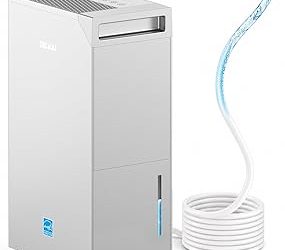
- Insist on continuous gravity drainage: Small tanks are the single biggest failure point. A 2L reservoir on a heavy flowering night fills before sunrise, the unit shuts off, and humidity spikes during the most vulnerable hours. Route a hose to a floor drain or bucket and forget about it.
- Prioritise a remote sensor probe: Ambient readings taken at the dehumidifier’s own intake are already dried air. A probe placed at canopy height gives your controller the number that actually predicts mildew, and prevents the unit from idling while your buds sit in a humid microclimate.
- Consider heat rejection and where it goes: Every dehumidifier is a net heater. In a bedroom-adjacent tent that extra thermal load can push your sleeping space above the 16–19°C range most people rest best in. Ducted units let you exhaust that heat where it won’t reach your mattress.
The Best Dehumidifier For Grow Tents (2026)s Reviewed
VIVOSUN AeroDrain D12 Smart Dehumidifier
The D12’s 12L/day capacity and app-based scheduling make it the most complete pick for a serious 4×4 or 5×5, and the included sensor probe means it responds to canopy conditions rather than its own exhaust. Auto-restart after a power blip is a genuinely underrated feature if your tent runs while you sleep.
AC Infinity HYDRONE 5
Ten discrete speed steps and a PWM rotary motor give the HYDRONE 5 something almost no competitor offers: the ability to hold a target without lurching between full-blast and silence, which is precisely what keeps it out of your sleep architecture. Dual duct ports let you evict its waste heat from the room entirely.
MARS HYDRO 38 Pints Plant Dehumidifier
At 18L/day, this is the heavyweight here and the right call for dense flowering rooms or multi-tent setups where moisture load overwhelms smaller units. Use the drain hose rather than the 2.1L tank, and site it away from bedroom walls — it’s effective, not subtle.
Small Grow Tent Dehumidifier Auto Kit
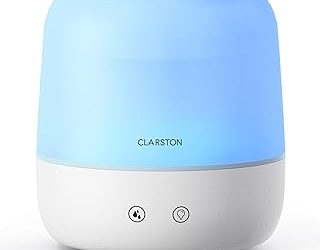
A sealed-cabinet thermoelectric kit with genuine humidity control and auto shut-off, ideal for propagation boxes, small closets, or anyone who cannot tolerate compressor noise at night. Its ceiling is low, so treat it as precision maintenance rather than bulk moisture removal.
Grow Tent Dehumidifier with Smart Controller
The standout feature is the external heating or cooling interface, which turns this from a dehumidifier into a small climate controller for confined spaces. Worth the setup effort if you’re managing both temperature and humidity in a closet that shares a wall with your bed.
Frequently Asked Questions
What humidity should I target inside a grow tent?
Roughly 65–70% for seedlings and early veg, tapering to 45–50% through flowering and as low as 40% in the final fortnight. Sitting above 60% during late flower is where bud rot risk climbs sharply.
Will a grow tent dehumidifier affect the air in my bedroom?
Yes, in both directions. A properly sized unit reduces the moisture leaking out of your tent and often improves the room’s overall humidity. An undersized one loses that battle while adding heat and noise — the worst of both outcomes.
Can I run it inside the tent or should it sit outside?
Inside is more effective because it treats the air your plants actually occupy. If heat becomes a problem, move it just outside the tent with intake ducted in, or choose a ducted model.
Are thermoelectric units powerful enough for a real grow?
For a two-plant tent, a propagation cabinet, or humidity maintenance in a sealed space, yes. For a flowering 4×4, no — you need compressor or refrigerant-based capacity.
Final Thoughts
For most growers balancing plant health against a quiet home, the AC Infinity HYDRONE 5 is the best overall choice thanks to its granular speed control and ducted heat rejection, while the VIVOSUN AeroDrain D12 offers the smartest control package for larger tents. If your moisture load is heavy and the tent lives away from sleeping areas, step up to the MARS HYDRO 38 Pints and plumb it to a drain.