Key takeaways
- Recline range and locking: A 135° tilt suits reading and light rest; 155°–170° approaches true horizontal for deeper recovery. Infinite-position locking beats fixed notches, since the ideal angle for winding down is rarely the one an engineer preset for you.
- Footrest depth and height: Extend it fully and check whether your heels clear the edge. A shallow slide-out that stops mid-calf creates a pressure point behind the knee, which is exactly where you don’t want compression during rest.
- Head and neck support: When you lean past 120°, the headrest becomes the load-bearing surface. Prioritize models with vertical and angular adjustment so the pad meets the base of your skull rather than shoving your chin toward your chest.
- Lumbar adjustability: Two-way lumbar (depth plus height) lets you keep the curve of your lower back filled as the backrest angle changes. Fixed foam blocks tend to lose contact the moment you recline.
- Base stability and weight rating: Deep recline shifts your center of gravity rearward. A steel base and a capacity rating comfortably above your body weight — 300 lb minimum, more for taller frames — is what keeps a lean from feeling precarious.
What's inside
Anyone who has ever tried to steal fifteen minutes of rest at a desk knows the problem: an ordinary office chair forces your neck into a strained angle, leaves your legs dangling, and interrupts recovery just as it begins. From a sleep-wellness standpoint, that matters more than most buyers realize. Short daytime rest works best when the body can settle into a neutral, gently inclined posture with the legs supported — the same principle behind elevating your feet at night to ease circulation. A chair that reclines but strands your calves in midair only solves half the equation.
This guide looks at reclining office chairs with built-in footrests through that lens: how far they lean, how well they hold that lean, and whether the leg support is genuinely usable or an afterthought. Below you’ll find current picks for 2026, a practical checklist for evaluating recline mechanisms and lumbar hardware, and answers to the questions readers ask most often about resting in a chair without sabotaging their nighttime sleep.
As an Amazon Associate we earn from qualifying purchases.


How to Choose a Reclining Office Chair With Footrest (2026)
- Recline range and locking: A 135° tilt suits reading and light rest; 155°–170° approaches true horizontal for deeper recovery. Infinite-position locking beats fixed notches, since the ideal angle for winding down is rarely the one an engineer preset for you.
- Footrest depth and height: Extend it fully and check whether your heels clear the edge. A shallow slide-out that stops mid-calf creates a pressure point behind the knee, which is exactly where you don’t want compression during rest.
- Head and neck support: When you lean past 120°, the headrest becomes the load-bearing surface. Prioritize models with vertical and angular adjustment so the pad meets the base of your skull rather than shoving your chin toward your chest.
- Lumbar adjustability: Two-way lumbar (depth plus height) lets you keep the curve of your lower back filled as the backrest angle changes. Fixed foam blocks tend to lose contact the moment you recline.
- Base stability and weight rating: Deep recline shifts your center of gravity rearward. A steel base and a capacity rating comfortably above your body weight — 300 lb minimum, more for taller frames — is what keeps a lean from feeling precarious.
The Best Reclining Office Chairs With Footrest (2026) Reviewed
amseatec Big and Tall Office Chair with Footrest
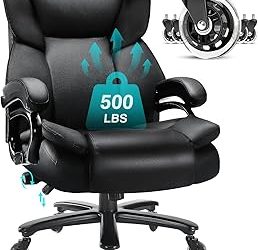
The infinite lock across 90°–135° is the standout here, letting you fine-tune the angle by degrees instead of settling for the nearest preset. Twenty spring packs in the seat give it a mattress-like give that distributes weight evenly, which is why it suits longer sits and larger frames particularly well.
Ergonomic Mesh Chair with 3D Armrest and Steel Base
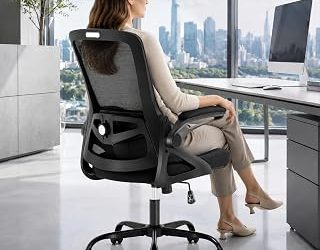
A strong pick for warm rooms or anyone who wakes up overheated, since the breathable mesh back prevents the heat buildup that leather tends to trap during extended rest. The 3D armrests and adjustable lumbar mean you can rebuild your support setup as you move between upright work and a 135° lean.
M30 Reclining Office Chair, 170-Degree
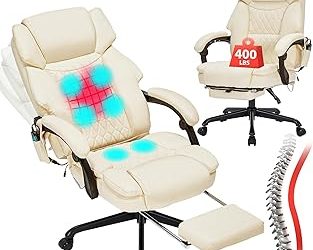
At 170° this comes closer to a flat sleeping surface than almost anything in the category, making it the most credible choice for genuine daytime naps rather than shallow rest. The 420 lb steel base is reassuringly planted, and the adjustable headrest earns its keep at those near-horizontal angles.
Reclining Leather Executive Chair, 90–155° (Brown)
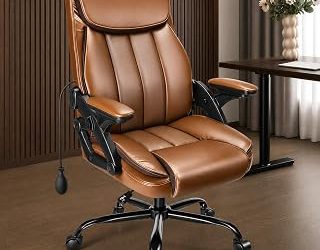
Thick padded leather and a 155° range strike a sensible middle ground between a work chair and a lounger, with enough recline for real recovery without dominating a small home office. The brown finish reads as furniture rather than gaming gear, which matters if your desk shares space with a bedroom.
CYKOV Ergonomic Office Chair with 4-Way Headrest
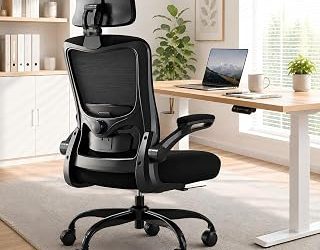
The adjustment specifics are what set this apart: 4.72 inches of headrest travel plus 60° of tilt, and two-way lumbar with both depth and height movement. That granularity lets you dial in neck and lower-back contact precisely, and the five-year warranty suggests the hardware is built to survive repeated recline cycles.
Frequently Asked Questions
Is napping in a reclining office chair actually restorative?
Yes, provided the angle is right. Research on inclined rest suggests reclining past roughly 120° with the legs supported allows the muscles to release and the nervous system to downshift. Keep these naps to 20 minutes, or extend to a full 90-minute cycle — the middle ground tends to leave you groggy.
Will a footrest chair replace a proper bed?
No, and it shouldn’t try to. Even a 170° recline keeps mild pressure on the spine and hips that a mattress relieves. Treat these chairs as tools for short recovery breaks, not as a nightly sleep surface.
Does leather or mesh work better for resting?
Mesh wins on thermoregulation, and body temperature is closely tied to how easily you drift off. Leather offers more cushioning and a more formal look, so choose it if your room stays cool or you rest only briefly.
How late in the day should I use the recline function?
Avoid extended reclined rest within about six hours of bedtime. Late-afternoon naps drain the sleep pressure your body has been accumulating, which is one of the most common hidden causes of trouble falling asleep at night.
Final Thoughts
If genuine daytime rest is your priority, the M30 with its 170° near-flat recline is the clearest choice in this group. The amseatec Big and Tall is the better all-day work chair thanks to its infinite locking and spring-pack seat, while the CYKOV offers the most precise headrest and lumbar adjustment for anyone who wants to tune their support angle by angle. Any of the three will let you rest properly at your desk — just keep those breaks short and early enough that they support your nighttime sleep instead of competing with it.