Key takeaways
- Flame color range, not just flame count: Marketing loves big numbers — 30 or 60 combinations — but what matters is whether the palette includes a genuinely warm amber or orange-only mode. Cool blues and violets are fun for a party and counterproductive at 10 p.m. Prioritize units that let you drop to a single warm hue at low brightness.
- Fan noise and heat independence: The heating element is the noisy part. Any unit worth buying runs flames with the heater completely off, which is how you’ll use it nine months a year and most evenings. If you plan to place it in or near a bedroom, treat “low noise” claims skeptically and check owner reports for blower whine.
- Thermostat versus fixed wattage: A true adjustable thermostat holds a set temperature instead of blasting 1,500W and shutting off. Sleep researchers generally point to the mid-60s Fahrenheit as an ideal sleeping range, so being able to warm a room to 68 and stop matters more than raw output.
- Framing depth and wall type: Recessed installation is cleaner and safer, but many slim units require specific stud depth. Confirm whether your wall is 2×4 or 2×6 before committing, and remember that most electric fireplaces need a dedicated or lightly loaded circuit at full heat.
- Timers, scheduling, and voice control: A 24-hour timer or WiFi schedule lets the fireplace fade out on its own, which removes one more decision from your wind-down routine. Automation you set once beats a remote you have to find.
What's inside
Most people shop for an electric fireplace with their eyes and forget about their nervous system. They picture the glow, the resale-friendly focal wall, the way a bare living room finally looks finished — and then they install a unit that hums at 42 decibels, throws blue-white light until midnight, and cycles its blower on and off like a distant lawnmower. As someone who spends most working hours helping people troubleshoot their evenings, I can tell you that the last two hours before bed are where a fireplace either earns its keep or quietly sabotages you. Warm, low, flickering light in that window supports the natural drop in core body temperature and the rise in melatonin that make sleep arrive easily. Harsh light and mechanical noise do the opposite.
This guide looks at the recessed and wall-mounted electric fireplaces that homeowners are actually buying in 2026, and evaluates them the way I would evaluate a bedroom lamp or a white-noise machine: how warm is the light at its lowest setting, how quiet is the fan, how granular is the heat control, and can you turn everything down without turning it off? A note on the title — “Consumer Reports best” is how many shoppers phrase this search, but the picks and commentary below are mine, based on specs, owner feedback patterns, and sleep-environment principles rather than any third-party testing lab’s ratings.
As an Amazon Associate we earn from qualifying purchases.



How to Choose a Consumer Reports Best Electric Fireplace (2026)
- Flame color range, not just flame count: Marketing loves big numbers — 30 or 60 combinations — but what matters is whether the palette includes a genuinely warm amber or orange-only mode. Cool blues and violets are fun for a party and counterproductive at 10 p.m. Prioritize units that let you drop to a single warm hue at low brightness.
- Fan noise and heat independence: The heating element is the noisy part. Any unit worth buying runs flames with the heater completely off, which is how you’ll use it nine months a year and most evenings. If you plan to place it in or near a bedroom, treat “low noise” claims skeptically and check owner reports for blower whine.
- Thermostat versus fixed wattage: A true adjustable thermostat holds a set temperature instead of blasting 1,500W and shutting off. Sleep researchers generally point to the mid-60s Fahrenheit as an ideal sleeping range, so being able to warm a room to 68 and stop matters more than raw output.
- Framing depth and wall type: Recessed installation is cleaner and safer, but many slim units require specific stud depth. Confirm whether your wall is 2×4 or 2×6 before committing, and remember that most electric fireplaces need a dedicated or lightly loaded circuit at full heat.
- Timers, scheduling, and voice control: A 24-hour timer or WiFi schedule lets the fireplace fade out on its own, which removes one more decision from your wind-down routine. Automation you set once beats a remote you have to find.
The Best Consumer Reports Best Electric Fireplace (2026)s Reviewed
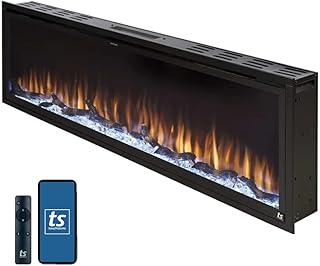
Touchstone Sideline 50″ Smart Recessed Fireplace
The most sensible all-rounder here: 30 ember and flame options include restrained warm settings, the 1,500W heater runs on a real thermostat rather than a crude high/low, and Alexa and WiFi control mean you can dim it from the couch without breaking a wind-down routine. The 50-inch width suits standard living rooms and bedrooms without dominating the wall.
Touchstone Sideline Elite Smart 60″
Effectively the Sideline with more room to tune — 60 color combinations plus log, crystal, and driftwood media, so you can build a genuinely amber, low-contrast look for late evenings. Worth the upgrade if the fireplace sits in a bedroom or media room where you’ll be looking at it directly for hours.
Ambe Linear 72″ with Real Wood Log Set
The Midwest hardwood log set and deep ember bed give this the most convincing low-light realism in the group, and the hidden vent design keeps airflow from drawing attention to itself. It’s the choice for a large open-plan room where the fireplace is the visual anchor.
Westinghouse 60″ Electric Fireplace Heater
Strong value for a 60-inch recessed or wall-mounted unit, with a 24-hour timer, 750W/1500W selectable heat, and Alexa and Google Home compatibility. Color-changing flames trend cooler than the Touchstones, so plan to settle on one warm preset.
R.W.FLAME 60″ Recessed and Wall-Mounted
Designed to fit 2×6 stud bays with adjustable flame color and speed, plus a touch screen and timed remote. Owners consistently single out how quiet it runs on flame-only mode, which makes it a reasonable bedroom candidate at a mid-tier price.
Frequently Asked Questions
Is it safe to leave an electric fireplace on while sleeping?
Flame-only mode draws very little power and is generally considered safe to leave running, though a timer is still smarter. Running the heater overnight is a different question: it can push the room above a comfortable sleeping temperature and cause fragmented sleep, so schedule the heat to shut off before bed.
Will the flame light keep me awake?
It depends entirely on brightness and color. A dim amber flame is closer to firelight or candlelight and is unlikely to suppress melatonin meaningfully; a bright blue-white display at full intensity is much more like a screen. Choose a unit with independent brightness control and use it.
How much does an electric fireplace cost to run?
At 1,500W and average U.S. electricity rates, expect roughly 20 cents per hour of full heat. Flame-only operation typically costs pennies per evening, which is why most owners run the visuals far more than the heater.
Recessed or wall-mounted — which is better?
Recessed looks better and keeps the unit flush and out of traffic paths, but requires cutting into the wall and confirming stud depth. Wall mounting is renter-friendlier and far easier to reverse; both perform identically.
Final Thoughts
If you want one recommendation, the Touchstone Sideline 50″ is the safest buy — thermostat control, warm flame options, and genuine smart-home integration in a size that fits most rooms. Step up to the Sideline Elite 60″ if you’ll be watching it nightly and want maximum control over color and brightness, or choose the Ambe Linear 72″ if you’re filling a large wall and want the most realistic ember bed available. All three let you keep the glow low, warm, and quiet in the hours that matter most for sleep.