Key takeaways
- Selectable color temperature: Look for 5CCT fixtures spanning roughly 2700K to 5000K. Warm settings for evening rooms, cooler for stairs and work zones. A single fixed 6000K light in a bedroom is a circadian liability, however crisp it looks in photos.
- Dimming floor, not just dimming range: “Dimmable” often means down to 20%, which is still far too bright an hour before bed. Fixtures rated to 5% or 10% give you a genuine wind-down setting without adding lamps.
- Beam control and glare geometry: On a vaulted ceiling you frequently view fixtures from below and to the side. Recessed wafers with deep baffles or aimable spots keep the emitter out of your direct line of sight; bare acrylic discs at height can create a persistent bright spot in peripheral vision.
- Slope compatibility and mounting depth: Confirm whether the fixture tolerates an angled surface or needs a sloped-ceiling adapter. Canless ultra-thin downlights are forgiving in tight joist bays; flush mounts need a flat plane or a level mounting block.
- Layering over lumen-stacking: One 100W centerpiece rarely serves a vaulted room well. Combine an ambient fixture with a few aimable accents so you can drop to a low, warm layer at night rather than choosing between full brightness and darkness.
What's inside
Vaulted ceilings do something wonderful for a room’s proportions and something unfortunate to its lighting. The extra vertical distance means a fixture that would flood a standard eight-foot bedroom sits too far away to do its job, so people compensate with brighter bulbs and cooler color temperatures. From a sleep-wellness perspective that’s the worst possible trade: high-intensity, blue-weighted light in the evening suppresses melatonin release and pushes your circadian timing later, which is why so many homeowners with beautiful angled ceilings report lying awake at eleven feeling oddly wired.
The fix isn’t more light — it’s better-placed, better-tuned light. This guide looks at fixtures that work with sloped and vaulted architecture, with particular attention to selectable color temperature, genuine low-end dimming (the number that actually matters after sunset), and glare control at the angles your eyes meet the fixture. Below you’ll find picks for bedrooms, stairwells, living rooms, and the awkward transitional spaces vaulted homes tend to have, plus what to check before you buy.
As an Amazon Associate we earn from qualifying purchases.


How to Choose a Light For Vaulted Ceiling (2026)
- Selectable color temperature: Look for 5CCT fixtures spanning roughly 2700K to 5000K. Warm settings for evening rooms, cooler for stairs and work zones. A single fixed 6000K light in a bedroom is a circadian liability, however crisp it looks in photos.
- Dimming floor, not just dimming range: “Dimmable” often means down to 20%, which is still far too bright an hour before bed. Fixtures rated to 5% or 10% give you a genuine wind-down setting without adding lamps.
- Beam control and glare geometry: On a vaulted ceiling you frequently view fixtures from below and to the side. Recessed wafers with deep baffles or aimable spots keep the emitter out of your direct line of sight; bare acrylic discs at height can create a persistent bright spot in peripheral vision.
- Slope compatibility and mounting depth: Confirm whether the fixture tolerates an angled surface or needs a sloped-ceiling adapter. Canless ultra-thin downlights are forgiving in tight joist bays; flush mounts need a flat plane or a level mounting block.
- Layering over lumen-stacking: One 100W centerpiece rarely serves a vaulted room well. Combine an ambient fixture with a few aimable accents so you can drop to a low, warm layer at night rather than choosing between full brightness and darkness.
The Best Light For Vaulted Ceiling (2026)s Reviewed
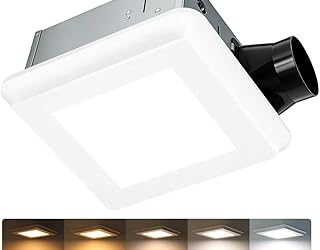
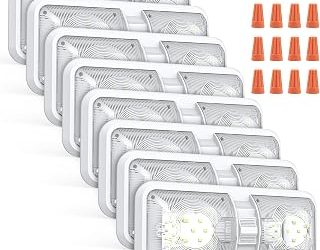
Ensenior 12-Pack 6″ LED Recessed Wafer Downlights
The most sleep-friendly approach to a vaulted room is a distributed grid of recessed lights rather than one distant fixture, and this 12-pack makes that affordable — 5CCT selection plus 5%–100% dimming means you can run 5000K over a stairwell and 2700K at a whisper in a bedroom. The canless design and included junction box simplify retrofits in shallow or angled joist cavities.
Shine LUEST 39.4″ Dimmable LED Flush Mount
For great rooms where a vault meets a broad flat span, this oversized dimmable disc delivers enough output to reach the floor without pushing the lamp aggressively bright. The remote control is more than a convenience: being able to dim from the sofa is what makes people actually taper their light levels in the evening.
12″ LED Flush Mount, 3200LM, 4-Pack
At 0.67″ deep with five selectable color temperatures, these are the practical choice for the flat sections, closets, and hallways that surround most vaulted spaces. Buying four keeps the color temperature consistent across adjacent rooms, which matters more for visual comfort than most buyers expect.
Multi-Directional Adjustable 3-Light Ceiling Spot
A semi-flush aimable trio is the smartest answer to a sloped plane: you can bounce light up the vault to lift the ceiling or aim it at artwork and reading chairs. That directional control lets you illuminate a task without lighting your whole visual field at bedtime.
Dimmable Ceiling Spotlight, CRI≥98, 3000K
With near-perfect color fidelity, warm 3000K output, and dimming to 10%, this cylinder spot is a specialist’s pick for wardrobes, reading nooks, and anywhere you judge color. It is the fixture I’d recommend for the evening layer in a vaulted bedroom.
Frequently Asked Questions
What color temperature is best for a vaulted bedroom?
Stay at 2700K–3000K for evening use. If the room doubles as a workspace, choose a selectable-CCT fixture and reserve 4000K or above for daytime hours only.
Can I use flush mounts on a sloped ceiling?
Only where the surface is flat or you install a sloped-ceiling adapter or level mounting block. Otherwise the canopy won’t seat properly and the light throw will be lopsided.
How many recessed lights does a vaulted room need?
As a rough guide, space 6″ downlights about four to five feet apart, then add roughly 15–20% more output than you’d use at eight feet to account for the extra distance — but pair that with deep dimming so you’re not stuck at full brightness.
Do bright ceiling lights really affect sleep?
Yes. Evening exposure to bright, short-wavelength light delays melatonin onset and shifts sleep timing later. Dimming and warming your ceiling light in the two hours before bed is one of the cheapest sleep interventions available.
Final Thoughts
For most vaulted spaces, the Ensenior 12-pack of 5CCT wafer downlights is the strongest overall value — distributed, tunable, and dimmable to a genuinely low floor. Pair it with the Multi-Directional 3-Light Spot for aimable accent work on sloped planes, and add the CRI≥98 warm spotlight where color accuracy and a gentle evening layer matter most.