Key takeaways
- Adjustable lumbar, not fixed foam: A bump molded into the backrest only helps if it happens to land at your L3–L5 curve. Look for lumbar support that slides vertically and ideally adjusts in depth, so you can dial it to your own spine rather than the average of a thousand strangers.
- Recline range and tilt lock: Sitting bolt upright all day is its own kind of strain. A 90–120° tilt with lockable positions lets you shift load off the discs periodically — the same principle behind changing sleep positions instead of holding one all night.
- Headrest geometry: A good headrest cradles the occiput and lets the neck stay neutral. A 2D or 3D adjustable headrest is worth prioritizing; a fixed one set too far forward will quietly feed forward-head posture and next-morning neck ache.
- Breathable mesh over sealed padding: Heat retention makes you fidget, and fidgeting masks itself as discomfort. Elastic mesh keeps skin temperature down during long sessions — the same thermoregulation logic that governs good bedding.
- Armrest behavior and weight rating: Flip-up arms let you tuck close to the desk and prevent shoulder shrugging; 3D arms are better still. A 330 lb capacity rating generally signals a sturdier base and gas lift, which translates to less wobble a year from now.
What's inside
Most people who wake up stiff blame their mattress. But if you spend eight or nine hours a day folded into a chair that pushes your pelvis backward and your head forward, your spine has already been loaded for a full shift before you ever lie down. As someone who spends most days helping clients troubleshoot restless nights, I’ve learned that the desk chair is one of the most overlooked variables in the whole picture — chronic low-back tension and upper-trap tightness don’t switch off at bedtime, and they’re a big reason people toss for the first hour after lights-out.
The good news: you don’t need a four-figure task chair to fix this. The sub-$200 category has matured quickly, and several mesh ergonomic models now offer genuine lumbar adjustment, real recline range, and headrests that support the base of the skull rather than shoving it forward. Below I’ve gathered the strongest options I’d actually recommend to a client, plus the specific features worth paying attention to and the ones that are mostly marketing.
As an Amazon Associate we earn from qualifying purchases.


How to Choose an Ergonomic Office Chair Under $200 (2026)
- Adjustable lumbar, not fixed foam: A bump molded into the backrest only helps if it happens to land at your L3–L5 curve. Look for lumbar support that slides vertically and ideally adjusts in depth, so you can dial it to your own spine rather than the average of a thousand strangers.
- Recline range and tilt lock: Sitting bolt upright all day is its own kind of strain. A 90–120° tilt with lockable positions lets you shift load off the discs periodically — the same principle behind changing sleep positions instead of holding one all night.
- Headrest geometry: A good headrest cradles the occiput and lets the neck stay neutral. A 2D or 3D adjustable headrest is worth prioritizing; a fixed one set too far forward will quietly feed forward-head posture and next-morning neck ache.
- Breathable mesh over sealed padding: Heat retention makes you fidget, and fidgeting masks itself as discomfort. Elastic mesh keeps skin temperature down during long sessions — the same thermoregulation logic that governs good bedding.
- Armrest behavior and weight rating: Flip-up arms let you tuck close to the desk and prevent shoulder shrugging; 3D arms are better still. A 330 lb capacity rating generally signals a sturdier base and gas lift, which translates to less wobble a year from now.
The Best Ergonomic Office Chairs Under $200 (2026), Reviewed
Marsail Ergonomic Office Chair with 2D Headrest
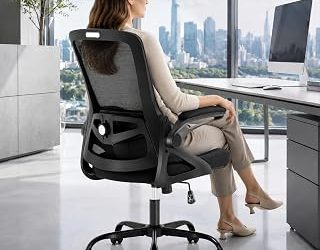
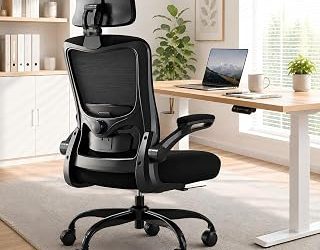
This is the most complete package in the group: adjustable armrests, a contoured seat cushion that reduces pressure on the sit bones, and a headrest that actually moves in two planes so you can find true neck neutral. If you routinely recline to read or take calls, this is where I’d start.
Marsail High Back Mesh Chair with 3D Armrests
The 3D armrests are the differentiator here — being able to set width and angle, not just height, keeps the shoulders down and the upper traps quiet through a long afternoon. The high mesh back also breathes well, which matters more than most buyers expect during summer work sessions.
Fizzin Mesh Office Chair with Thickened Cushion
Fizzin pairs a proper adjustable lumbar panel with a noticeably deeper seat cushion, making it a sensible pick for anyone who finds thin mesh seats unforgiving after two hours. The included headrest rounds it out for people who lean back to think.
High Back Mesh Chair with Flip-Up Armrests (330 lb Capacity)
A strong value option with a 330 lb rating and flip-up arms that let you pull right up to the desk edge, which quietly prevents the reaching-and-hunching pattern behind a lot of shoulder pain. The lumbar support adjusts, so most body types can get a reasonable fit.
Ergonomic Office Chair for Long Hours with Padded Lumbar Support
Built around one clear priority: lower-back relief across extended sittings, with a padded, height-adjustable lumbar pad and a 330 lb frame. It’s the simplest chair here, and for people whose main complaint is end-of-day lumbar ache, that focus is a feature rather than a limitation.
Frequently Asked Questions
Can a better desk chair really improve my sleep?
Indirectly, yes. Musculoskeletal discomfort is a well-documented contributor to difficulty falling asleep and to nighttime awakenings. Reducing the postural load you accumulate during the day means less residual tension to settle at bedtime — though a chair won’t compensate for poor sleep timing or a worn-out mattress.
Is mesh or a cushioned seat better?
A hybrid is ideal: elastic mesh on the backrest for airflow and dynamic support, with a moderately firm foam seat. Very soft seats feel great in the first ten minutes and then let your pelvis sink and rotate backward, which flattens the lumbar curve.
How do I set the chair up correctly?
Set seat height so hips sit level with or slightly above knees and feet rest flat. Position the lumbar support at the inward curve just above your belt line. Then lower the armrests until your shoulders drop naturally, and unlock the tilt so you can shift position throughout the day.
How long should a sub-$200 chair last?
Expect three to five years of daily use from the models here, with the gas lift and casters usually failing before the frame. Chairs with higher weight ratings and metal bases tend to sit at the longer end of that range.
Final Thoughts
If you want the most adjustability for the money, the Marsail chair with the 2D headrest is the one I’d recommend first, with the Marsail 3D-armrest model a close second for anyone whose discomfort centers on the shoulders and neck. Prefer a plusher seat for marathon sessions? The Fizzin is the comfortable middle ground — and whichever you choose, spend ten minutes actually dialing in the lumbar height and armrests. That setup step does more for how you feel at 10 p.m. than the price tag does.