Key takeaways
- Lumbar support that adapts, not just exists: A fixed foam bump helps almost no one. Look for height-adjustable or inflatable lumbar mechanisms so the curve meets your actual L3–L5 region rather than your mid-back or tailbone.
- Recline range for recovery intervals: A chair that tilts to 130–155° with a locking function lets you offload spinal pressure for five minutes every hour. These short unloading breaks reduce the accumulated muscular tension that so often surfaces as restless, position-shifting sleep.
- Seat depth and edge design: You want two to three fingers of clearance behind the knee and a waterfall front edge. Pressure on the popliteal area restricts circulation, which is a common and overlooked driver of evening leg discomfort.
- Leather type and thermal behavior: Bonded and PU leather look sharp and clean easily, but they breathe less than top-grain. If you run warm, prioritize perforation or segmented cushioning — elevated skin temperature during the day makes the body’s natural evening cooling curve less pronounced.
- Base, capacity, and armrest travel: A five-star metal base and a weight rating comfortably above your own means less micro-wobble and less stabilizing effort from your core. Height-adjustable or flip-up arms let you keep shoulders passive rather than shrugged.
What's inside
Most people who spend nine or ten hours at a desk assume their afternoon fog is a caffeine problem. In my work on sleep and circadian health, I see a different pattern: a chair that quietly forces the pelvis to roll backward, compresses the diaphragm, and turns shallow breathing into a low-grade stress signal your nervous system carries all the way to bedtime. Poor daytime seating doesn’t just make your lower back ache — it fragments your ability to wind down, because a body that never fully unloaded during the day arrives at night still braced.
This guide looks at leather office chairs specifically through that lens: which ones actually hold your spine in a neutral stack for eight-plus hours, which offer genuine recline for micro-recovery breaks, and which are built solidly enough that the support you paid for still exists in year three. Below you’ll find current picks, the specifications that matter most in 2026, and answers to the questions readers ask me most often.
As an Amazon Associate we earn from qualifying purchases.


How to Choose a Leather Office Chair For Long Hours (2026)
- Lumbar support that adapts, not just exists: A fixed foam bump helps almost no one. Look for height-adjustable or inflatable lumbar mechanisms so the curve meets your actual L3–L5 region rather than your mid-back or tailbone.
- Recline range for recovery intervals: A chair that tilts to 130–155° with a locking function lets you offload spinal pressure for five minutes every hour. These short unloading breaks reduce the accumulated muscular tension that so often surfaces as restless, position-shifting sleep.
- Seat depth and edge design: You want two to three fingers of clearance behind the knee and a waterfall front edge. Pressure on the popliteal area restricts circulation, which is a common and overlooked driver of evening leg discomfort.
- Leather type and thermal behavior: Bonded and PU leather look sharp and clean easily, but they breathe less than top-grain. If you run warm, prioritize perforation or segmented cushioning — elevated skin temperature during the day makes the body’s natural evening cooling curve less pronounced.
- Base, capacity, and armrest travel: A five-star metal base and a weight rating comfortably above your own means less micro-wobble and less stabilizing effort from your core. Height-adjustable or flip-up arms let you keep shoulders passive rather than shrugged.
The Best Leather Office Chairs For Long Hours (2026) Reviewed
Furmax High Back Executive Chair
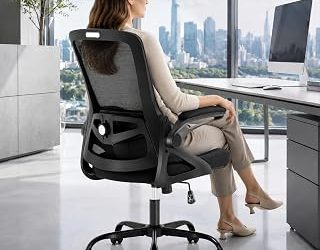
The most accessible entry point here, with a high back, PU leather, and integrated lumbar shaping that outperforms its price bracket. Best suited to workers logging four to six focused hours rather than full marathon days, since the cushioning is firmer and thinner than the premium picks.
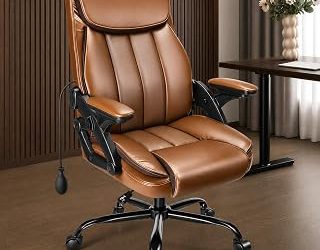
Ergonomic Leather Office Chair with Adjustable Headrest (Brown)
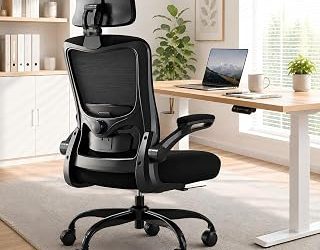
The adjustable headrest is the standout feature — it lets you support the cervical spine during reading or calls instead of craning forward, which is where most desk-related neck tension originates. Combined with padded arms and genuine lumbar contouring, it’s a strong all-day option for anyone who already carries tightness into the evening.
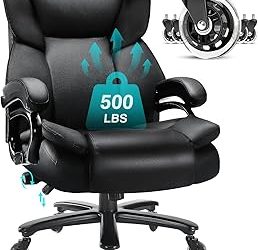
High Back Ergonomic Executive Chair with Flip Arms
Built-in adjustable lumbar support plus thick padding and a strong metal base make this a durable choice for consistent long sessions. The flip-up arms are more than a convenience feature: they let you slide fully under a desk and keep your elbows near your torso, reducing the shoulder elevation that quietly fatigues the upper back.
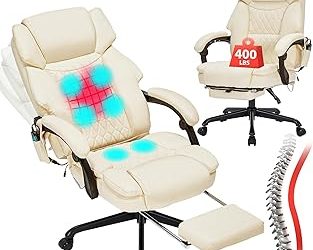
Heavy Duty Leather Chair, 400 lb Capacity
The best recovery-oriented chair on this list, thanks to a 155° locking recline and a 3-inch armrest adjustment range that accommodates a wide variety of body proportions. The 400 lb rating translates to a rigid, non-flexing frame — ideal for bigger and taller users who’ve worn out lighter chairs.
COLAMY High Back Executive Chair
The inflatable lumbar support is the sharpest ergonomic idea in this roundup, letting you dial in exactly how much lower-back curve you need and change it as the day progresses. Add tilt lock and flip-up arms, and it becomes the most genuinely customizable pick for people whose comfort needs shift between morning and late afternoon.
Frequently Asked Questions
Can my office chair really affect how well I sleep?
Indirectly, yes. Sustained poor posture keeps postural muscles under low-level load and elevates sympathetic nervous system activity, both of which make it harder to reach the relaxed state that sleep onset requires. Comfortable, well-supported sitting won’t replace good sleep hygiene, but it removes a persistent obstacle to it.
Is PU leather acceptable, or should I insist on genuine leather?
PU leather is perfectly serviceable, easy to wipe down, and often more consistent than low-grade bonded leather. Genuine top-grain breathes better and ages more gracefully; if you sit for eight hours in a warm room, that ventilation advantage is worth the added cost.
How often should I get up during a long workday?
Aim to change posture every 30 minutes and stand briefly every hour. Even a 60-second walk resets spinal disc hydration and boosts circulation — and afternoon movement helps consolidate your sleep drive for the night ahead.
Do I need a headrest?
Only if you recline. A headrest is valuable during breaks and calls, but if you sit upright the entire day, it may push your head forward. Choose an adjustable one, or skip it.
Final Thoughts
For most people working genuinely long hours, the COLAMY High Back Executive Chair offers the best support-to-price ratio because its inflatable lumbar system adapts as your body fatigues. If you’re bigger and taller or want real recline for midday recovery, the Heavy Duty 400 lb chair is the more robust investment, while the Ergonomic Leather Chair with Adjustable Headrest remains the smartest pick for anyone whose neck and shoulders are the first things to complain.