Key takeaways
- Lift height, not just “has a pump”: Check the vertical rise in feet before you buy. A pump rated to 16 feet will clear a basement window or an upstairs utility sink; a 6-foot pump will not, and you’ll be back to hauling buckets.
- Noise you can sleep beside: Anything above roughly 50 dB belongs on the other side of a wall or a floor away. If the unit must share a bedroom, prioritize a low-fan setting and place it on a rubber mat — compressor vibration transmitted through joists is what wakes people, not the fan itself.
- Humidistat quality over raw pint rating: A precise humidistat that holds 45–50% RH and cycles the compressor intelligently protects sleep better than an oversized machine that overshoots into desert-dry territory and leaves you with a raw throat.
- Auto defrost for cool spaces: Crawl spaces and unheated basements often sit in the 50s °F, where coils frost over and capacity collapses. Auto defrost is non-negotiable if temperatures dip below about 65 °F.
- Redundant drainage options: The best units offer pump, gravity hose, and bucket. Pumps are the one component most likely to fail eventually, and a gravity fallback means a failure becomes an inconvenience rather than a flood.
What's inside
Anyone who has woken up at 3 a.m. with a scratchy throat, a stuffy nose, or sheets that feel faintly damp knows that humidity is a sleep issue long before it becomes a mold issue. The sleep research is fairly consistent: the body needs to shed roughly a degree of core temperature to fall asleep and stay there, and it does that largely by evaporating moisture off the skin. When indoor relative humidity creeps past 60%, evaporation stalls, thermoregulation gets sloppy, and you get the fragmented, sweaty, unrefreshing sleep that no mattress upgrade will fix. Add dust mites — which thrive above 50% RH and are among the most common triggers of nighttime nasal congestion — and a damp basement bedroom becomes a genuine obstacle to rest.
The catch is that most people who need a dehumidifier most are the ones least likely to run one, because emptying a bucket twice a day is a chore nobody sustains. That is the entire argument for a built-in condensate pump: the unit lifts its own water up and out to a sink, window, or standpipe, so it keeps working through the humid week you’re away and the humid month you stop thinking about it. Below I’ve assessed the current crop of pump-equipped units through a sleep-environment lens — noise behavior, overnight stability, hands-off drainage, and whether the capacity actually matches the square footage on the box.
As an Amazon Associate we earn from qualifying purchases.



How to Choose a Dehumidifier With Built In Pump (2026)
- Lift height, not just “has a pump”: Check the vertical rise in feet before you buy. A pump rated to 16 feet will clear a basement window or an upstairs utility sink; a 6-foot pump will not, and you’ll be back to hauling buckets.
- Noise you can sleep beside: Anything above roughly 50 dB belongs on the other side of a wall or a floor away. If the unit must share a bedroom, prioritize a low-fan setting and place it on a rubber mat — compressor vibration transmitted through joists is what wakes people, not the fan itself.
- Humidistat quality over raw pint rating: A precise humidistat that holds 45–50% RH and cycles the compressor intelligently protects sleep better than an oversized machine that overshoots into desert-dry territory and leaves you with a raw throat.
- Auto defrost for cool spaces: Crawl spaces and unheated basements often sit in the 50s °F, where coils frost over and capacity collapses. Auto defrost is non-negotiable if temperatures dip below about 65 °F.
- Redundant drainage options: The best units offer pump, gravity hose, and bucket. Pumps are the one component most likely to fail eventually, and a gravity fallback means a failure becomes an inconvenience rather than a flood.
The Best Dehumidifier With Built In Pump (2026)s Reviewed
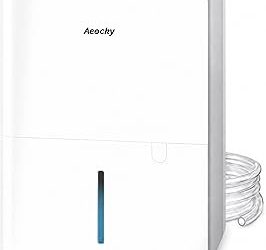
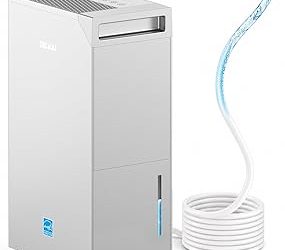
5000 Sq.Ft 100 Pint Dehumidifier with Pump
The 16.4-foot pump lift is the standout spec here — it’s the difference between a genuinely set-and-forget install and a machine that only works if you happen to have a floor drain nearby. Smart humidity control holds a target RH tightly enough that a finished basement bedroom stays comfortable rather than swinging between clammy and parched, and the ENERGY STAR certification keeps the cost of running it continuously reasonable.
Waykar 155 Pint Commercial Dehumidifier
Coverage claims up to 8,000 sq. ft. put this in a different class, and the washable filter matters more than most buyers realize: a clogged filter is the quiet reason dehumidifiers underperform in year two. The five-year coverage is unusually strong reassurance on a product whose pump is its most vulnerable part.
BSMTEK 190 Pint Industrial Dehumidifier
This is restoration-grade capacity, appropriate after a burst pipe or in a chronically wet 6,000 sq. ft. footprint where a residential unit would run permanently and never win. Overkill for a bedroom, but if you’re drying a structure before anyone sleeps in it again, aggressive extraction now prevents the mold spore load that causes respiratory symptoms later.
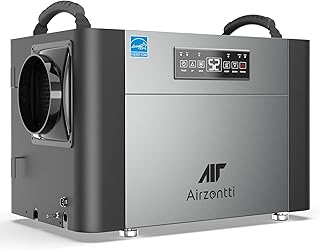
Moiswell Defender MP70 145 Pint
The compact chassis is the real feature — most high-capacity units simply won’t fit through a crawl space hatch or into a low-clearance basement corner. Auto defrost and a timer let you schedule heavy dehumidification for daytime hours and keep overnight noise down, which is a smart compromise if the unit sits below a bedroom.
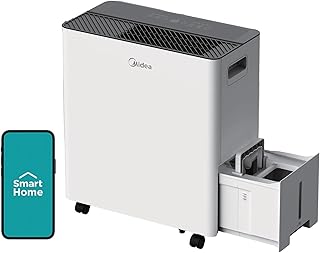
Midea 50 Pint Dehumidifier with Pump (Renewed)
For a single damp bedroom or a modest 4,500 sq. ft. of open basement, this is the sensible-sized choice, and the renewed pricing makes it an easy first purchase to see whether humidity is genuinely your sleep culprit. Midea’s fan is relatively mild-mannered on low, which helps if it must run in the same room.
Frequently Asked Questions
What humidity level is best for sleep?
Aim for 40–50% relative humidity. That range suppresses dust mites and mold while still allowing comfortable evaporative cooling and keeping nasal passages from drying out. Below about 30% you trade congestion for irritation.
Can I run a dehumidifier in the bedroom overnight?
Yes, provided the noise floor suits you. Place it several feet from the bed on a vibration-damping mat, run the low fan setting, and let the humidistat cycle it rather than running continuously on high.
How high can a built-in pump actually push water?
Typical residential pumps handle 6 to 16 feet of vertical lift. Measure from the unit to your drain point and add horizontal run length into your margin — long horizontal stretches reduce effective lift.
Does a dehumidifier help with allergies and snoring?
Often, indirectly. Reducing dust mite and mold populations lowers the inflammatory load on nasal passages, and less nasal congestion means less mouth breathing — which is a common contributor to snoring and dry-mouth awakenings.
Final Thoughts
For most homes where damp air is quietly degrading sleep quality, the 100 Pint 5000 Sq.Ft model with its 16.4-foot pump lift is the most practical choice — enough capacity for a full basement, and drainage flexible enough that it genuinely runs unattended. Step up to the Waykar 155 Pint if you’re conditioning a large or persistently wet space and want the longer warranty behind the pump, or scale down to the Midea 50 Pint for a single bedroom where quiet operation matters more than raw extraction. Whichever you choose, set the humidistat near 45%, give the pump a clear drain path, and let it work; better sleep tends to arrive within a week or two of the air drying out.