Key takeaways
- Minimum seat height: This is the single most important spec. Look for a lowest setting of 16–17.5 inches so both feet plant flat with knees at roughly 90 degrees. Dangling legs compress the back of the thigh, restrict circulation, and are a common cause of evening restlessness in the calves.
- Seat pan depth: Aim for 17–18.5 inches from backrest to front edge. If you can’t slide two fingers between the seat edge and the back of your knee, the pan is too deep — you’ll unconsciously slide forward and abandon the lumbar support entirely.
- Lumbar contour height: A mid-back chair often serves shorter users better than a tall executive model, because the curve sits at the actual small of the back. Check that the backrest’s deepest point falls at or just above your belt line.
- Armrest range and flip-up design: Armrests that won’t drop below 7 inches above the seat push the shoulders into a permanent shrug. Adjustable or flip-up arms let you set them at true elbow height, or move them out of the way for close desk work.
- Cushion density over cushion thickness: Lighter-framed users sink less, so plush foam can feel unsupportive while high-density or double-layer padding holds the pelvis level. Mesh backs earn their keep if you run warm — thermal comfort during the day helps keep your core temperature rhythm predictable.
What's inside
As a sleep-wellness practitioner, I spend most of my day talking about what happens in the eight hours people lie down — but the other sixteen matter just as much. When a chair forces you to perch on the front edge, dangle your feet, or crane forward to reach a keyboard, your hip flexors shorten, your lumbar spine flattens, and your upper back holds tension it will still be holding at 11 p.m. Shorter-framed adults feel this most acutely, because the average desk chair is dimensioned around a 5’9″ body: seat pans run 19–20 inches deep, minimum seat heights start around 18 inches, and lumbar pads land somewhere between the shoulder blades instead of the low back.
This guide approaches chair selection through that daytime-to-nighttime lens. Below you’ll find the measurements that actually matter for anyone roughly 4’10” to 5’4″, followed by hands-on assessments of six chairs — a mix of padded PU leather models and breathable mesh options — that are explicitly built or easily adapted for shorter proportions. Every recommendation is judged on seat depth, lowest achievable height, lumbar placement, and whether it supports the kind of relaxed, unclenched posture that lets your nervous system wind down on schedule.
As an Amazon Associate we earn from qualifying purchases.



How to Choose a/an Ergonomic Office Chair For Short Person (2026)
- Minimum seat height: This is the single most important spec. Look for a lowest setting of 16–17.5 inches so both feet plant flat with knees at roughly 90 degrees. Dangling legs compress the back of the thigh, restrict circulation, and are a common cause of evening restlessness in the calves.
- Seat pan depth: Aim for 17–18.5 inches from backrest to front edge. If you can’t slide two fingers between the seat edge and the back of your knee, the pan is too deep — you’ll unconsciously slide forward and abandon the lumbar support entirely.
- Lumbar contour height: A mid-back chair often serves shorter users better than a tall executive model, because the curve sits at the actual small of the back. Check that the backrest’s deepest point falls at or just above your belt line.
- Armrest range and flip-up design: Armrests that won’t drop below 7 inches above the seat push the shoulders into a permanent shrug. Adjustable or flip-up arms let you set them at true elbow height, or move them out of the way for close desk work.
- Cushion density over cushion thickness: Lighter-framed users sink less, so plush foam can feel unsupportive while high-density or double-layer padding holds the pelvis level. Mesh backs earn their keep if you run warm — thermal comfort during the day helps keep your core temperature rhythm predictable.
The Best Ergonomic Office Chair For Short Person (2026)s Reviewed
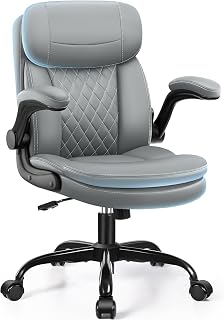
Leather Office Chair with Ergonomic Back Support for Short People
A compact PU leather model designed from the ground up around a shorter frame, with a shallow seat pan and a low starting height that lets most users under 5’4″ sit fully back without their feet leaving the floor. The 360° swivel and adjustable armrests make it easy to dial in elbow position, and the modest footprint suits a bedroom or spare-room desk where bulk is unwelcome.
Upgraded PU Chair with Double-Layer Cushion and Neckrest
The double-layer seat cushion is the standout here: it resists the bottoming-out that lighter users often experience after a few months, keeping the pelvis neutral through longer sessions. The integrated neckrest is genuinely useful for short recline breaks, though taller-than-average torsos may find it sits low.
Leather Swivel Chair with Lumbar Support in Brown
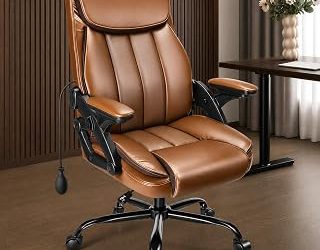
This one balances an executive look with proportions that don’t swallow a smaller frame, and the lumbar curve is placed low enough to make contact where it should. Padded arms and smooth-rolling casters round it out — a sensible pick for a shared home office where the chair needs to look the part.
Executive Chair with Lumbar Support and Flip-up Armrests
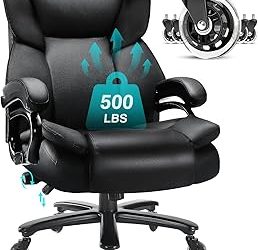
The flip-up armrests are the reason to choose this model: raising them lets you pull right up to a desk that’s slightly too high, closing the reach gap that drives forward head posture. Firm PU upholstery and a supportive lumbar panel make it a strong all-day option in classic black.
BestOffice Mid-Back Ergonomic Swivel Chair
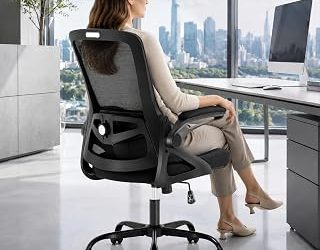
A well-judged budget entry whose mid-back design places lumbar support and shoulder clearance in the right zone for shorter users, with a breathable backrest that helps on warm afternoons. Adjustment range is basic rather than generous, so verify your desk height first.
Frequently Asked Questions
What seat height should I look for if I’m 5’0″?
Roughly 15.5–16.5 inches, measured from floor to seat top with your shoes on. Sit down and check that your thighs are parallel to the floor and your feet are flat — if the chair bottoms out higher than that, add a footrest rather than living with dangling legs.
Is mesh or PU leather better for a smaller frame?
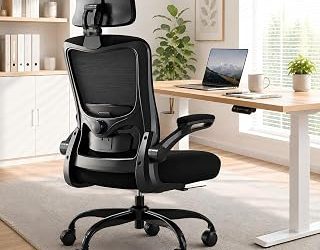
Mesh flexes and breathes, which suits warm sleepers and anyone who overheats at a desk; the high-back mesh chair with flip-up armrests is a good example. PU leather offers firmer, more structured support and wipes clean easily. Neither is inherently more ergonomic — placement of the lumbar curve matters far more.
Can a good chair really affect my sleep?
Indirectly, yes. Sustained daytime muscular tension in the hips, low back, and shoulders is a frequent contributor to difficulty settling at night, and a chair that lets you sit without bracing reduces that accumulated load. It’s one input among many, not a cure.
Should I use a footrest or a cushion instead?
A footrest is the better fix, because it addresses leg support without raising you further from your desk. Adding a cushion on top of the seat lifts you higher and usually makes the reach problem worse.
Final Thoughts
For most shorter-framed buyers, the Upgraded PU Chair with Double-Layer Cushion offers the best combination of dense, long-lasting support and short-person proportions, while the Executive Chair with Flip-up Armrests is the smarter choice if your desk sits a little too high for comfort. If breathability is your priority, the high-back mesh chair with adjustable lumbar support delivers the same postural fundamentals with far better airflow — and whichever you choose, measure your seat height first and let your feet stay flat on the floor.