Key takeaways
- Color temperature range: Look for selectable CCT spanning roughly 3000K to 6500K. The warm end (2700K–3000K) belongs to evenings and bedrooms; the cool end suits kitchens, laundry rooms, and morning routines. A fixture locked at 6000K is a poor choice anywhere you sleep.
- Genuine dimming, not just switching: Verify the fixture dims smoothly and, critically, whether it needs a compatible wall dimmer or handles dimming internally via remote. Fixtures that dim only in three preset steps rarely get low enough for pre-bed use.
- Diffusion quality: Ultra-thin panels with even, milky acrylic diffusers reduce glare far better than fixtures with visible LED hotspots. Glare from above is a common and overlooked cause of evening eye strain.
- Size against room dimensions: A rough starting point: add the room’s length and width in feet, and use that number in inches as your fixture diameter. A 7.5-inch panel suits closets and small baths; 12 to 13 inches handles bedrooms and hallways.
- Safety listing and wiring reality: Confirm ETL or UL listing, then confirm your ceiling box is wired for a hardwired fixture. Also check flicker behavior at low dim levels — visible or invisible flicker is a frequent complaint and a known headache trigger.
What's inside
Ceiling fixtures are the most-used lights in a home and the least considered. Most buyers focus on whether a fixture looks good in daylight photos, then discover its real personality at 10 p.m., when a wall of cool white floods the bedroom and the body’s melatonin release stalls out. From a sleep-wellness standpoint, the overhead light is the single most influential lamp in any room, because it sits in your upper visual field — exactly where the eye’s non-visual photoreceptors are most sensitive to blue-weighted light.
This guide evaluates flush mount ceiling lights through two lenses at once: how well they illuminate a space for real tasks, and how gracefully they let go of that brightness when the evening winds down. Below you’ll find selection criteria that matter for circadian health, short reviews of five standouts across sizes and styles, and answers to the questions that come up most often once a fixture is actually on the ceiling.
As an Amazon Associate we earn from qualifying purchases.




How to Choose a Light For Ceiling (2026)
- Color temperature range: Look for selectable CCT spanning roughly 3000K to 6500K. The warm end (2700K–3000K) belongs to evenings and bedrooms; the cool end suits kitchens, laundry rooms, and morning routines. A fixture locked at 6000K is a poor choice anywhere you sleep.
- Genuine dimming, not just switching: Verify the fixture dims smoothly and, critically, whether it needs a compatible wall dimmer or handles dimming internally via remote. Fixtures that dim only in three preset steps rarely get low enough for pre-bed use.
- Diffusion quality: Ultra-thin panels with even, milky acrylic diffusers reduce glare far better than fixtures with visible LED hotspots. Glare from above is a common and overlooked cause of evening eye strain.
- Size against room dimensions: A rough starting point: add the room’s length and width in feet, and use that number in inches as your fixture diameter. A 7.5-inch panel suits closets and small baths; 12 to 13 inches handles bedrooms and hallways.
- Safety listing and wiring reality: Confirm ETL or UL listing, then confirm your ceiling box is wired for a hardwired fixture. Also check flicker behavior at low dim levels — visible or invisible flicker is a frequent complaint and a known headache trigger.
The Best Light For Ceiling (2026)s Reviewed
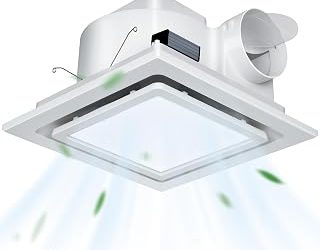
Dimmable LED Flush Mount with Remote, 12-Inch
The remote is what earns this one a bedroom recommendation: you can drop from a bright 6500K to a warm, low 3000K without leaving bed, which removes the friction that stops most people from ever adjusting their lighting. The ultra-thin profile also suits low-clearance ceilings where a semi-flush fixture would feel oppressive.
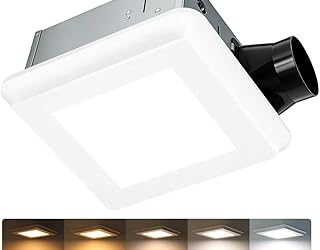
DLLT 13-Inch 5CCT Flush Mount
Five color temperature steps between 3000K and 6000K give it more evening nuance than the usual three-setting fixtures, and 24W of output is genuinely bright for a mid-size hallway or kitchen. The brushed nickel trim reads as intentional rather than builder-grade, which matters when the fixture is at eye level on a stairwell landing.
7.5-Inch Ultra Thin Round Flush Mount
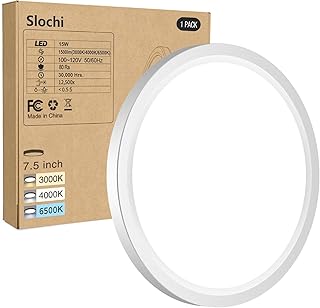
At 100W-equivalent output in a 7.5-inch body, this is the fixture to reach for in bathrooms, closets, and small entries where larger panels overwhelm the ceiling plane. The three-temperature selector means a guest bath can run cool for grooming and warm for late-night trips.
libtit 13-Inch Dimmable LED Ceiling Light
ETL listing plus a full 3000K–6500K adjustable range makes this a sensible default for whole-home consistency — buy several, tune each room differently. The slim round housing and brushed nickel finish hold up in kitchens without dating the space.
Black 2-Light Farmhouse Flush Mount with Seeded Glass
This is the character pick, and it behaves differently by design: seeded glass and warm filament-style bulbs produce sparkle and shadow rather than flat, even coverage. Pair it with your own low-color-temperature bulbs in an entryway or hallway where atmosphere matters more than lux readings.
Frequently Asked Questions
What color temperature should a bedroom ceiling light be?
Aim for 2700K–3000K in the evening. Warm, dim overhead light interferes far less with melatonin onset than cool white, and a selectable-CCT fixture lets you still access brighter, cooler light for cleaning or getting dressed on dark mornings.
Can I install a flush mount ceiling light myself?
Many people do, but it involves working at the ceiling junction box with the circuit off at the breaker. If your box lacks a ground wire, is loose, or you’re unsure of its weight rating, hire an electrician — it’s an inexpensive call.
Do LED ceiling lights need special dimmer switches?
Often, yes. Remote-dimmed fixtures like the 12-inch model above handle dimming internally and work with a standard switch, while wall-dimmed LEDs require an LED-compatible dimmer to avoid buzzing, flicker, and limited range.
How bright should the fixture be for my room size?
A general guide is 20 lumens per square foot for bedrooms and living rooms, and 40 or more for kitchens and baths. A 24W flush mount typically lands in the 2,000–2,400 lumen range, which suits rooms up to roughly 120 square feet as the primary source.
Final Thoughts
For bedrooms, the remote-controlled 12-inch dimmable flush mount is the most sleep-friendly choice here, simply because adjusting it is effortless. The DLLT 13-inch 5CCT fixture is the strongest all-rounder for hallways and kitchens, while the libtit 13-inch model is the value pick if you’re relighting several rooms at once and want consistent, ETL-listed hardware throughout.