Key takeaways
- Backrest height above the shoulders: Tall spines need the support surface to continue past the shoulder blades so the upper back isn’t cantilevered. Look for a genuinely high back plus a headrest that adjusts in height and angle — a fixed headrest set for a 5’8″ user becomes a neck-pusher on a taller frame, which is a reliable recipe for tension headaches and poor sleep posture later.
- Seat depth, not just seat width: Long femurs need roughly 19–21 inches of usable depth, with two to three fingers of clearance behind the knee. Too shallow and you perch forward, unloading the backrest entirely; too deep and the edge compresses the popliteal area. Adjustable seat depth (a sliding pan) is the single most valuable feature at this height.
- Cylinder range and true seat height: A 6’3″ user typically wants a seat that rises to 21–23 inches with feet flat. Check the maximum seat height rather than trusting the “big and tall” label, and confirm the gas lift class if you’re near the top of the range.
- Weight capacity as a proxy for build quality: A 400–500 lb rating usually means a reinforced steel or heavy-duty nylon base, a thicker cylinder, and denser foam that resists bottoming out. Even well under the limit, that overbuild is what keeps a chair from developing a lean at month eight.
- Reclining range and tilt lock: Being able to lock the backrest anywhere between roughly 90° and 120° matters more than most buyers expect. Brief reclined intervals through the afternoon offload the discs and calm the hip flexors — a small habit that meaningfully reduces the evening stiffness that fragments sleep.
What's inside
Most tall desk workers describe the same arc: the morning feels fine, the afternoon feels long, and by 9 p.m. the low back and neck are still holding the shape of a chair that was never built for a 6’4″ frame. As someone who spends most of my working life on sleep quality, I’ve come to see this as a nighttime problem with a daytime cause. A seat pan that’s too shallow forces you to perch, a backrest that stops mid-shoulder-blade leaves your neck negotiating with gravity for eight hours, and the resulting muscular tension doesn’t clock out when you do — it follows you into bed, where it shows up as restlessness, position-switching, and that specific 3 a.m. ache in the lumbar spine.
This guide looks at big-and-tall office chairs through that lens: not just which ones feel supportive for the first twenty minutes, but which ones distribute load well enough that your body isn’t still decompressing at bedtime. Below you’ll find the models worth shortlisting, a buyer’s checklist based on the dimensions that actually matter above 6 feet, honest notes on each pick, and answers to the questions I hear most from tall clients working through daytime pain and disrupted sleep.
As an Amazon Associate we earn from qualifying purchases.



How to Choose an Ergonomic Office Chair For Tall People (2026)
- Backrest height above the shoulders: Tall spines need the support surface to continue past the shoulder blades so the upper back isn’t cantilevered. Look for a genuinely high back plus a headrest that adjusts in height and angle — a fixed headrest set for a 5’8″ user becomes a neck-pusher on a taller frame, which is a reliable recipe for tension headaches and poor sleep posture later.
- Seat depth, not just seat width: Long femurs need roughly 19–21 inches of usable depth, with two to three fingers of clearance behind the knee. Too shallow and you perch forward, unloading the backrest entirely; too deep and the edge compresses the popliteal area. Adjustable seat depth (a sliding pan) is the single most valuable feature at this height.
- Cylinder range and true seat height: A 6’3″ user typically wants a seat that rises to 21–23 inches with feet flat. Check the maximum seat height rather than trusting the “big and tall” label, and confirm the gas lift class if you’re near the top of the range.
- Weight capacity as a proxy for build quality: A 400–500 lb rating usually means a reinforced steel or heavy-duty nylon base, a thicker cylinder, and denser foam that resists bottoming out. Even well under the limit, that overbuild is what keeps a chair from developing a lean at month eight.
- Reclining range and tilt lock: Being able to lock the backrest anywhere between roughly 90° and 120° matters more than most buyers expect. Brief reclined intervals through the afternoon offload the discs and calm the hip flexors — a small habit that meaningfully reduces the evening stiffness that fragments sleep.
The Best Ergonomic Office Chairs For Tall People (2026), Reviewed
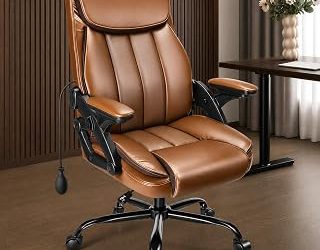
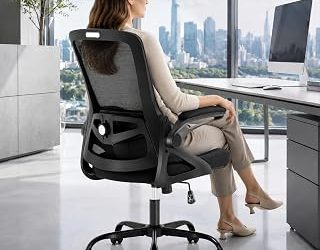
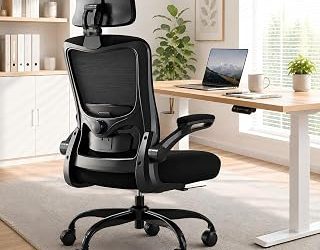
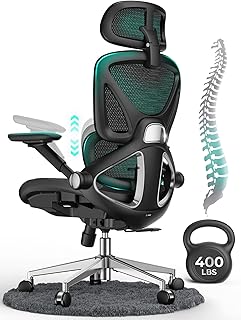
High Back Mesh Task Chair with Headrest and Flip-Up Arms
A sensible default for taller users who want breathable mesh, a wide cushion, and a 90–120° tilt lock without paying executive-chair money. The flip-up arms are a practical bonus if you tuck the chair under a desk or shift between typing and writing postures through the day.
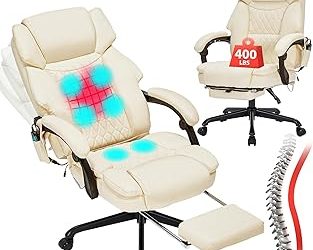
X100 Ergonomic Mesh Chair with Footrest
The standout here is the combination of 5D flip-up armrests and 3D-adjustable lumbar support, which gives long torsos room to fine-tune where the pressure lands. The retractable footrest makes it easy to take short reclined breaks — the kind that pay dividends by bedtime.
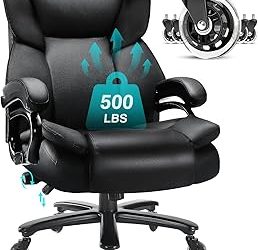
500lbs Big and Tall Executive Office Chair
Built for durability first: an extra-wide seat, thick armrest padding, a heavy-duty base and upgraded casters. If you’ve worn out lighter chairs or want padded upholstery instead of mesh, this is the structurally reassuring choice, particularly for larger frames dealing with existing back pain.
Ergonomic Mesh Chair with Footrest and Adjustable Seat Depth
My pick for long-femur users, since adjustable seat depth plus 3D armrests solves the perching problem that undermines most tall setups. The high mesh back and adjustable lumbar make it easy to dial in neutral spine alignment rather than approximating it.
Adjustable Lumbar High Back Mesh Chair (400 lbs)
A well-rounded mid-range option with 4D flip-up arms, a 3D headrest, three-position tilt and quiet PU casters. The 400 lb rating suggests a sturdier chassis than the price implies, and the headrest range genuinely accommodates taller sitters.
Frequently Asked Questions
Can my office chair really affect how well I sleep?
Indirectly but meaningfully. Sustained postural strain keeps the paraspinal and shoulder muscles in low-grade contraction, and that tension often persists into the night, increasing position changes and shallow-sleep awakenings. Reduce the daytime load and most people notice the difference within a week or two.
What seat height should I look for if I’m over 6’2″?
Aim for a chair that reaches at least 21 inches, ideally 22–23, so your hips sit slightly above your knees with feet flat. If a chair maxes out below that, you’ll compensate by rounding forward — no amount of lumbar padding fixes an under-height seat.
Is mesh or padded upholstery better for long days?
Mesh wins on thermoregulation, which matters more than people think: staying cooler through the afternoon reduces fatigue and sweat-driven fidgeting. Dense foam wins on pressure distribution for heavier frames. Choose based on whether heat or hip pressure is your limiting factor.
Do I need a footrest and a headrest?
Neither is essential, but both extend the range of postures you can hold comfortably. A headrest is the higher priority for tall users, since it supports the cervical spine during reclined intervals; a footrest simply makes those intervals easier to take.
Final Thoughts
If you want the most adaptable fit for a tall frame, start with the Ergonomic Mesh Chair with Footrest and adjustable seat depth — the sliding pan is what makes the rest of the ergonomics work. The X100 is the better choice if you value granular armrest and lumbar adjustment, while the 500lbs Big and Tall Executive Chair is the one I’d recommend for larger builds who prioritize longevity and padded support. Any of the three should leave you finishing the day with less to unwind — and sleeping better for it.