Key takeaways
- Pelvic support before lumbar support: Most “lumbar” pain begins lower, at the pelvis. Look for a backrest whose curve begins at the top of the buttocks and supports the sacrum, not one that merely presses a pad into your mid-spine.
- Recline you’ll actually use: Sitting bolt upright for eight hours loads the discs continuously. A chair that reclines to roughly 110–125° and locks there lets you offload periodically, which is why tilt-lock mechanisms are worth paying for.
- Thermal regulation: Core body temperature drives sleep pressure, and heat trapped against your back all afternoon leaves you subtly overheated and irritable by evening. Mesh breathes; thick foam and bonded leather do not.
- Seat depth and edge shape: You want two to three fingers of clearance behind the knee and a waterfall front edge. Pressure on the popliteal region restricts circulation and is a genuine contributor to that fidgety, can’t-settle feeling in the legs at night.
- Armrests that leave when asked: Fixed arms that collide with your desk force you to sit forward, unsupported. Flip-up or height-adjustable arms let you keep your elbows near 90° and your shoulders down.
What's inside
Most people who spend their days at a desk quietly accept a level of low-grade discomfort that would alarm them if it appeared anywhere else in their lives. A dull ache under the shoulder blade by 3 p.m., legs that feel restless at bedtime, a lower back that protests the moment you stand up — these are not inevitable side effects of desk work. From a sleep-wellness perspective, they matter more than most buyers realize: unresolved daytime muscular tension is one of the more common reasons people struggle to settle at night. Your body carries the shape of your chair into bed with you.
This guide looks at IKEA’s two best-known office chairs alongside a handful of well-reviewed alternatives, judged on the things that actually determine whether you finish the day loose or locked up: pelvic support, breathability, recline behaviour, and how honestly the adjustments work. Below you’ll find our current picks, followed by a short buying framework, individual assessments, and answers to the questions readers ask most.
As an Amazon Associate we earn from qualifying purchases.
![IKEA MARKUS Office chair, Adjust the height and angle of this chair so your workday feels comfortable [Vissle dark grey]](https://m.media-amazon.com/images/I/51kHkJFe2pL._AC_UL320_.jpg)


How to Choose a/an Ikea Office Chair (2026)
- Pelvic support before lumbar support: Most “lumbar” pain begins lower, at the pelvis. Look for a backrest whose curve begins at the top of the buttocks and supports the sacrum, not one that merely presses a pad into your mid-spine.
- Recline you’ll actually use: Sitting bolt upright for eight hours loads the discs continuously. A chair that reclines to roughly 110–125° and locks there lets you offload periodically, which is why tilt-lock mechanisms are worth paying for.
- Thermal regulation: Core body temperature drives sleep pressure, and heat trapped against your back all afternoon leaves you subtly overheated and irritable by evening. Mesh breathes; thick foam and bonded leather do not.
- Seat depth and edge shape: You want two to three fingers of clearance behind the knee and a waterfall front edge. Pressure on the popliteal region restricts circulation and is a genuine contributor to that fidgety, can’t-settle feeling in the legs at night.
- Armrests that leave when asked: Fixed arms that collide with your desk force you to sit forward, unsupported. Flip-up or height-adjustable arms let you keep your elbows near 90° and your shoulders down.
The Best Ikea Office Chair (2026)s Reviewed
IKEA MARKUS
The MARKUS remains the sensible default: a tall mesh back with a genuinely useful built-in lumbar curve, a headrest that supports the skull rather than shoving it forward, and a synchronised tilt that feels smooth after years of use. Its weakness is the fixed armrests, which suit some desk heights beautifully and frustrate others entirely — measure before you commit.
IKEA JÄRVFJÄLLET
The step up, and the one we’d recommend to anyone with an existing back complaint. Adjustable armrests, adjustable seat depth, and a firm, well-shaped back give you far more scope to fit the chair to your body instead of the reverse; the leather version looks handsome but runs warmer than the fabric, which matters if your office catches afternoon sun.
GTPLAYER Big and Tall Mesh Chair
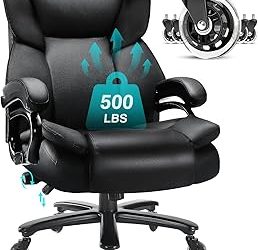
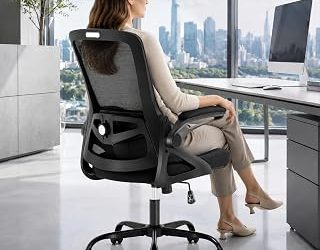
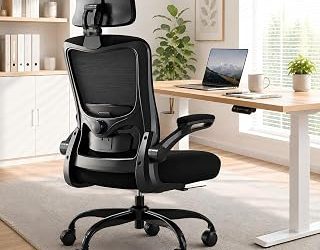
A strong choice for taller or heavier sitters who find standard chairs cramped, with a wide cushion, headrest, and a 90–125° tilt lock that makes genuine reclining rest possible. The flip-up arms are a practical touch for tucking into a shallow desk.
Ergonomic Mesh Chair with Lumbar Support (Khaki)
An unusually capable budget option: breathable mesh, a separate adjustable lumbar mechanism, and flip-up arms, in a colourway that looks less like office furniture than most. Expect a firmer seat than the IKEA chairs and slightly coarser adjustment increments.
Chreenoask Mesh Desk Chair
Best suited to shorter working sessions or a secondary desk. The mesh back and flip-up armrests cover the fundamentals competently, though the seat lacks the depth adjustment that makes a chair truly forgiving over a full day.
Frequently Asked Questions
Can my office chair really affect how well I sleep?
Indirectly but meaningfully. Poor seating produces sustained muscular tension and reduced circulation, both of which raise the effort required to relax at night. It also encourages people to sit for longer stretches without moving, and low daytime movement is one of the most reliable predictors of light, fragmented sleep.
MARKUS or JÄRVFJÄLLET?
Choose the MARKUS if your desk height suits fixed arms and you want the best value. Choose the JÄRVFJÄLLET if you’re outside average proportions, have a history of back trouble, or simply want the ability to fine-tune seat depth and arm height.
Is mesh worth it over padded upholstery?
For most people, yes. Mesh keeps the skin surface cooler and drier, reduces afternoon sluggishness, and stays comfortable in summer. Padded chairs feel more luxurious for the first twenty minutes and warmer for the following seven hours.
How often should I be getting out of the chair?
Aim to change posture every twenty to thirty minutes and stand fully at least twice an hour, even briefly. No chair, at any price, substitutes for movement — the best ones simply make the sitting intervals cost you less.
Final Thoughts
If you want one recommendation, the IKEA JÄRVFJÄLLET is the most adaptable chair here and the safest choice for anyone already managing back or neck discomfort. The IKEA MARKUS is the better buy for most ordinary desks and budgets, provided its fixed armrests clear your worktop, while the GTPLAYER Big and Tall chair is the one we’d point larger sitters toward for its wider seat and proper reclining lock.