Key takeaways
- Lumbar contact, not just lumbar shape: A curved backrest means little if the apex sits above or below your natural lordotic curve. Look for adjustable lumbar mechanisms that let you dial the support to the belt-line region, where the L3–L5 vertebrae need reinforcement most.
- Seat depth and width margin: Aim for roughly two to three fingers of clearance between the seat edge and the back of your knees. Extra-wide seats matter for larger frames because a pinched pelvis forces compensatory slouching within twenty minutes.
- Recline plus headrest, working together: The single best mid-day intervention is a two-minute recline that unloads spinal compression. That only works if a headrest catches the skull rather than the neck, so treat adjustable headrests as a recovery feature rather than a luxury.
- Thermal behaviour of the upholstery: Bonded and PU leathers vary enormously in breathability. Perforated panels, ribbed channels, or lower-density foam all help disperse heat, and staying cooler at the desk makes the natural evening drop in core temperature feel less like a struggle.
- Verified weight capacity with headroom: Choose a rating comfortably above your body weight. Chairs operating near their ceiling develop cylinder sag and frame flex, and a seat that slowly sinks over months retrains your posture without you noticing.
What's inside
As someone who spends their working life studying how bodies recover, I’ve noticed a pattern that surprises most people: the chair you sit in from nine to five has a measurable say in how you sleep from eleven to seven. Prolonged sitting in a poorly supported seat compresses the lumbar discs, shortens the hip flexors, and locks the thoracic spine into a forward curl. By evening, that accumulated tension doesn’t simply evaporate when you lie down — it shows up as restlessness, mid-back ache, and the frustrating sensation of being tired without being able to settle. Add the afternoon slump that a shallow, unsupportive seat encourages, and many desk workers end up caffeinating past their body’s cutoff window, pushing sleep onset later still.
This guide looks at executive leather office chairs through that recovery-first lens. Rather than fixating on boardroom aesthetics alone, I’ve weighed the features that genuinely reduce postural load across an eight-hour day: lumbar geometry, seat depth and width, headrest positioning for the cervical spine, recline range for periodic unloading, and whether the leather breathes well enough to avoid the low-grade thermal discomfort that quietly fragments your energy. Below you’ll find my selections, followed by a buying framework and answers to the questions I hear most from clients who work seated.
As an Amazon Associate we earn from qualifying purchases.


How to Choose a/an Executive Leather Office Chair (2026)
- Lumbar contact, not just lumbar shape: A curved backrest means little if the apex sits above or below your natural lordotic curve. Look for adjustable lumbar mechanisms that let you dial the support to the belt-line region, where the L3–L5 vertebrae need reinforcement most.
- Seat depth and width margin: Aim for roughly two to three fingers of clearance between the seat edge and the back of your knees. Extra-wide seats matter for larger frames because a pinched pelvis forces compensatory slouching within twenty minutes.
- Recline plus headrest, working together: The single best mid-day intervention is a two-minute recline that unloads spinal compression. That only works if a headrest catches the skull rather than the neck, so treat adjustable headrests as a recovery feature rather than a luxury.
- Thermal behaviour of the upholstery: Bonded and PU leathers vary enormously in breathability. Perforated panels, ribbed channels, or lower-density foam all help disperse heat, and staying cooler at the desk makes the natural evening drop in core temperature feel less like a struggle.
- Verified weight capacity with headroom: Choose a rating comfortably above your body weight. Chairs operating near their ceiling develop cylinder sag and frame flex, and a seat that slowly sinks over months retrains your posture without you noticing.
The Best Executive Leather Office Chair (2026)s Reviewed
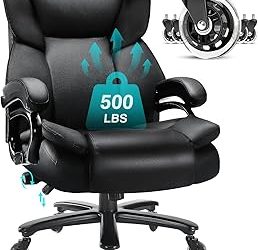
800lbs Big and Tall Executive Chair with Adjustable Headrest
This is the most complete postural package in the group: an extra-wide seat that lets the pelvis sit square, plus a headrest that actually adjusts to skull height rather than jabbing the cervical spine. The 800-pound frame rating means no gradual sag, which is exactly what you want if you plan to keep the chair for five years.
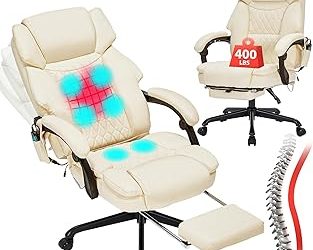
Massage Office Chair with 6-Point Vibration and Foot Rest
The six vibration points won’t replace bodywork, but gentle stimulation does encourage blood flow through the glutes and hamstrings during long sessions. Paired with the footrest for genuine leg elevation, it’s the strongest pick for anyone whose lower limbs feel heavy by evening.
LANDSUN High Back Ribbed Leather Executive Chair
The ribbed panelling isn’t purely decorative — the channels give warm air somewhere to escape, which keeps this chair noticeably cooler than flat-panel rivals. A sensible choice for smaller offices where a slimmer high-back silhouette suits the room.
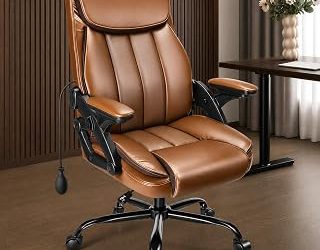
800LBS Heavy Duty Executive Chair with Adjustable Lumbar (Brown)
The standout here is independently adjustable lumbar support, letting you position reinforcement precisely at your own curve rather than accepting a fixed guess. Combined with the wide seat and high back, it’s a strong option for taller users who find standard chairs shallow.
EXCEBET Big and Tall Chair with Footrest (Brown)
A well-judged balance of price and function, with a retractable footrest that makes short recline breaks realistic instead of theoretical. The 400-pound rating suits most users, and the lumbar shaping holds up well through full working days.
Frequently Asked Questions
Can my office chair really affect how well I sleep?
Indirectly but meaningfully. Sustained muscular tension and disc compression from poor seating often surface as discomfort once you’re horizontal, and daytime fatigue from bad posture drives late caffeine use that delays sleep onset.
How often should I get out of the chair?
Change position every thirty to forty-five minutes, even briefly. Standing, walking, or a short full recline all reduce cumulative load far more effectively than any single chair feature.
Is bonded leather worth choosing over PU?
Bonded leather, as in the La-Z-Boy Bradley, tends to feel warmer and more supple initially, while quality PU generally resists cracking longer. Prioritise the support geometry first and the material second.
Do massage functions actually help recovery?
Vibration modestly increases local circulation and can ease the stiffness of prolonged sitting. Treat it as a useful supplement to movement breaks rather than a substitute for them.
Final Thoughts
If you want the strongest all-round postural support, the 800lbs Big and Tall Executive Chair with Adjustable Headrest is my primary recommendation, with the 800LBS Heavy Duty model in brown a close second for its dedicated lumbar adjustment. For those whose legs and lower back take the brunt of long days, the Massage Office Chair with footrest earns its place — recline and elevation remain the two most underrated recovery tools available at a desk.