Key takeaways
- Understand the physics first: Ventless units cool by evaporation, not refrigeration. They perform beautifully in dry or moderately humid rooms and lose effectiveness above roughly 60% relative humidity — so pair one with a dehumidifier if you live on the Gulf Coast.
- Noise floor over raw airflow: For a bedroom, a low speed you can actually sleep beside matters more than peak CFM. Look for units advertised as ultra-quiet with a dedicated sleep or night mode that dims the display and steps down fan speed automatically.
- Tank capacity versus your sleep window: A 2-gallon tank typically covers a full night; smaller reservoirs may run dry at 3 a.m. and leave you with a plain fan. Dual-tank designs advertising 24-hour runtime remove refill anxiety entirely.
- Timer granularity and remote reach: A 7-to-15-hour programmable timer lets you cool aggressively at bedtime and taper before dawn, when body temperature naturally rises. A remote with real range means you never leave a warm bed to adjust settings.
- Oscillation and placement: Wide 90–120° sweep prevents a cold draft aimed at one shoulder all night. Position the unit near a slightly open door or window so humid air can escape rather than accumulate.
What's inside
Sleep architecture is exquisitely sensitive to temperature. Core body temperature needs to drop roughly one to two degrees Fahrenheit for deep, slow-wave sleep to consolidate, and a bedroom stuck above 75°F quietly sabotages that process — more awakenings, lighter stages, and that unrefreshed feeling at 7 a.m. The trouble is that millions of bedrooms, converted lofts, basement suites, and rentals with fixed or casement windows simply cannot host a hose-and-bracket air conditioner. Landlord rules, sliding glass doors, and shared walls rule out the standard fix.
That’s where ventless cooling comes in. These units — properly called evaporative or “swamp” coolers — pull warm air across a water-saturated media pad, converting heat into evaporation and returning air several degrees cooler, with no exhaust duct required. This guide explains where that technology genuinely shines for sleep and comfort, where it falls short, what specifications matter once the lights go out, and which current models are worth your money.
As an Amazon Associate we earn from qualifying purchases.


How to Choose a/an Portable Air Conditioner Ventless (2026)
- Understand the physics first: Ventless units cool by evaporation, not refrigeration. They perform beautifully in dry or moderately humid rooms and lose effectiveness above roughly 60% relative humidity — so pair one with a dehumidifier if you live on the Gulf Coast.
- Noise floor over raw airflow: For a bedroom, a low speed you can actually sleep beside matters more than peak CFM. Look for units advertised as ultra-quiet with a dedicated sleep or night mode that dims the display and steps down fan speed automatically.
- Tank capacity versus your sleep window: A 2-gallon tank typically covers a full night; smaller reservoirs may run dry at 3 a.m. and leave you with a plain fan. Dual-tank designs advertising 24-hour runtime remove refill anxiety entirely.
- Timer granularity and remote reach: A 7-to-15-hour programmable timer lets you cool aggressively at bedtime and taper before dawn, when body temperature naturally rises. A remote with real range means you never leave a warm bed to adjust settings.
- Oscillation and placement: Wide 90–120° sweep prevents a cold draft aimed at one shoulder all night. Position the unit near a slightly open door or window so humid air can escape rather than accumulate.
The Best Portable Air Conditioner Ventless (2026)s Reviewed
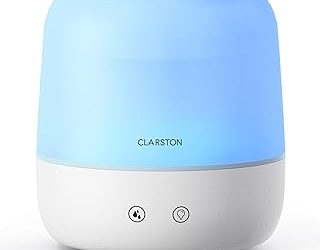
3-in-1 Windowless Evaporative Cooler with 4 Ice Packs
The four included ice packs are the smart touch here — dropping them into the reservoir sharpens the temperature delta noticeably during the first hour of sleep onset, which is exactly when you need it. A 7-hour timer and 70° oscillation make this a sensible, compact pick for a small bedroom or home office.
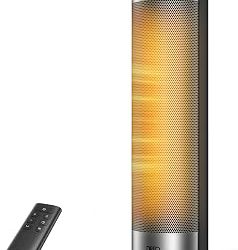
24″ Windowless Portable AC with 15H Timer
The tower form factor pushes cooled air up toward mattress height rather than along the floor, and the 2-gallon tank plus 15-hour timer comfortably outlasts a full sleep cycle. The ultra-quiet low speed is the standout: unobtrusive enough to double as gentle sound masking.
Dual-Tank Ventless Cooler with 24H Cooling
Two independent reservoirs mean you can fill both at bedtime and forget the unit entirely — a genuine advantage for anyone whose sleep is easily fragmented by mid-night chores. The 28-foot remote and 120° sweep round out a well-considered bedroom package.
4-in-1 Evaporative Cooler with 3-Gal Tank
The largest tank in this lineup, paired with six fan speeds, gives you unusually fine control over both runtime and noise. Best suited to larger open-plan rooms where you want sustained cooling for a full day and night without refills.
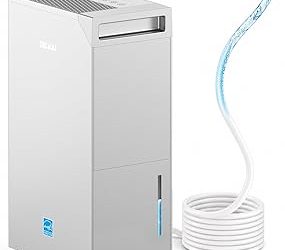
8000 BTU Ventless Floor Unit with Dehumidifier
The integrated dehumidifier function is the differentiator, since removing moisture directly improves perceived comfort and helps evaporative cooling work harder. A dedicated sleep mode makes it the most bedroom-tuned option here, though expect gradual cooling rather than an instant chill.
Frequently Asked Questions
How much cooler will my room actually get?
In dry conditions, expect an air-outlet temperature drop of roughly 10–20°F at the unit, translating to a more modest 4–8°F in the room itself. The perceived relief is greater than the thermometer suggests because moving air accelerates skin evaporation.
Will it make my bedroom humid?
It adds some moisture by design. Leave a door ajar or crack a window an inch to allow air exchange; without it, humidity climbs and cooling efficiency falls off within a few hours.
Are these safe to run all night?
Yes, provided you keep the tank filled, empty and dry it weekly to discourage microbial growth, and rinse the media pad regularly. Anyone with asthma or mold sensitivity should be especially diligent about that cleaning schedule.
Can one replace a real air conditioner?
Not in humid climates or during extreme heat events. Treat ventless cooling as a targeted comfort tool for bedrooms and workspaces where ducted or window units simply aren’t an option.
Final Thoughts
For most sleepers, the Dual-Tank Ventless Cooler is the strongest overall choice — uninterrupted overnight runtime is the single feature that most reliably protects sleep continuity. The 24″ model with its 15-hour timer is the better buy for tight bedrooms that need a quiet tower footprint, while the 8000 BTU unit with built-in dehumidifier earns a look if muggy air, not just heat, is what keeps you awake.