Key takeaways
- Adjustable lumbar, not decorative lumbar: A fixed bulge in the backrest is a gamble on your spine matching the factory average. Look for lumbar support that moves vertically and adjusts in depth, so the pressure lands at your actual curve rather than above or below it.
- Seat width and depth over cushion softness: Plush foam feels great briefly and bottoms out by hour three. Extra-wide seats with pocket-spring or high-density construction spread load more evenly, which is what prevents the hip and glute tightness that shows up later as difficulty settling at night.
- Weight rating with headroom: Buy a capacity well above your body weight. A 400–500 lb rated frame used by a 220 lb person stays rigid for years; a chair used near its ceiling develops wobble, and wobble means your stabilising muscles never switch off.
- Recline and a footrest for genuine breaks: The single most useful recovery habit at a desk is a two-minute reclined pause with legs elevated. Chairs with deep tilt and a retractable footrest make that automatic instead of aspirational.
- Quiet, floor-appropriate casters: Rubber or polyurethane wheels roll silently on hardwood. This sounds trivial until you work near a sleeping household member — noise-driven arousals are cumulative, and a squeaking chair is a surprisingly common culprit.
What's inside
As someone who spends most of my working life studying fatigue — how it builds, where it hides, and why people wake up tired even after eight hours in bed — I’ve come to see the desk chair as a sleep-adjacent piece of furniture. Ten hours of low-grade postural strain doesn’t disappear when you stand up. It follows you to the couch, then to bed, where it surfaces as restlessness, a stiff lower back at 3 a.m., or that specific ache between the shoulder blades that makes side-sleeping unpleasant. Buyers rarely connect the two, so they shop for chairs based on how a seat feels in the first five minutes rather than what it does to the body across a full day.
This guide approaches long-hours seating through that lens. Below you’ll find chairs built for genuine endurance — models with real lumbar adjustment, generous seat geometry, and load ratings that don’t quietly degrade after six months. I’ve focused on what matters for recovery: pressure distribution across the sit bones, whether the backrest actually supports the lumbar curve or merely touches it, and how much a chair encourages micro-movement instead of locking you in place. Prices and availability update automatically in the cards below.
As an Amazon Associate we earn from qualifying purchases.




How to Choose a/an Executive Office Chair For Long Hours (2026)
- Adjustable lumbar, not decorative lumbar: A fixed bulge in the backrest is a gamble on your spine matching the factory average. Look for lumbar support that moves vertically and adjusts in depth, so the pressure lands at your actual curve rather than above or below it.
- Seat width and depth over cushion softness: Plush foam feels great briefly and bottoms out by hour three. Extra-wide seats with pocket-spring or high-density construction spread load more evenly, which is what prevents the hip and glute tightness that shows up later as difficulty settling at night.
- Weight rating with headroom: Buy a capacity well above your body weight. A 400–500 lb rated frame used by a 220 lb person stays rigid for years; a chair used near its ceiling develops wobble, and wobble means your stabilising muscles never switch off.
- Recline and a footrest for genuine breaks: The single most useful recovery habit at a desk is a two-minute reclined pause with legs elevated. Chairs with deep tilt and a retractable footrest make that automatic instead of aspirational.
- Quiet, floor-appropriate casters: Rubber or polyurethane wheels roll silently on hardwood. This sounds trivial until you work near a sleeping household member — noise-driven arousals are cumulative, and a squeaking chair is a surprisingly common culprit.
The Best Executive Office Chair For Long Hours (2026)s Reviewed
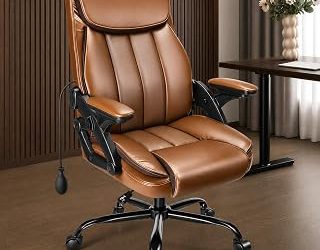
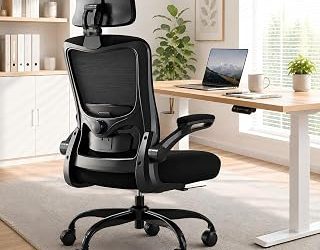
High Back Ergonomic Executive Chair with Flip Arms
The built-in adjustable lumbar block and thick padding make this a strong all-rounder for standard desks, and the flip-up arms let you tuck it fully under a worktop when you’re done for the day. A sensible choice for anyone who wants ergonomic fundamentals without a sprawling footprint.
X100 Ergonomic Mesh Chair with Footrest
Mesh keeps the back cool, which matters more than people realise — trapped heat across the lumbar region drives fidgeting and low-level discomfort through the afternoon. The 3D lumbar adjustment and pull-out footrest make this my pick for anyone who wants a structured mid-day reclined break.
Big and Tall Executive Chair with Extra Wide Seat
The extra-wide seat pan and heavy-duty frame suit larger builds and long, uninterrupted sessions where a narrow seat would create pressure points at the outer hips. Quiet rolling wheels and straightforward lumbar adjustment round out a practical, no-nonsense package.
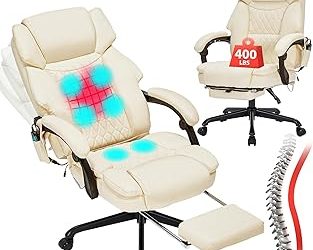
EXCEBET Big and Tall Chair with Footrest
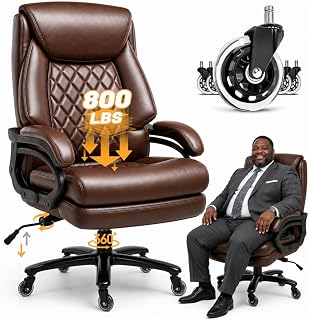
A 400 lb capacity, brown PU leather build with a thick cushion and padded armrests — this is the traditional executive silhouette done with actual support behind it. The footrest is well integrated, making it easy to shift posture without leaving your desk.
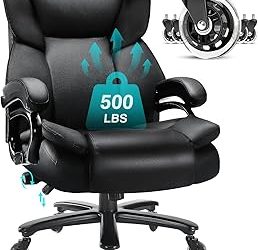
500lbs Heavy Duty Chair with Pocket Spring Cushion
Pocket springs are the standout here: they resist the slow collapse that afflicts foam-only seats, so hour nine feels much closer to hour one. Combined with a 500 lb rating and rubber casters, it’s the most durability-focused option on this list.
Frequently Asked Questions
Can a bad office chair really affect my sleep?
Indirectly but reliably, yes. Sustained postural strain leaves muscles in a low-level guarded state, and that tension doesn’t release the moment you lie down — it shows up as difficulty finding a comfortable position, more position changes overnight, and morning stiffness.
How should I set lumbar support for long sessions?
Sit fully back, then raise or lower the lumbar pad until it sits just above your belt line, filling the natural inward curve of your lower back. It should feel like gentle contact, not a shove — if you’re arching to accommodate it, it’s too aggressive or too high.
Is mesh or padded upholstery better for all-day use?
Mesh wins on breathability and is the better bet in warm rooms or for anyone who runs hot. Padded leather or fabric offers more cushioning under the sit bones, which suits colder spaces and heavier users — provided the foam is dense enough not to flatten.
How often should I get out of the chair?
Aim for a brief change of position every 30 to 45 minutes and a proper stand-and-walk break each hour. A recline-and-footrest pause counts as a position change, which is exactly why footrest-equipped models earn their place here.
Final Thoughts
If you want one chair that handles long days without compromise, the X100 Ergonomic Mesh Chair with Footrest offers the best combination of breathability, adjustable lumbar support, and built-in recovery breaks. Larger users and anyone prioritising longevity should look at the 500lbs Heavy Duty Chair with Pocket Spring Cushion, while the High Back Ergonomic Executive Chair with Flip Arms remains the smartest pick for compact home offices where the chair needs to disappear under the desk at day’s end.