Key takeaways
- Sound character, not just decibels: A steady 48 dB hum is far kinder to sleep architecture than a 42 dB unit that cycles its compressor on and off. Look for continuous-run or low-speed sustained modes, and treat any listed “quiet” rating as a claim to verify with your own ears during the return window.
- Real refrigerant cooling vs. evaporative: Compressor units genuinely lower cabin temperature; water-tank evaporative coolers move air and add moisture. Both have a place, but only the former will help you in humid heat, and confusing the two is the single most common buying mistake.
- Where the hot air goes: Every compressor-based cooler exhausts heat somewhere. In a tent or van, a dual-hose design that pulls its condenser air from outside will hold temperature far better than a single-hose unit slowly depressurizing your sleeping space.
- Power budget and runtime math: A 400 W draw on a 1,000 Wh power station gives you roughly two hours at full tilt. Check the wattage at low speed, not peak, and match it honestly to your battery, alternator, or shore power before buying.
- Light discipline: Color-changing LEDs and bright displays suppress melatonin at exactly the wrong moment. Prioritize units with a full display-off option, or plan to cover the panel with opaque tape.
What's inside
Anyone who has tried to nap in a parked car during a July afternoon, or bed down in a van at a trailhead, knows the problem isn’t really temperature — it’s thermal instability. Core body temperature needs to drop roughly one degree Celsius for sleep to begin and stay down for sleep to continue, and a sealed vehicle cabin fights that process at every stage. Glass and sheet metal store heat, release it slowly overnight, and then swing sharply cold before dawn. The result is a night of fragmented, shallow rest even when you technically slept for eight hours.
This guide approaches portable auto air conditioning from a rest-quality perspective rather than a raw-power one. Below you’ll find the units worth considering in 2026, followed by a selection framework built around the three things that actually govern sleep in a small space — sound consistency, humidity behavior, and how the unit vents its heat — plus concise reviews of the top five options and answers to the questions buyers ask most.
As an Amazon Associate we earn from qualifying purchases.


How to Choose a Portable Auto Air Conditioner (2026)
- Sound character, not just decibels: A steady 48 dB hum is far kinder to sleep architecture than a 42 dB unit that cycles its compressor on and off. Look for continuous-run or low-speed sustained modes, and treat any listed “quiet” rating as a claim to verify with your own ears during the return window.
- Real refrigerant cooling vs. evaporative: Compressor units genuinely lower cabin temperature; water-tank evaporative coolers move air and add moisture. Both have a place, but only the former will help you in humid heat, and confusing the two is the single most common buying mistake.
- Where the hot air goes: Every compressor-based cooler exhausts heat somewhere. In a tent or van, a dual-hose design that pulls its condenser air from outside will hold temperature far better than a single-hose unit slowly depressurizing your sleeping space.
- Power budget and runtime math: A 400 W draw on a 1,000 Wh power station gives you roughly two hours at full tilt. Check the wattage at low speed, not peak, and match it honestly to your battery, alternator, or shore power before buying.
- Light discipline: Color-changing LEDs and bright displays suppress melatonin at exactly the wrong moment. Prioritize units with a full display-off option, or plan to cover the panel with opaque tape.
The Best Portable Auto Air Conditioners (2026) Reviewed
Dual Hose 6800 BTU Portable Camping AC & Heating (5-in-1)
The dual-hose architecture is what earns this unit the top spot for sleeping: because condenser air is drawn from outside, a tent or van cabin stays sealed and pressure-stable, which translates into flatter temperature curves through the night. The heating function also solves the pre-dawn cold swing that wakes so many vehicle sleepers.
5200 BTU Portable Camping Air Conditioner (4-in-1)
At 400 W, this is the most realistic compressor cooler for solo travelers running off a mid-size power station, and its output is well matched to a two-person tent or truck cab. Expect meaningful cooling rather than dramatic cooling — which, for sleep onset, is usually the correct trade.
14,000 BTU Portable AC with WiFi (700 Sq.Ft)
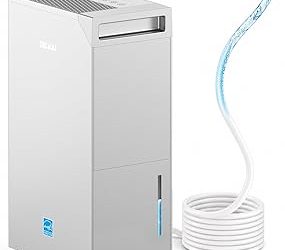
For a garage conversion, workshop, or any space where you have real mains power, this is the strongest performer here, and the WiFi scheduling is genuinely useful: pre-cooling a space 30 minutes before bedtime beats running the unit loudly all night. Auto-evaporation means no routine tank emptying.
12,000 BTU Portable AC (550 Sq.Ft)
A sensible step down for smaller rooms and single-bay garages, with the same auto-evaporation convenience and a quieter low setting than its larger sibling. Choose this over the 14,000 BTU model if your space is under roughly 500 square feet, since an oversized unit short-cycles and creates the very noise inconsistency you want to avoid.
2026 4-in-1 Portable AC with 1500ML Tank
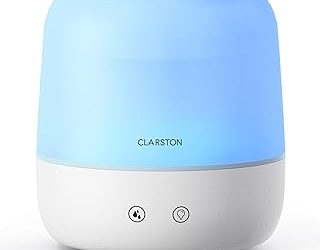
This is an evaporative personal cooler, and judged as one it performs well — quiet airflow, a useful remote, and a tank that lasts a full night on low. Best suited to dry climates and desk or bunk-side use, and worth disabling the seven-color LED before sleep.
Frequently Asked Questions
Will a small unit actually cool a car enough to sleep?
In a compact cabin, yes — a 5,000-plus BTU compressor unit can hold a comfortable sleeping temperature provided the exhaust is routed outside through a window gap or vent. Evaporative models will not achieve this in humid conditions.
Is it safe to run one overnight in a vehicle?
Battery or shore-powered units are fine, but never sleep with the engine idling to power an inverter, due to carbon monoxide risk. Use a dedicated power station and keep at least one vent slightly open for fresh air exchange.
How cold should the space be for good sleep?
Most people sleep best between 60 and 67°F. Cooling below that wastes power without improving sleep depth and often causes waking from cold.
Do the water tanks need constant attention?
Evaporative models need refilling roughly every 8 to 10 hours on low, plus periodic cleaning to prevent microbial growth. Auto-evaporation compressor units generally require no nightly intervention.
Final Thoughts
For sleeping in a vehicle or tent, the Dual Hose 6800 BTU unit is the most sleep-friendly option here thanks to its sealed-cabin exhaust and heating mode, with the 5200 BTU 4-in-1 as the better choice for tighter power budgets. If you’re cooling a garage, workshop, or room with mains power, the 14,000 BTU WiFi model paired with a pre-bedtime cooling schedule delivers the steadiest overnight conditions of the group.