Key takeaways
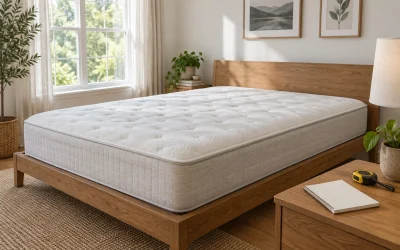
- Thickness worth paying for: Anything under 2 inches will bottom out beneath a hip within minutes. Aim for 3 inches as a baseline; if you carry more weight through the hips or your mattress has developed a visible trough, 4–5 inches gives your joint somewhere to actually go.
- Zoned versus uniform construction: A zoned topper varies firmness along its length, softening at the shoulder and hip while staying firmer at the lumbar region. This is the single most useful feature for side sleepers, because uniform foam forces you to choose between pressure relief and alignment rather than delivering both.
- Slow-response foam for pressure, springs for rebound: Memory foam cradles the trochanter beautifully but can feel like quicksand if you change position often. Spring-based or latex-alternative toppers rebound faster — better if hip pain makes you shift a dozen times a night.
- Thermal management is not optional: Deep contouring wraps your body in insulation. Look for gel infusion, open-cell structure, or a viscose-from-bamboo cover, all of which move heat away from the contact zone rather than trapping it against inflamed tissue.
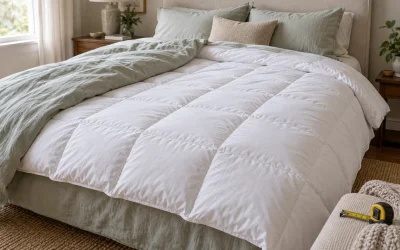
- Anchoring that survives the night: Deep-pocket skirts sized to your mattress depth, four-way elastic straps, or a genuinely grippy non-slip base. A topper that migrates leaves your hip resting on a seam — a common and easily avoided source of morning soreness.
What's inside
Side sleeping concentrates a surprising amount of load onto two narrow points: the shoulder and the greater trochanter, the bony knob at the top of your femur. When the sleep surface beneath you refuses to yield, that bone presses soft tissue against an unforgiving surface for hours at a time, and the bursa sitting over it responds the way any irritated tissue does — with inflammation and a dull, radiating ache that tends to announce itself around 3 a.m. Most people blame their hip. Often the real culprit is a mattress that has lost its ability to let the hip sink while still holding the waist and ribcage level.
A topper is the most economical way to correct that geometry without replacing an entire bed. The catch is that “soft” and “supportive” are not opposites here — you need a layer that permits controlled sinkage at the hip while resisting collapse under the heavier torso, otherwise you simply trade pressure pain for spinal twist. Below, I’ve assessed six widely available 2026 toppers through that lens: contour depth, zoning, edge stability, and how they handle the heat that inevitably builds where your body meets a thick comfort layer.
As an Amazon Associate we earn from qualifying purchases.



🛒 Best Price Today on Amazon
Prime members get fast, free shipping on everything above, plus member-only deals. New members get a 30-day free trial — cancel anytime.
How to Choose a Mattress Topper For Side Sleepers With Hip Pain (2026)
- Thickness worth paying for: Anything under 2 inches will bottom out beneath a hip within minutes. Aim for 3 inches as a baseline; if you carry more weight through the hips or your mattress has developed a visible trough, 4–5 inches gives your joint somewhere to actually go.
- Zoned versus uniform construction: A zoned topper varies firmness along its length, softening at the shoulder and hip while staying firmer at the lumbar region. This is the single most useful feature for side sleepers, because uniform foam forces you to choose between pressure relief and alignment rather than delivering both.
- Slow-response foam for pressure, springs for rebound: Memory foam cradles the trochanter beautifully but can feel like quicksand if you change position often. Spring-based or latex-alternative toppers rebound faster — better if hip pain makes you shift a dozen times a night.
- Thermal management is not optional: Deep contouring wraps your body in insulation. Look for gel infusion, open-cell structure, or a viscose-from-bamboo cover, all of which move heat away from the contact zone rather than trapping it against inflamed tissue.
- Anchoring that survives the night: Deep-pocket skirts sized to your mattress depth, four-way elastic straps, or a genuinely grippy non-slip base. A topper that migrates leaves your hip resting on a seam — a common and easily avoided source of morning soreness.
The Best Mattress Topper For Side Sleepers With Hip Pain (2026)s Reviewed
Dormeo Premium Octaspring 3-Zone Topper
The Octaspring design replaces solid foam with individual foam springs, which means the hip zone compresses independently of the lumbar zone instead of dragging it down — genuinely useful engineering rather than marketing language. It also breathes better than any slab foam topper here, making it my first recommendation for side sleepers who wake up both aching and overheated.
SHOUREN 5 Inch Gel Memory Foam Topper
Five inches is a lot of topper, and that is precisely the point if your existing mattress is too firm or has sagged unevenly; the hip disappears into it while the gel infusion keeps the contact zone from cooking. The four-way straps matter at this height, since thick foam has more leverage to wander.
Queen Bamboo Viscose 5-Zone DualSide Topper
The five-zone spinal alignment layout is well judged, with meaningful softening through the shoulder and hip bands, and the dual-sided build lets you flip toward firmer support if your pain pattern changes seasonally. A sensible pick for lighter side sleepers who need contour without excessive sink.
PERLECARE 3 Inch Gel Memory Foam Topper
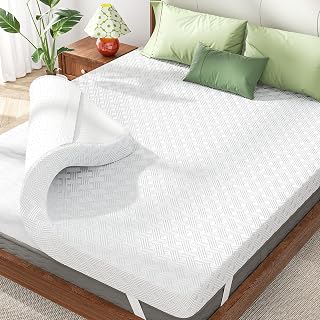
A clean, well-executed three inches of gel memory foam with an Oeko-Tex certified cover you can actually remove and wash — the correct starting point for most side sleepers with mild to moderate trochanteric pain. The non-slip base performs reliably, which is more than can be said for many toppers in this bracket.
BEDLORE Viscose Bamboo Pillow Top Topper
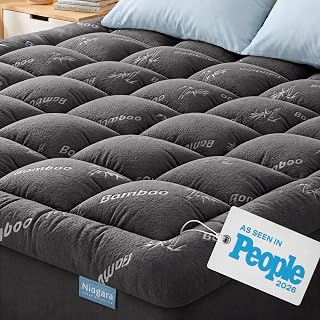
This is a plush pillow-top rather than a corrective foam layer, so it excels at softening a harsh surface but won’t rebuild support in a genuinely sagging bed. The stretch pockets accommodate mattresses from 6 to 18 inches, and the viscose cover sleeps notably cool.
Frequently Asked Questions
Can a topper actually resolve hip pain, or only mask it?
If your pain is positional — present on waking, easing within an hour of moving — redistributing pressure often resolves it outright. Pain that persists through the day, radiates below the knee, or worsens with activity warrants assessment by a clinician rather than a purchase.
How firm should the topper itself be?
Medium-soft at the contact surface, supported by something firmer underneath. Side sleepers need roughly 1.5 to 2.5 inches of hip sinkage to bring the spine level; more than that and the pelvis rotates, which introduces a fresh problem.
Will a thick topper make my sheets stop fitting?
Add topper thickness to mattress thickness and buy deep-pocket sheets accordingly. A five-inch topper on a twelve-inch mattress needs sheets rated for at least eighteen inches of depth.
How long before I judge the results?
Give it two to three weeks. New foam needs several nights to reach full loft, and connective tissue adapting to a corrected sleep posture can feel briefly worse before it feels better.
Final Thoughts
For most side sleepers with hip pain, the Dormeo Octaspring offers the best balance of zoned pressure relief and airflow, while the SHOUREN 5 Inch Gel Memory Foam Topper is the stronger choice when a tired or overly firm mattress needs substantial rescuing. If you want proven memory foam contouring at a more accessible depth, the PERLECARE 3 Inch topper remains the dependable middle path.