Key takeaways
- Central over cornered: Moisture moves toward whatever is actively pulling it. A unit placed roughly in the middle of a room, or at minimum 6–12 inches clear of every wall and drape, draws from all directions instead of recycling the same pocket of stale air.
- Treat the source, not the symptom: If the damp originates in a basement or crawlspace, that’s where the machine belongs. Humid air rises and spreads; drying the bedroom while the foundation keeps exhaling moisture is an endless losing battle.
- Respect the noise radius: For sleeping quarters, aim for a unit rated near 28–35 dB and position it at least six feet from your head. Compressor models belong behind a closed door or one floor down, where their cycling becomes ambient rather than intrusive.
- Plan the water exit first: Decide before you buy whether you’ll empty a tank or run a hose. Continuous-drain placement needs a floor drain, sink, or sump within reach and a slight downhill run — retrofitting that later usually means moving the unit somewhere worse.
- Control the light: Color-changing LEDs are pleasant in a living room and counterproductive beside a bed. Confirm the unit has a sleep mode or a full light-off setting before it earns a bedroom spot.
What's inside
Damp air rarely announces itself. It shows up as a pillow that never feels quite dry, a musty note in the closet that survives every wash cycle, or that 3 a.m. wake-up where your throat feels thick and your sheets feel heavier than they did at bedtime. As someone who spends most working hours helping people troubleshoot their sleep environments, I can tell you that humidity is the variable almost nobody checks — and placement is the variable almost nobody gets right. Buying a capable dehumidifier and then tucking it into a corner behind a dresser is like buying blackout curtains and leaving them open six inches.
This guide approaches the question of where to put a dehumidifier from a rest-first perspective: airflow geometry, noise distance, drainage logistics, and how light output affects melatonin in a bedroom. Below you’ll find units suited to different placements — compact bedside-adjacent models, mid-size room units, and basement-grade compressors that handle the moisture source before it ever migrates upstairs. I’ve noted the ideal spot for each, along with the mistakes that quietly cost you performance.
As an Amazon Associate we earn from qualifying purchases.


How to Choose a Place To Put Dehumidifier (2026)
- Central over cornered: Moisture moves toward whatever is actively pulling it. A unit placed roughly in the middle of a room, or at minimum 6–12 inches clear of every wall and drape, draws from all directions instead of recycling the same pocket of stale air.
- Treat the source, not the symptom: If the damp originates in a basement or crawlspace, that’s where the machine belongs. Humid air rises and spreads; drying the bedroom while the foundation keeps exhaling moisture is an endless losing battle.
- Respect the noise radius: For sleeping quarters, aim for a unit rated near 28–35 dB and position it at least six feet from your head. Compressor models belong behind a closed door or one floor down, where their cycling becomes ambient rather than intrusive.
- Plan the water exit first: Decide before you buy whether you’ll empty a tank or run a hose. Continuous-drain placement needs a floor drain, sink, or sump within reach and a slight downhill run — retrofitting that later usually means moving the unit somewhere worse.
- Control the light: Color-changing LEDs are pleasant in a living room and counterproductive beside a bed. Confirm the unit has a sleep mode or a full light-off setting before it earns a bedroom spot.
The Best Place To Put Dehumidifier (2026)s Reviewed
95OZ Dehumidifier for Home, 1000 sq ft (Black)
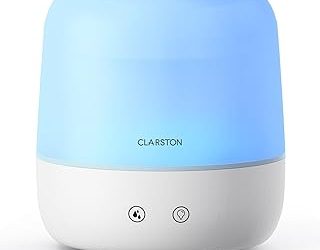
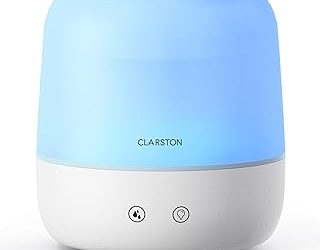
This one earns a spot on a dresser or low bookshelf in a bedroom or living room — elevated slightly so intake isn’t smothered by carpet, but still central. The 95-ounce reservoir means fewer trips to the sink, and the seven-color ambient light works as a soft evening cue provided you switch it off at lights-out.
ToLife Dehumidifier with Sleep Mode, 1000 Sq Ft
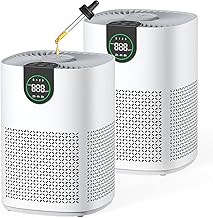
The dedicated sleep mode is what separates this from most peltier units — it dims the display and drops fan speed so the unit becomes genuinely forgettable across the room. Best placed on the far wall of a bedroom or just outside a steamy bathroom door, where it can catch moisture on its way out.
1000 Sq. Ft Dehumidifier with 95oz Tank (Grey)
A sensible pick for a finished basement guest room or a home office that smells faintly of last winter. Auto shut-off means you can leave it running while you’re upstairs asleep without worrying about overflow, and the grey finish disappears against most flooring.
35 OZ Dehumidifier for Bedroom & RV, 28dB
At 28 decibels this is the only unit here I’d comfortably put on a nightstand — it sits below the threshold where most sleepers register sound as an intrusion. Its 280 square-foot rating suits closets, RVs, nurseries, and small bedrooms where the goal is maintenance rather than heavy extraction.
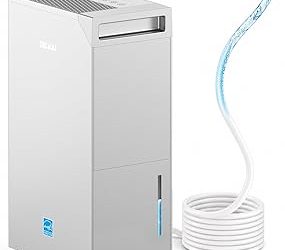
4500 Sq. Ft Compressor Dehumidifier with Drain Hose
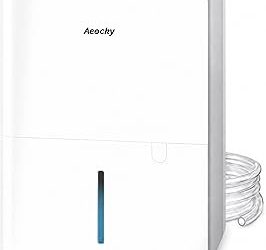
This belongs in the basement, near the sump or floor drain, working upstream of your sleeping spaces. Intelligent humidity control lets it hold a setpoint around 45–50% and idle rather than run flat out, which is both quieter and cheaper over a season.
Frequently Asked Questions
Should a dehumidifier go in the bedroom or the hallway?
In the bedroom, if it’s quiet enough — humidity is a localized condition and hallway placement dilutes the effect. If noise is the obstacle, choose a lower-decibel unit rather than relocating a loud one.
How far from the wall does it need to sit?
Six to twelve inches minimum on the intake and exhaust sides, more if you can spare it. Blocked airflow is the single most common reason people conclude their dehumidifier “doesn’t work.”
What humidity level should I target for sleep?
Between 40% and 50%. Below that, airways and sinuses dry out; above roughly 55%, you’re in territory where dust mites and mold become comfortable.
Can I run one on carpet?
Yes, though raising it a few inches on a stable platform improves intake and protects against condensation marks on the carpet beneath.
Final Thoughts
If your damp problem starts below grade, put the Waykar 80-pint or the 4500 Sq. Ft compressor unit in the basement near a drain and let it work while you sleep. For the bedroom itself, the 35 OZ 28dB model is the one I’d place closest to the bed, with the ToLife Sleep Mode unit as the better choice for larger rooms where you need more extraction without more noise.