Key takeaways
- Noise floor, measured not marketed: Look for a published decibel figure under 40 dB, and ideally near 28 dB. Sleep architecture is disrupted by intermittent noise more than by steady sound, so a quiet compressor that cycles may bother you more than a slightly louder unit that hums continuously. Peltier (thermoelectric) models have no compressor at all — they are the gold standard for a bedside position.
- Tank capacity versus hose drainage: A 35 oz tank in a humid rig can fill in six to eight hours and shut off mid-night, leaving you to wake up in rising humidity. If your RV has a shower drain or sink you can route to, choose a model with continuous drain hose support and stop thinking about it entirely.
- Light discipline: Ambient color lights are pleasant in a living room and actively counterproductive in a sleeping space, since even dim light suppresses melatonin. Insist on a unit whose display and RGB ring can be fully switched off, or that offers a dedicated sleep mode that dims everything.
- Power draw and temperature range: Thermoelectric units sip roughly 25–50 watts, which is realistic for inverter or solar setups. Compressor units draw far more and generally need shore power, but they’re the only real answer above 30 pints of daily moisture. Also check the operating temperature floor — compressors struggle below 41°F unless auto-defrost is included.
- Footprint and stability in transit: Measure your intended nook before buying, and confirm you can stow the unit with the tank emptied. A top-heavy 80-pint machine is a projectile on a mountain grade.
What's inside
Anyone who has woken up at 3 a.m. in an RV knows the feeling: the pillow feels faintly damp, the windows are streaked with condensation, and the air has that closed-up, mineral smell that no amount of window-cracking seems to fix. From a sleep-wellness standpoint, this is more than a comfort nuisance. Two adults exhale roughly a pint of moisture over a night’s sleep, and inside 200 square feet of insulated aluminum, that water has nowhere to go but into your mattress, your cabinetry, and your sinuses. Elevated humidity keeps skin temperature from dropping the way it needs to for deep sleep, and it feeds the dust mites and mold spores that turn light sleepers into congested, restless ones.
This guide approaches RV dehumidifiers the way a sleep clinician would: prioritizing noise floor, overnight tank capacity, ambient light control, and whether the unit can run unattended while you’re unconscious eight feet away. Below you’ll find compact thermoelectric models sized for a bedroom-over-cab, larger compressor units for wet-climate full-timers, and clear guidance on matching pint rating to rig size so you’re not buying more machine than your battery bank or your ears can tolerate.
As an Amazon Associate we earn from qualifying purchases.


How to Choose a/an Dehumidifier For Rvs (2026)
- Noise floor, measured not marketed: Look for a published decibel figure under 40 dB, and ideally near 28 dB. Sleep architecture is disrupted by intermittent noise more than by steady sound, so a quiet compressor that cycles may bother you more than a slightly louder unit that hums continuously. Peltier (thermoelectric) models have no compressor at all — they are the gold standard for a bedside position.
- Tank capacity versus hose drainage: A 35 oz tank in a humid rig can fill in six to eight hours and shut off mid-night, leaving you to wake up in rising humidity. If your RV has a shower drain or sink you can route to, choose a model with continuous drain hose support and stop thinking about it entirely.
- Light discipline: Ambient color lights are pleasant in a living room and actively counterproductive in a sleeping space, since even dim light suppresses melatonin. Insist on a unit whose display and RGB ring can be fully switched off, or that offers a dedicated sleep mode that dims everything.
- Power draw and temperature range: Thermoelectric units sip roughly 25–50 watts, which is realistic for inverter or solar setups. Compressor units draw far more and generally need shore power, but they’re the only real answer above 30 pints of daily moisture. Also check the operating temperature floor — compressors struggle below 41°F unless auto-defrost is included.
- Footprint and stability in transit: Measure your intended nook before buying, and confirm you can stow the unit with the tank emptied. A top-heavy 80-pint machine is a projectile on a mountain grade.
The Best Dehumidifier For Rvs (2026)s Reviewed
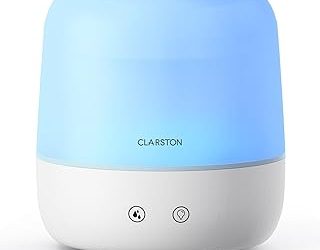
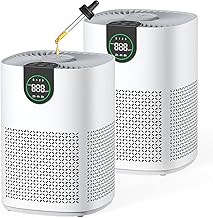
35 OZ Dehumidifier for Bedroom RV
At a claimed 28 dB, this is the closest thing to an inaudible unit on the list, which makes it my default recommendation for a bedside position in a van or small travel trailer. The 280 sq ft rating and modest tank mean it’s a maintenance-and-comfort device rather than a flood remediator, so empty it each morning and let it work quietly through the night.
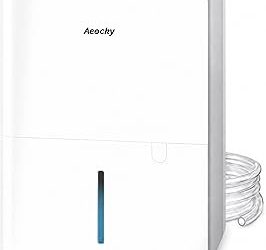
68oz Small Dehumidifier with Drain Hose
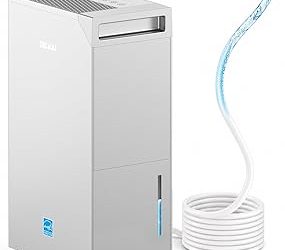
The combination of a 2000 ml reservoir and genuine hose drainage makes this the most set-and-forget option in the compact category — the single best predictor of whether a dehumidifier actually helps your sleep is whether it’s still running at 4 a.m. Rated for up to 650 sq ft, it comfortably handles most Class C and fifth-wheel interiors.
21 Pint Dehumidifier with Drain Hose
This is the pick for full-timers parked in the Pacific Northwest, Gulf Coast, or anywhere shoulder-season condensation soaks the bedding. Intelligent humidity control, a 24-hour timer, and auto defrost let you target a stable 45–50% relative humidity — the range most consistent with comfortable breathing and minimal mite activity — without babysitting the machine.
95 OZ Dehumidifier with Sleep Mode
The nearly three-liter tank buys you a full night plus a margin, and the dedicated sleep mode addresses my main complaint about ambient-light models by dimming the display and color ring. Rated to 1000 sq ft, it’s slightly overbuilt for a small rig, which simply means it reaches your target humidity faster and then coasts.
Waykar 80 Pints Energy Star Dehumidifier
Strictly a shore-power, seasonal-storage, or park-model proposition — 5000 sq ft of capacity is far beyond nightly respiration management. Where it earns its place is drying out a rig after a leak or a damp winter, with continuous drainage and auto-defrost doing the heavy lifting before you ever sleep inside again.
Frequently Asked Questions
What humidity level should I target in an RV bedroom?
Aim for 40–50% relative humidity. Below 30% you’ll trade condensation problems for dry throat and irritated nasal passages; above 60% you invite mold and dust mite proliferation, both of which fragment sleep in allergy-prone people.
Will a dehumidifier make my RV warmer?
Slightly, yes — both compressor and thermoelectric units release waste heat. In practice, drier air feels cooler because sweat evaporates more efficiently, so most people perceive a net improvement in sleeping comfort even as the thermometer ticks up a degree.
Can I run one overnight on battery power?
A small thermoelectric unit drawing 30–50 watts is plausible on a healthy lithium bank with an efficient inverter, budgeting roughly 300–500 Wh per night. Compressor models are not realistic off-grid without substantial capacity.
Do I still need to ventilate if I have a dehumidifier?
Yes. Dehumidifiers remove water vapor but not carbon dioxide or VOCs, and elevated CO₂ measurably reduces sleep quality. Keep a roof vent cracked or run a low-speed fan alongside the unit.
Final Thoughts
For most RV sleepers, the 35 OZ Dehumidifier for Bedroom RV is the right first purchase — near-silent, tiny, and honest about what it does. If you’d rather never empty a tank, the 68oz Small Dehumidifier with Drain Hose is the smarter long-term buy, and full-timers facing genuinely wet climates should step up to the 21 Pint Dehumidifier for precise, hands-off humidity control that protects both your rig and your rest.