Key takeaways
- Extraction technology: Thermoelectric (Peltier) units are silent, vibration-free, and light — ideal for sleeping areas, though they slow down below about 60°F. Compressor models pull far more water and work in cold weather, but they’re heavy and audible. Match the technology to the season you actually camp in.
- Noise floor, measured honestly: Look for a stated figure near 28–35 dB and a dedicated sleep mode. In a rig, the unit sits within a few feet of your head with no drywall to absorb sound, so a machine rated “quiet” for a basement can still fragment your sleep architecture.
- Tank capacity versus drain option: A 35 oz tank may fill in a single humid night. Either size up to 60–95 oz or choose a model that accepts a continuous drain hose you can route into the gray tank or shower pan.
- Auto shut-off and travel security: Non-negotiable. A full-tank cutoff prevents overflow onto vinyl flooring, and a unit with a latching tank and low center of gravity survives washboard roads without redecorating your galley.
- Light control: Ambient color lighting is pleasant at dusk and disruptive at 2 a.m. Melanopic light exposure suppresses melatonin, so insist on the ability to dim the display or switch the LEDs off entirely while the unit keeps running.
What's inside
Anyone who has woken up in an RV to fogged windows, a damp pillowcase, and that unmistakable musty exhale from the overhead cabinets knows the problem isn’t rain — it’s you. Two adults breathing overnight in a sealed 200-square-foot shell release well over a liter of water vapor, and propane heat, shower steam, and boiling pasta pile on from there. As a sleep-wellness specialist, I care about this for one reason above all: humidity above roughly 60% degrades sleep quality measurably. Damp air blunts the body’s ability to shed heat through evaporation, which interferes with the core-temperature drop that initiates and sustains deep sleep. It also feeds dust mites and mold spores, the two most common overnight airway irritants in a rig.
This guide focuses on what actually works inside a recreational vehicle, where cabin size, 12V and generator limits, road vibration, and storage space rule out most household units. Below you’ll find compact thermoelectric units suited to bunkhouses and wet baths, plus one full-size compressor model for the fifth-wheel and skoolie crowd who need real extraction volume. I’ve weighted noise floor, tank ergonomics, and continuous-drain capability heavily, because a dehumidifier you have to empty at 3 a.m. is a dehumidifier that fails the only test that matters.
As an Amazon Associate we earn from qualifying purchases.


How to Choose a Dehumidifier For An Rv (2026)
- Extraction technology: Thermoelectric (Peltier) units are silent, vibration-free, and light — ideal for sleeping areas, though they slow down below about 60°F. Compressor models pull far more water and work in cold weather, but they’re heavy and audible. Match the technology to the season you actually camp in.
- Noise floor, measured honestly: Look for a stated figure near 28–35 dB and a dedicated sleep mode. In a rig, the unit sits within a few feet of your head with no drywall to absorb sound, so a machine rated “quiet” for a basement can still fragment your sleep architecture.
- Tank capacity versus drain option: A 35 oz tank may fill in a single humid night. Either size up to 60–95 oz or choose a model that accepts a continuous drain hose you can route into the gray tank or shower pan.
- Auto shut-off and travel security: Non-negotiable. A full-tank cutoff prevents overflow onto vinyl flooring, and a unit with a latching tank and low center of gravity survives washboard roads without redecorating your galley.
- Light control: Ambient color lighting is pleasant at dusk and disruptive at 2 a.m. Melanopic light exposure suppresses melatonin, so insist on the ability to dim the display or switch the LEDs off entirely while the unit keeps running.
The Best Dehumidifier For An Rv (2026)s Reviewed
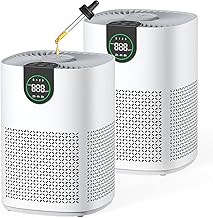
95 OZ Dehumidifier with Sleep Mode (White)
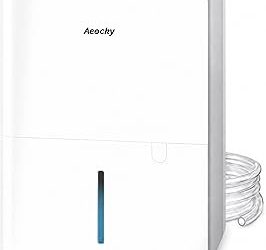
This is my default recommendation for couples in a travel trailer: the near-3-liter reservoir absorbs a full night of two-person respiration plus a hot shower without demanding a midnight trip to the dump station. The dedicated sleep mode dims the panel and drops fan speed, which is exactly the behavior you want from a machine parked at the foot of the bed.
95 OZ Dehumidifier with 7-Color Ambient Light (Black)
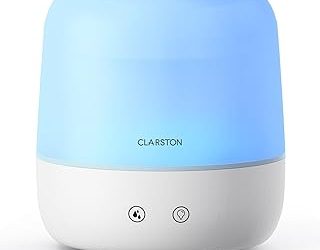
Mechanically the same generous tank in a darker shell that hides fingerprints and road dust, with a color-cycling glow that doubles as a soft galley nightlight. Set it to a warm amber tone or switch the LEDs off before bed; the extraction rate is unaffected either way.
60 OZ Dual-Semiconductor Dehumidifier
The twin Peltier modules give this one noticeably better throughput than single-element compacts while staying completely free of compressor vibration — a genuine advantage in a vehicle where every hard surface transmits sound. The programmable timer is the standout feature: run it for two hours after your shower, then let it shut itself down.
35 OZ Compact Dehumidifier, 28 dB
At a claimed 28 dB this is the quietest unit here, and the best choice for a bunk, a Class B van, or a closet where clothing and linens are absorbing moisture. Accept the trade-off: the small tank needs daily attention in humid conditions.
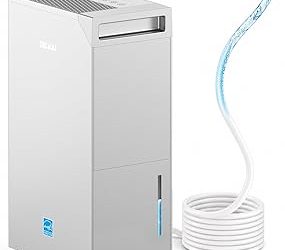
Waykar 80-Pint Energy Star Dehumidifier
Serious hardware for large fifth-wheels, park models, and converted buses, especially during long stays in the Pacific Northwest or Gulf Coast. It runs on a 15A hookup rather than battery power, but the continuous drainage and auto-defrost make it the only option here that keeps up with genuinely wet climates and cold shoulder seasons.
Frequently Asked Questions
What humidity level should I target in an RV bedroom?
Aim for 40–50%. That band suppresses dust mite reproduction and mold growth while keeping nasal passages comfortable. Below 30% you invite dry throat and morning congestion, which is its own sleep disruptor.
Can I run a dehumidifier off battery power overnight?
A small thermoelectric unit typically draws 25–75 watts, which most lithium house-battery systems can sustain for a night with an inverter. Compressor models like the Waykar require shore power or a generator.
Why does the compact unit collect so little water in cold weather?
Peltier condensation depends on a temperature differential, and it becomes inefficient below roughly 60°F. In freezing conditions, moisture-absorbing desiccant tubs or a compressor unit with auto-defrost are more effective.
Will running a dehumidifier reduce my window condensation?
Substantially, though ventilation matters too. Crack a roof vent an inch while running the unit, and wipe single-pane glass in the morning — RV windows are thermal weak points that will always sweat first.
Final Thoughts
For most RV owners, the 95 OZ Dehumidifier with Sleep Mode strikes the right balance of tank capacity and bedroom-appropriate quiet, while the 60 OZ Dual-Semiconductor model earns its place with a timer and vibration-free operation for smaller vans and wet baths. If you’re stationary in a large rig or camping somewhere genuinely soggy, step up to the Waykar 80-Pint and run a permanent drain line — then enjoy the deeper, cooler, less congested sleep that dry air makes possible.