Key takeaways
- Noise floor, not “quiet” claims: Anything at or under roughly 30 dB disappears beneath your own breathing. Look for a published figure — 21 dB and 28 dB are meaningfully different from an unlabelled “whisper quiet.”
- Runtime that clears a full night: A tank that empties at 4 a.m. leaves your plants dry through the driest hours and may wake you with an auto-shutoff chirp. Aim for 30 hours or more on low so a single fill covers a night plus a working day.
- Top-fill and wide-mouth access: Cool-mist ultrasonic tanks grow biofilm. If you can’t get a hand and a brush inside, you won’t clean it weekly — and an unclean tank aerosolizes what’s living in it straight into your bedroom.
- Directional output for plant clusters: A 360° rotating nozzle lets you aim mist toward foliage rather than at drywall or a headboard. Height matters too: raise the unit slightly so mist drifts across leaves instead of pooling on the floor.
- Humidistat control over guesswork: Auto humidity control holds a set point instead of running flat out. Target 50–60% for most tropicals; above 60% in a closed bedroom invites condensation on cold windows and mould in corners.
What's inside
Houseplants and sleeping humans want roughly the same thing from a room: air that isn’t parched. Most tropical foliage evolved in 50–70% relative humidity, while the average heated bedroom in winter drifts down to 25% or lower — dry enough to crisp a Calathea’s edges and dry enough to leave you waking at 3 a.m. with a raw throat and a stuffed nose. That overlap is why the “plant humidifier” category has quietly become a bedroom category, and why the wrong unit creates two problems at once: a machine that gurgles all night and a plant shelf that stays thirsty anyway.
This guide looks at the current crop through both lenses. I’ve weighted the things that actually determine whether a humidifier survives past week three — measured noise floor at sleeping distance, tank capacity versus real runtime, how easily you can reach the inside to scrub it, and whether the mist output is genuinely directional enough to reach a plant grouping without soaking a wall or a nightstand. Below are the units worth your money in 2026, followed by the buying criteria I’d use myself.
As an Amazon Associate we earn from qualifying purchases.




How to Choose a Plant Humidifier (2026)
- Noise floor, not “quiet” claims: Anything at or under roughly 30 dB disappears beneath your own breathing. Look for a published figure — 21 dB and 28 dB are meaningfully different from an unlabelled “whisper quiet.”
- Runtime that clears a full night: A tank that empties at 4 a.m. leaves your plants dry through the driest hours and may wake you with an auto-shutoff chirp. Aim for 30 hours or more on low so a single fill covers a night plus a working day.
- Top-fill and wide-mouth access: Cool-mist ultrasonic tanks grow biofilm. If you can’t get a hand and a brush inside, you won’t clean it weekly — and an unclean tank aerosolizes what’s living in it straight into your bedroom.
- Directional output for plant clusters: A 360° rotating nozzle lets you aim mist toward foliage rather than at drywall or a headboard. Height matters too: raise the unit slightly so mist drifts across leaves instead of pooling on the floor.
- Humidistat control over guesswork: Auto humidity control holds a set point instead of running flat out. Target 50–60% for most tropicals; above 60% in a closed bedroom invites condensation on cold windows and mould in corners.
The Best Plant Humidifiers (2026), Reviewed
Levoit NeoClassic 450
At 21 dB with a 42-hour runtime and a dishwasher-safe tank, this is the unit I’d hand to someone who wants their plants happy and their sleep undisturbed with no trade-off. The 4.2L top-fill design and dimmable night light make it the most genuinely bedroom-native option here.
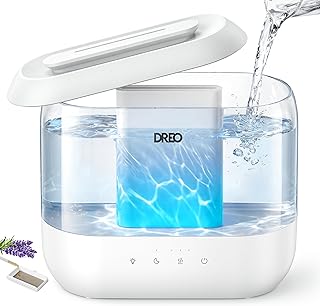
DREO HM311 4L
A 36-hour run at 28 dB puts this in the same conversation as the Levoit, and the wide opening makes weekly cleaning a two-minute job rather than a chore you postpone. Strong choice for a larger room with a substantial plant shelf.
Coolfiqu 6L Warm & Cool Mist
The warm-mist mode is the differentiator: it raises humidity faster in cold rooms and reduces the chilly draft that cool-mist units can create near a bed. Auto humidity control plus a 360° nozzle means you can set a target and let it hold the line overnight.
ROSEKM 2.0L Cool Mist
Filterless, compact, and quiet enough for a nightstand or a small propagation station. It won’t humidify a whole bedroom, but as a targeted microclimate machine for a few fussy plants in a modest space it’s excellent value.
VIVOSUN AeroStream H05
This is the grower’s pick rather than the sleeper’s — a 5L smart unit with a remote humidity probe and VPD-based control, which is genuinely superior precision if you’re running a tent or a serious indoor collection. Overkill for a nightstand; ideal for a plant room.
Frequently Asked Questions
Will a humidifier that helps my plants also help me sleep?
Usually, yes. Holding a room at 45–55% reduces nasal dryness, throat irritation and snoring intensity for many people, and sits comfortably within the range most tropicals prefer.
Cool mist or warm mist for plants?
Cool mist is the safer default and uses less power. Warm mist raises humidity faster in cold rooms and avoids the cool draft near a bed, which is why a dual-mode unit is a sensible compromise.
How close should the humidifier sit to my plants?
Two to three feet away, aimed across the foliage rather than directly at it. Point mist at leaves continuously and you invite fungal spotting; raise the unit and let humidity diffuse instead.
How often does it need cleaning?
Rinse the tank every refill and do a proper descale weekly with white vinegar or citric acid. Use distilled water if your tap is hard — it prevents the white mineral dust that settles on leaves and furniture.
Final Thoughts
For most people sharing a bedroom with plants, the Levoit NeoClassic 450 is the one to buy: quietest in the group, longest runtime, easiest to keep clean. Choose the Coolfiqu 6L if your room runs cold and you want warm mist with automatic humidity holding, and step up to the VIVOSUN AeroStream H05 only if you’re managing a dedicated plant room where probe-based precision earns its keep.