Key takeaways
- Diffusion over exposure: Bare filament bulbs at eye level create discomfort glare, which keeps your visual system alert long after you’d like to be sleepy. Look for frosted glass, layered crystal, or shades that scatter light rather than beam it. Faceted K9 crystal is a strong diffuser — it breaks a single point source into hundreds of soft reflections.
- Dimmability is non-negotiable: Confirm the fixture works with a TRIAC or ELV dimmer and buy dimmable bulbs to match. The ability to drop to roughly 10% output after sunset is the single most useful feature a chandelier can have for sleep hygiene. E12 and E26 sockets give you the widest choice of dimmable warm-white lamps.
- Colour temperature you control: Fixtures with replaceable bulbs beat integrated LED arrays, because you decide the Kelvin. Stay at or below 2700K in bedrooms and dining rooms; save 3000K and above for kitchens and stairwells where you need visual acuity, not calm.
- Scale and hanging height: Add your room’s length and width in feet — that number in inches is a reasonable diameter. Over a dining table, hang the bottom 30 to 34 inches above the surface. In an entryway or stairwell, keep at least seven feet of clearance. Adjustable chain or rod length is worth paying for.
- Weight, wiring, and assembly: Multi-tier crystal fixtures can exceed 30 pounds and need a rated brace or junction box, plus an electrician in most cases. If you want a weekend project instead, prioritise pre-assembled models and confirm the canopy fits your existing box.
What's inside
Most people shop for a chandelier the way they shop for a painting — they look at it, decide whether it’s beautiful, and stop there. But a chandelier isn’t decoration that happens to glow. It’s a light source suspended in the room where you unwind, eat your last meal of the day, and pass through on the way to bed. As someone who spends most days talking to clients about why their sleep is fragmented, I can tell you that overhead lighting is one of the most overlooked culprits in the house. A fixture that throws hard, cool-toned light downward at 9pm will quietly delay melatonin release, and no amount of blackout curtains later will undo that.
This guide looks at the best chandeliers of 2026 through a lens most roundups skip: how each one behaves in the evening. I’ve weighed crystal cut and glass diffusion for glare control, socket type for bulb flexibility, dimmer compatibility, and mounting height — because the vertical position of a light source relative to your eyes matters more than its wattage. Aesthetics still count, and every fixture here earns its place visually. But you’ll also learn which ones support a wind-down routine and which demand a dimmer switch before you hang them.
As an Amazon Associate we earn from qualifying purchases.


How to Choose a Chandelier (2026)
- Diffusion over exposure: Bare filament bulbs at eye level create discomfort glare, which keeps your visual system alert long after you’d like to be sleepy. Look for frosted glass, layered crystal, or shades that scatter light rather than beam it. Faceted K9 crystal is a strong diffuser — it breaks a single point source into hundreds of soft reflections.
- Dimmability is non-negotiable: Confirm the fixture works with a TRIAC or ELV dimmer and buy dimmable bulbs to match. The ability to drop to roughly 10% output after sunset is the single most useful feature a chandelier can have for sleep hygiene. E12 and E26 sockets give you the widest choice of dimmable warm-white lamps.
- Colour temperature you control: Fixtures with replaceable bulbs beat integrated LED arrays, because you decide the Kelvin. Stay at or below 2700K in bedrooms and dining rooms; save 3000K and above for kitchens and stairwells where you need visual acuity, not calm.
- Scale and hanging height: Add your room’s length and width in feet — that number in inches is a reasonable diameter. Over a dining table, hang the bottom 30 to 34 inches above the surface. In an entryway or stairwell, keep at least seven feet of clearance. Adjustable chain or rod length is worth paying for.
- Weight, wiring, and assembly: Multi-tier crystal fixtures can exceed 30 pounds and need a rated brace or junction box, plus an electrician in most cases. If you want a weekend project instead, prioritise pre-assembled models and confirm the canopy fits your existing box.
The Best Chandeliers (2026) Reviewed
Gold Crystal 12-Light Empire Chandelier, 22″
The tiered empire silhouette wraps twelve candelabra sockets in enough K9 crystal to soften every one of them, which is exactly what you want in a dining room used after dark. Adjustable height makes it easy to hit that 30-inch clearance over a table, and the E12 sockets accept warm dimmable lamps without hunting for proprietary parts.
37″ Extra Large 14-Light Gold Round Chandelier
Smoke-tinted blown glass is a quietly brilliant choice for evening rooms — the tint knocks down luminance at the source, so the fixture reads as warm ambience rather than fourteen bright points. At 37 inches it needs a generous room and a tall ceiling, but in an open living space it’s the most restful of the modern picks here.
31-Light Chrome Three-Tier Empire Crystal Chandelier, 32″
A statement piece for double-height foyers and staircases, where its sheer crystal mass distributes light beautifully across two floors. The chrome finish pushes the tone cooler, so pair it with 2700K bulbs and a dimmer, and be prepared for professional installation given the weight.
Antique Gold 12-Light Three-Tier Raindrop Chandelier, 31″
The raindrop strands do real optical work, drawing the eye upward and away from the sockets while spreading a gentle sparkle across the ceiling. Antique gold warms the light slightly compared with chrome, making this an easy fit above a dining table you actually linger at.
Black 6-Light Farmhouse Chandelier
The practical choice: no assembly required, six standard sockets, and a matte black frame that hides in the shadows once you dim it. Because the bulbs sit relatively exposed, I’d pair it with frosted or amber-tinted lamps rather than clear filaments, especially in a bedroom.
Frequently Asked Questions
Can a chandelier really affect my sleep?
Indirectly, yes. Bright, blue-shifted light in the two to three hours before bed suppresses melatonin and pushes your body clock later. A chandelier is often the brightest fixture in the rooms you occupy during that window, so its bulb choice and dimming range matter more than its location suggests.
What bulbs should I use for evening comfort?
Dimmable LEDs at 2200K to 2700K, with a CRI of 90 or higher so skin tones and food still look right. Frosted envelopes beat clear ones for glare. Check the fixture’s maximum wattage per socket and stay under it.
Is a chandelier appropriate in a bedroom?
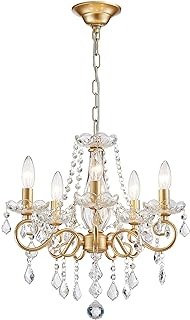
Absolutely, provided it’s dimmable and mounted so the sockets sit outside your sightline when you’re lying down. Mini crystal fixtures like the ANJIADENGSHI 16.9-inch model suit bedrooms and kitchen islands well, since five sockets on a dimmer give plenty of low-end control.
Do I need an electrician?
For anything over about 15 pounds, or if your ceiling box isn’t fixture-rated, yes. Heavy multi-tier crystal fixtures also benefit from a brace installed between joists. Pre-assembled lightweight models are the realistic DIY option.
Final Thoughts
If you want one fixture that looks impressive and behaves well after sunset, the 37″ 14-Light Gold Round Chandelier with smoke blown glass is my top pick — the tinted diffusion does the heavy lifting for you. For dining rooms, the Gold Crystal 12-Light Empire, 22″ offers the best balance of scale, adjustability, and glare control, while the ANJIADENGSHI Mini Crystal Chandelier is the smart small-space choice for bedrooms and islands. Whichever you choose, install a dimmer at the same time. It’s the cheapest sleep upgrade in the whole project.