Key takeaways
- Sealed filtration, not just a filter: A HEPA-rated media element means little if the housing leaks around it. Look for language about full-seal or multi-stage systems, and treat filtration as a respiratory-health feature — captured dust mite debris and pet dander are the same triggers that fragment sleep in sensitive people.
- Realistic run time: Advertised maximums assume the lowest suction setting. Assume roughly a third of the headline figure at full power, then decide whether swappable batteries or a single long-life pack fits your route better. Two 65-minute batteries beat one 70-minute pack for continuous work.
- Load distribution: Stick formats put weight in your wrist and shoulder; backpack formats transfer it to hips if the harness is designed properly. For anything over 30 minutes of continuous use, hip-loaded designs are markedly kinder to the cervical spine.
- Sound pressure at working distance: Anything above roughly 75 dB becomes a nuisance in occupied spaces and a fatigue source for the operator. Quiet modes are worth real money in hospitality and healthcare settings.
- Brush-roll hair management: Anti-tangle geometry eliminates the mid-shift ritual of cutting hair off a roller with scissors. In pet-heavy environments this single feature saves more time than any suction spec.
What's inside
Ask anyone who cleans for a living what wakes them at 3 a.m., and it’s rarely the alarm clock — it’s the shoulder that never fully loosened, the dust that followed them home, the ringing in the ears after eight hours behind a machine. As someone who spends most of my working life studying what degrades human sleep, I’ve come to see vacuum choice as an unlikely but real sleep variable. Fine particulate stirred up by a leaky filter settles in bedding and upper airways. Noise exposure late in a shift keeps cortisol elevated well past clock-out. And a poorly balanced canister strapped to a torso quietly builds the kind of musculoskeletal tension that makes lying flat uncomfortable hours later.
This guide looks at cordless commercial vacuums through that lens: sealed filtration that actually traps allergens instead of aerosolizing them, run times long enough to finish a route without a mid-job battery scramble, and ergonomics that spare your neck and lumbar spine. I’ve weighted quiet operation heavily, since machines used in occupied hotels, clinics, and short-term rentals are frequently running while someone nearby is trying to rest. Below you’ll find the models worth your attention in 2026, plus the specifications that genuinely predict long-term comfort.
As an Amazon Associate we earn from qualifying purchases.




How to Choose a Cordless Commercial Vacuum (2026)
- Sealed filtration, not just a filter: A HEPA-rated media element means little if the housing leaks around it. Look for language about full-seal or multi-stage systems, and treat filtration as a respiratory-health feature — captured dust mite debris and pet dander are the same triggers that fragment sleep in sensitive people.
- Realistic run time: Advertised maximums assume the lowest suction setting. Assume roughly a third of the headline figure at full power, then decide whether swappable batteries or a single long-life pack fits your route better. Two 65-minute batteries beat one 70-minute pack for continuous work.
- Load distribution: Stick formats put weight in your wrist and shoulder; backpack formats transfer it to hips if the harness is designed properly. For anything over 30 minutes of continuous use, hip-loaded designs are markedly kinder to the cervical spine.
- Sound pressure at working distance: Anything above roughly 75 dB becomes a nuisance in occupied spaces and a fatigue source for the operator. Quiet modes are worth real money in hospitality and healthcare settings.
- Brush-roll hair management: Anti-tangle geometry eliminates the mid-shift ritual of cutting hair off a roller with scissors. In pet-heavy environments this single feature saves more time than any suction spec.
The Best Cordless Commercial Vacuums (2026) Reviewed
X7A Pro Cordless Stick Vacuum (650W, 55KPa)
The X7A Pro is the most balanced stick option here: strong static lift, a self-standing body that doesn’t require a wall to lean against between rooms, and an anti-tangle roller that holds up under long-hair loads. The touch screen makes battery triage obvious at a glance, which matters more than it sounds when you’re pacing a multi-unit turnover.
Upgraded 55KPa Stick Vacuum with Hurricane Mode
Essentially the X7A platform with a boosted top-end setting and a larger 1.8L dust cup, this one suits embedded grit in commercial carpet where a slower pass at maximum draw genuinely outperforms repetition. Expect the shortest run time of the group in Hurricane Mode, so reserve it for problem areas rather than whole-floor work.
Tomahawk 18V Battery Backpack Vacuum (6L)
For janitorial routes and occupied buildings, this is my pick. The backpack format loads your hips rather than your wrist, the 6L capacity means fewer interruptions, and the notably quiet operation lets you clean corridors and lobbies without disturbing guests trying to sleep — a genuine operational advantage in hospitality.
130-Minute Dual-Battery Cordless Vacuum (50KPa)
Two batteries and a wall-mount charging dock make this the most practical choice for anyone covering large square footage in a single session, since you swap rather than wait. I’d skip the scent cartridge; fragrance additives are a common and underappreciated irritant for people with reactive airways.
180° Foldable Wand Cordless Vacuum (650W, 55KPa)
The folding wand is the standout — it reaches under beds, desks, and low furniture without asking you to kneel or twist, which is exactly the posture that produces next-day back pain. The included hose and auto-mode round it out into a capable generalist.
Frequently Asked Questions
Is a cordless vacuum powerful enough for commercial carpet?
For maintenance cleaning, yes — modern 50–55KPa units handle daily soil comfortably. For deep restorative extraction on heavily trafficked commercial carpet, a corded upright still has the endurance advantage.
Should I consider a corded backpack instead?
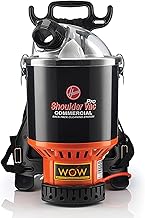
If you’re always near outlets, the Hoover Commercial Shoulder Vac Pro is a strong value: chiropractic harness design and HEPA media filtration with unlimited run time. It’s corded, so it trades mobility for endurance.
Does vacuuming actually affect sleep quality?
Indirectly but measurably. Reducing bedroom dust mite allergen load lowers nighttime nasal congestion and airway inflammation, both of which fragment sleep architecture. Weekly mattress-adjacent vacuuming with sealed filtration is a reasonable, low-cost intervention.
How long do these batteries last before replacement?
Plan on 500–800 full cycles, or roughly two to three years of daily commercial use. Buy platforms with readily available replacement packs rather than sealed-in cells.
Final Thoughts
If your work happens in occupied buildings, the Tomahawk 18V backpack is the sleep-conscious choice — quiet, hip-loaded, and large-capacity. For versatile all-day cleaning, the dual-battery 130-minute model removes the run-time anxiety entirely, while the X7A Pro remains the best-balanced stick vacuum for smaller commercial spaces and short-term rental turnovers.