Key takeaways
- Filtration depth: A basic carbon block improves taste, but multi-stage systems that address lead, mercury, chlorine byproducts and PFAS are the better investment in older buildings with uncertain pipework. Check for NSF or WQA certification rather than vague “purifies water” claims.
- Noise profile: Compressor cooling is more efficient but audible; thermoelectric cooling is quieter but slower to recover under heavy demand. If the unit sits near desks, quiet rooms, or a nap space, prioritize a model reviewers describe as low-hum and place it on a hard, level surface to avoid resonance.
- Hot water that’s genuinely hot: Aim for roughly 185–200°F if staff brew tea. Chamomile, valerian and lemon balm need near-boiling water to extract properly, and a lukewarm dispenser sends people back to the kettle queue.
- Hygiene and self-cleaning: Ozone or UV self-sanitizing cycles matter in shared environments where dozens of hands touch the same panel daily. Touchless dispensing and a removable drip tray are practical rather than luxury features.
- Footprint and installation reality: Countertop units suit kitchenettes and small teams; freestanding models handle 15+ people without constant recovery lag. Confirm you have a cold-water line and outlet within reach, and check whether a saddle valve installation kit is included before you book anyone to fit it.
What's inside
Most office hydration conversations stop at the afternoon slump, but as someone who spends their days studying sleep architecture, I’d argue the more interesting story unfolds after you clock out. Mild dehydration nudges cortisol upward, thickens the feeling of fatigue without making you genuinely sleepy, and pushes many people toward a third or fourth coffee well past the point where caffeine still clears the system before bedtime. Meanwhile, the opposite failure mode is just as common: employees who drink almost nothing between nine and five, then compensate with a liter of water at 9 p.m. and spend the night shuttling to the bathroom. A water source that people actually walk to — one that isn’t a warm, dusty jug in a back corner — quietly solves both problems.
That’s the lens I’ve applied to this guide. Bottleless dispensers plumb directly into your building’s cold-water line and filter on demand, which eliminates the delivery contracts, the lifting, the storage footprint, and the stagnant plastic taste that makes people avoid the cooler in the first place. Below you’ll find the models worth considering for 2026, ranked with attention to filtration quality, noise output (a genuine concern in open-plan rooms and adjacent to quiet zones), hot-water performance for herbal teas, and how much maintenance actually lands on whoever ends up unofficially responsible for it.
As an Amazon Associate we earn from qualifying purchases.




How to Choose a Bottleless Water Dispenser For Office (2026)
- Filtration depth: A basic carbon block improves taste, but multi-stage systems that address lead, mercury, chlorine byproducts and PFAS are the better investment in older buildings with uncertain pipework. Check for NSF or WQA certification rather than vague “purifies water” claims.
- Noise profile: Compressor cooling is more efficient but audible; thermoelectric cooling is quieter but slower to recover under heavy demand. If the unit sits near desks, quiet rooms, or a nap space, prioritize a model reviewers describe as low-hum and place it on a hard, level surface to avoid resonance.
- Hot water that’s genuinely hot: Aim for roughly 185–200°F if staff brew tea. Chamomile, valerian and lemon balm need near-boiling water to extract properly, and a lukewarm dispenser sends people back to the kettle queue.
- Hygiene and self-cleaning: Ozone or UV self-sanitizing cycles matter in shared environments where dozens of hands touch the same panel daily. Touchless dispensing and a removable drip tray are practical rather than luxury features.
- Footprint and installation reality: Countertop units suit kitchenettes and small teams; freestanding models handle 15+ people without constant recovery lag. Confirm you have a cold-water line and outlet within reach, and check whether a saddle valve installation kit is included before you book anyone to fit it.
The Best Bottleless Water Dispensers For Office (2026) Reviewed
Avalon Self-Cleaning Bottleless Water Cooler
This is the safest default for a mid-sized office: a stainless cabinet that resists fingerprints, three temperature settings including true room temperature for anyone who dislikes cold water, and an NSF-certified filter with an ozone self-cleaning cycle that removes the guesswork from shared-unit hygiene. Recovery is fast enough that a queue of five people at 11 a.m. won’t exhaust the cold tank.
Avalon B8BLK Countertop Touchless
The strongest choice where floor space is scarce — think a compact kitchenette or a satellite meeting room. Touchless dispensing reduces shared-surface contact, and the two-stage filter plus included installation kit means one afternoon of setup rather than a plumbing call, though heavy-traffic floors will outpace its smaller reservoir.
iSpring DS4S
My pick when water quality is the primary concern: the built-in four-stage system targets chlorine, lead, mercury and PFAS, which matters if your building predates modern plumbing standards. The child safety lock on the hot tap is worth noting for offices with family visits or on-site childcare, and the self-cleaning function keeps maintenance to filter swaps.
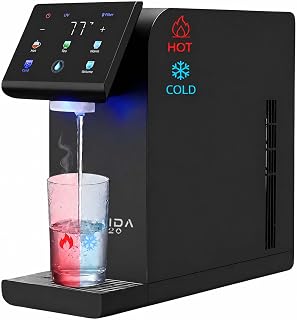
Ultra Instant Hot & Cold Countertop Dispenser
Well suited to quiet-first workplaces, this one pairs WQA-certified multi-stage filtration with UV sterilization and runs noticeably softer than compressor-heavy alternatives. Instant hot delivery makes it the best of this group for tea drinkers who’d otherwise reach for another espresso at 3 p.m.
Brio Self-Cleaning Bottleless Cooler
Brio’s point-of-use model is the workhorse option for busier offices, with a UL-approved stainless build and reliable hot, cold and ambient output that holds up to sustained demand. The self-cleaning cycle is straightforward to run, and the interface is simple enough that nobody needs a briefing.
Frequently Asked Questions
Does drinking water at the office really affect sleep?
Indirectly, and meaningfully. Steady daytime hydration reduces the fatigue signals people misread as needing caffeine, which lowers late-afternoon coffee intake — the single most common self-inflicted cause of delayed sleep onset. It also prevents the evening catch-up drinking that fragments sleep with bathroom trips.
When should staff stop drinking water to avoid night waking?
There’s no universal cutoff, but front-loading intake across the working day and tapering roughly two hours before bed works for most people. The goal is distribution, not restriction.
How often do bottleless dispenser filters need replacing?
Typically every six to twelve months, depending on stages, local water hardness and volume. Set a shared calendar reminder rather than waiting for a taste change — by then, performance has already declined.
Is a bottleless unit cheaper than bottled delivery?
Almost always over a two-year horizon. You trade recurring delivery invoices and storage space for a one-time installation and periodic filter costs, and you remove the labor of swapping heavy jugs entirely.
Final Thoughts
For most offices, the Avalon Self-Cleaning Bottleless Water Cooler is the balanced pick — capable, hygienic, and unfussy. Choose the iSpring DS4S if contaminant removal is your priority, or the Ultra Instant Hot & Cold if quiet operation and near-boiling water for evening-friendly herbal teas matter more than tank capacity. Any of the three will get people drinking during the day, which is where better nights quietly begin.