Key takeaways
- Roller depth control: The “4D” label means the rollers move in and out, not just up, down, and around. What matters is whether you can dial that protrusion down as well as up — gentle, slow strokes are what shift the body toward parasympathetic dominance. A chair that only goes hard is a poor sleep tool.
- Track length and shape: An SL-track should follow you from the base of the skull through the glutes and hamstrings. Longer tracks (53″–55″) reach the suboccipital area and upper glutes, two regions that quietly sabotage side sleepers. Check the stated length rather than trusting the word “extended.”
- Zero gravity execution: Look for a recline that lifts the knees above the heart and takes load off the lumbar spine. A well-tuned zero-gravity position lowers perceived body weight and makes it far easier to drift off mid-session — which is a feature, not a bug.
- Heat placement: Lumbar and abdominal (“core”) heating helps relax the deep hip flexors; shoulder or shawl heating targets the upper trapezius. Heat in the seat only is largely cosmetic. Warmth followed by cooling is also one of the more reliable sleep-onset cues we have.
- Evening usability: Voice control and app presets sound gimmicky until you’re half-asleep and don’t want to sit up and squint at a bright touchscreen. Favour chairs with quiet motors, dimmable displays, and one-touch programs you can trigger without opening your eyes.
What's inside
Most people shopping for a 4D massage chair aren’t chasing luxury — they’re chasing a decent night’s sleep. As a sleep-wellness practitioner, I hear the same story weekly: a client lies down at 11 p.m. with a jaw clenched from a day of screens, shoulders drawn up toward the ears, and a nervous system still running at daytime speed. They don’t need more melatonin. They need a reliable way to signal to the body that the workday is over. The trouble is that the massage chair category is a thicket of spec sheets — track lengths, airbag counts, “AI voice” — and almost none of it is written with wind-down in mind.
This guide sorts that out. Below you’ll find the 4D massage chairs I’d actually recommend for evening recovery in 2026, judged on the things that matter physiologically: how deeply and slowly the rollers can work, how well the chair supports the spine in a reclined position, whether the heat is placed where tension actually accumulates, and how quietly and predictably the whole thing runs. I’ve also included a short buying framework so you can evaluate any model you come across, plus answers to the questions clients ask me most often.
As an Amazon Associate we earn from qualifying purchases.


🛒 Best Price Today on Amazon
Prime members get fast, free shipping on everything above, plus member-only deals. New members get a 30-day free trial — cancel anytime.
How to Choose a/an 4d Massage Chair (2026)
- Roller depth control: The “4D” label means the rollers move in and out, not just up, down, and around. What matters is whether you can dial that protrusion down as well as up — gentle, slow strokes are what shift the body toward parasympathetic dominance. A chair that only goes hard is a poor sleep tool.
- Track length and shape: An SL-track should follow you from the base of the skull through the glutes and hamstrings. Longer tracks (53″–55″) reach the suboccipital area and upper glutes, two regions that quietly sabotage side sleepers. Check the stated length rather than trusting the word “extended.”
- Zero gravity execution: Look for a recline that lifts the knees above the heart and takes load off the lumbar spine. A well-tuned zero-gravity position lowers perceived body weight and makes it far easier to drift off mid-session — which is a feature, not a bug.
- Heat placement: Lumbar and abdominal (“core”) heating helps relax the deep hip flexors; shoulder or shawl heating targets the upper trapezius. Heat in the seat only is largely cosmetic. Warmth followed by cooling is also one of the more reliable sleep-onset cues we have.
- Evening usability: Voice control and app presets sound gimmicky until you’re half-asleep and don’t want to sit up and squint at a bright touchscreen. Favour chairs with quiet motors, dimmable displays, and one-touch programs you can trigger without opening your eyes.
The Best 4d Massage Chair (2026)s Reviewed
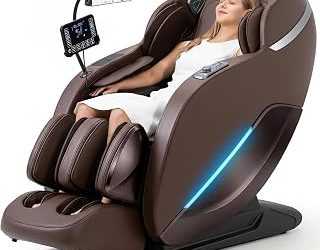
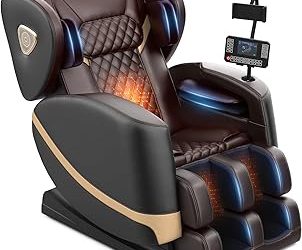
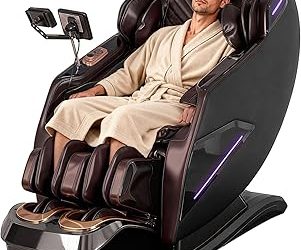
4D Zero Gravity SL-Track Shiatsu Recliner with Core Heating
With 20 techniques, core heating, and foot rollers, this is the most complete wind-down package here — I’d point most clients toward it first. The AI voice control earns its keep at night, letting you drop into a slower program without breaking the drowsy state you’ve just built.
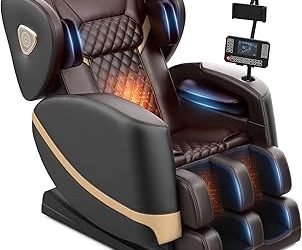
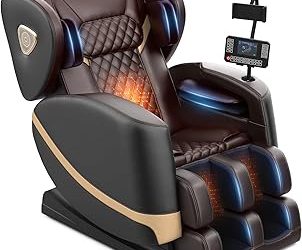
4D 55″ SL-Track Recliner with Body Scan
The 55-inch track is the longest in this group and genuinely reaches the neck and upper glutes, which is why it suits tall users and stubborn upper-back tension. Body scanning keeps roller placement accurate as you sink into the recline, and 40 airbags deliver broad, even compression rather than isolated squeezing.
4D+2D Dual Mechanism with Waist & Shawl Heating
Two mechanisms working in tandem let it hold deep pressure in the lumbar region while treating the shoulders more lightly — a combination few single-mechanism chairs manage. The shawl heating is the standout for anyone whose stress lives in the traps, and the Bluetooth music sync pairs neatly with a slow-tempo playlist.
4D 166° Flexible SL-Track Recliner
The flexible track conforms closely through the lumbar curve, so the rollers stay in contact instead of skipping over the low back. With 18 modes and 36 airbags it’s a well-rounded mid-range option, and the yoga stretch program is a sensible pre-bed routine for desk-bound hips.
4D 53.2″ Ultra Long SL Track with 32 Airbags
Full-body air compression plus core heating makes this the most enveloping chair on the list — closer to being held than being worked on, which is exactly right for anxious sleepers. Ten techniques is fewer than some rivals, but the ones included are well executed.
Frequently Asked Questions
Is 4D actually better than 3D for sleep?
Yes, mainly because of control. The added depth axis lets you slow the rollers and soften pressure in a way 3D chairs can’t, and slow, predictable, moderate pressure is what encourages the shift into rest mode.
How long should an evening session be?
Fifteen to twenty minutes, finishing 30 to 60 minutes before bed. Longer sessions risk soreness, and stopping a little early lets your core temperature drop — a useful sleep-onset signal.
Can I fall asleep in the chair?
Occasionally, no harm done; most chairs shut off automatically. As a habit, though, it’s worth moving to bed so your brain keeps associating the mattress with sleep.
Should I avoid one entirely?
Check with a clinician if you’re pregnant, have osteoporosis, a recent injury, blood clots, or an implanted device. Otherwise, start on the lowest intensity for the first week.
Final Thoughts
For most households, the 4D Zero Gravity SL-Track Shiatsu Recliner with core heating and AI voice is the best all-round sleep investment. Taller users or those with persistent upper-back tension should look at the 55″ SL-Track model with body scan, while anyone whose stress settles in the shoulders will get the most from the 4D+2D dual-mechanism chair with shawl heating.