Key takeaways
- Tunable color temperature: Insist on selectable CCT with a true 2700K setting. A single fixed 4000K strip is fine for meal prep and counterproductive after sunset; five-step tuning between 2700K and 5000K lets one fixture serve both the morning rush and the wind-down hour.
- Dimming depth, not just dimmability: “Dimmable” often means down to 20% and no further. For late-night use you want smooth, flicker-free performance at the bottom of the range, paired with a quality ELV or TRIAC dimmer that the manufacturer explicitly lists as compatible.
- Color rendering and R9: CRI above 90 with an R9 value above 90 keeps reds and skin tones accurate, which matters for both food prep and for making low-CCT settings feel restful rather than dingy.
- Glare control and mounting position: Mount toward the front edge of the cabinet with a diffused lens so you see illuminated counter, not the emitter itself. Direct line-of-sight glare at eye level is the single fastest way to make an otherwise good fixture feel harsh.
- Wiring and linkability: Confirm junction-box access, whether the fixture supports daisy-chaining, and how many units your circuit and driver can carry. Hardwired installs are permanent — plan the run before you open the drywall.
What's inside
Kitchen lighting decisions usually get made in daylight, standing in a showroom aisle, which is precisely the wrong context for them. The fixtures under your cabinets aren’t primarily daytime tools — they’re the lights you reach for at 6 a.m. while the coffee brews and at 11 p.m. while you rinse the last plate. Get the color temperature and dimming range wrong and you’ve installed a small, permanent alarm clock in your kitchen: a burst of high-intensity short-wavelength light that tells your suprachiasmatic nucleus the day has started, hours before you’d like it to.
I evaluate residential lighting the way I evaluate a bedroom: by how well it supports the body’s 24-hour rhythm rather than how bright it looks on a spec sheet. That means tunable color temperature, honest dimming down to a genuine low output, and color rendering good enough that warm settings look like warm light instead of muddy amber. Below are the hardwired under-cabinet options I’d actually specify in 2026, plus the recessed trims worth pairing them with for a layered, evening-friendly kitchen.
As an Amazon Associate we earn from qualifying purchases.


How to Choose a Hardwired Under Cabinet Lighting (2026)
- Tunable color temperature: Insist on selectable CCT with a true 2700K setting. A single fixed 4000K strip is fine for meal prep and counterproductive after sunset; five-step tuning between 2700K and 5000K lets one fixture serve both the morning rush and the wind-down hour.
- Dimming depth, not just dimmability: “Dimmable” often means down to 20% and no further. For late-night use you want smooth, flicker-free performance at the bottom of the range, paired with a quality ELV or TRIAC dimmer that the manufacturer explicitly lists as compatible.
- Color rendering and R9: CRI above 90 with an R9 value above 90 keeps reds and skin tones accurate, which matters for both food prep and for making low-CCT settings feel restful rather than dingy.
- Glare control and mounting position: Mount toward the front edge of the cabinet with a diffused lens so you see illuminated counter, not the emitter itself. Direct line-of-sight glare at eye level is the single fastest way to make an otherwise good fixture feel harsh.
- Wiring and linkability: Confirm junction-box access, whether the fixture supports daisy-chaining, and how many units your circuit and driver can carry. Hardwired installs are permanent — plan the run before you open the drywall.
The Best Hardwired Under Cabinet Lighting (2026)s Reviewed
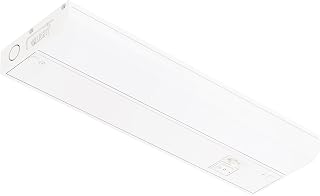
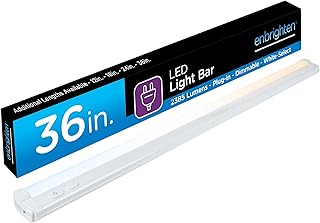
4-Pack Hardwired Under Cabinet Lighting, 12″ 10W 666LM
This is my default recommendation for a full galley or L-shaped kitchen: four 12-inch bars at 666 lumens each give you generous task light when you want it, and the five-step CCT selector plus CRI above 92 and R9 above 90 means the 2700K position looks genuinely warm rather than washed out. Dimming is smooth enough that I’m comfortable leaving these as the only light source after dark.
2-Pack Hardwired Under Cabinet Lighting, 12″ 10W 666LM
Identical optics and tuning in a smaller quantity — the right choice for a single run above a sink, a coffee station, or a closet where two bars will cover the span. Buying the pair rather than the four-pack also makes it easy to trial the color quality before committing to a whole-kitchen install.
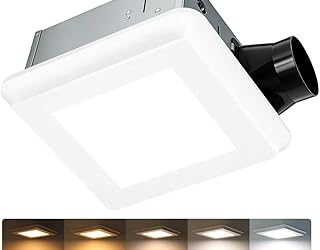
HALO LT 5/6″ LED Recessed Trim, 5-CCT, 750lm
At 750 lumens with five selectable color temperatures, the LT trim is the ambient layer that lets your under-cabinet lights stay dim in the evening instead of doing all the work. Set these to 2700K on a separate dimmer and you have a credible low-stimulus kitchen after 9 p.m.
HALO RL 5/6″ LED Recessed Trim, 5-CCT, 600lm
The lower-output sibling to the LT, and often the smarter pick in kitchens with eight-foot ceilings or tight fixture spacing where 750 lumens per can adds up quickly. Same five-step tuning, same reliable dimming behavior.
HALO HLBE Slim Canless Recessed, 4″, 3000K, 24-Pack
A pragmatic bulk option for renovations and additions: the slim canless housing installs where a full can won’t fit, and the fixed 3000K output is warm enough to coexist comfortably with tuned under-cabinet fixtures. Buy this one when you know your CCT and want consistency across many openings.
Frequently Asked Questions
What color temperature should under-cabinet lights be?
Choose tunable fixtures and use the range. Roughly 4000K to 5000K for daytime prep work, and 2700K dimmed low from a couple of hours before bed onward. Short-wavelength-heavy light in the evening measurably delays melatonin onset, so the ability to shift downward matters more than any single “best” number.
Will dim warm lighting be bright enough to cook by?
For finishing dishes, plating, and cleanup, yes — that’s why task lighting sits close to the work surface. For knife work and reading fine print, switch to a cooler, brighter setting temporarily. The point is having control, not permanently living in dim light.
Do I need an electrician for a hardwired install?
If you’re comfortable working in a de-energized junction box and your local code permits homeowner work, it’s a manageable project. If the run requires new circuits, wall fishing, or a permit, hire a licensed electrician — hardwired means you’ll live with the result for years.
Why does my dimmer buzz or flicker at low levels?
Almost always a driver-and-dimmer mismatch. Check the manufacturer’s compatibility list and use a dimmer rated for the load; flicker at low output is not just annoying but a genuine source of visual fatigue and headache for sensitive people.
Final Thoughts
For most kitchens, the 4-Pack Hardwired Under Cabinet Lighting is the strongest all-around choice — full-run coverage, five-step tuning, and color rendering that holds up at 2700K — with the 2-Pack serving smaller spans and single-station installs. Pair either with the HALO LT recessed trims on their own dimmer, and you’ll have a kitchen that supports alertness in the morning and gets out of your body’s way at night.