Key takeaways
- Color temperature: For evening-friendly bathrooms, look for fixtures that accept standard E26 bulbs so you can choose 2700K warm white for nighttime comfort. Fixed 5000K–6000K LEDs deliver excellent task visibility and morning alertness but are harsher on a pre-sleep routine, so treat them as a deliberate choice rather than a default.
- Dimming capability: A dimmable fixture is the single most useful feature for sleep hygiene, letting you drop output to 10–20% for late-night trips without waking yourself fully. Confirm compatibility with your existing wall dimmer before ordering.
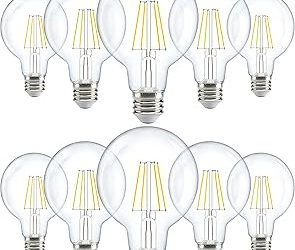
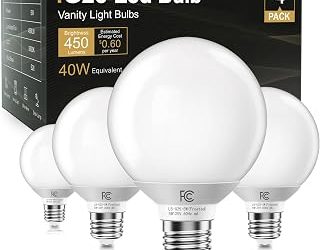
- Shade diffusion: Frosted or milky glass softens output and reduces glare, which is kinder to dark-adapted eyes. Clear glass looks sharper and more architectural but exposes the filament, so pair it with low-wattage or vintage-style bulbs.
- Beam direction: Shades that can be mounted upward wash the ceiling for gentle ambient light; downward-facing shades concentrate output on the sink and mirror for shaving or skincare. Rotatable heads let you switch between the two depending on time of day.
- Scale and placement: Match fixture width to roughly 75% of your mirror width, and mount 75–80 inches from the floor. Correct positioning eliminates the under-eye shadows that make good lighting feel bad.
What's inside
Most people shop for a vanity light the same way they shop for a towel bar: they pick whatever looks good above the mirror and move on. But the fixture over your bathroom sink is one of the last light sources your eyes register before bed and one of the first they meet at dawn — which makes it a quiet but genuine player in how well you sleep. A blast of cold, bright light during a 10 p.m. face-washing routine can suppress melatonin at precisely the moment your body is trying to release it, and a dim, shadow-heavy fixture at 6 a.m. does nothing to help your circadian clock understand that the day has started.
This guide approaches bathroom lighting through a sleep-wellness lens as well as a design one. Below you’ll find the vanity lights worth your money in 2026, plus the specifications that actually matter — color temperature, dimmability, shade diffusion, beam direction, and bulb flexibility — so you can choose a fixture that flatters your bathroom without sabotaging your rest.
As an Amazon Associate we earn from qualifying purchases.


How to Choose a Bathroom Vanity Light (2026)
- Color temperature: For evening-friendly bathrooms, look for fixtures that accept standard E26 bulbs so you can choose 2700K warm white for nighttime comfort. Fixed 5000K–6000K LEDs deliver excellent task visibility and morning alertness but are harsher on a pre-sleep routine, so treat them as a deliberate choice rather than a default.
- Dimming capability: A dimmable fixture is the single most useful feature for sleep hygiene, letting you drop output to 10–20% for late-night trips without waking yourself fully. Confirm compatibility with your existing wall dimmer before ordering.
- Shade diffusion: Frosted or milky glass softens output and reduces glare, which is kinder to dark-adapted eyes. Clear glass looks sharper and more architectural but exposes the filament, so pair it with low-wattage or vintage-style bulbs.
- Beam direction: Shades that can be mounted upward wash the ceiling for gentle ambient light; downward-facing shades concentrate output on the sink and mirror for shaving or skincare. Rotatable heads let you switch between the two depending on time of day.
- Scale and placement: Match fixture width to roughly 75% of your mirror width, and mount 75–80 inches from the floor. Correct positioning eliminates the under-eye shadows that make good lighting feel bad.
The Best Bathroom Vanity Lights (2026) Reviewed
Brushed Gold 3-Light Vanity Light with Clear Glass Shades
A warm-metal fixture that reads more like a piece of decor than a bathroom utility, and the brushed gold finish naturally complements the amber tones of low-Kelvin bulbs. Because the shades are clear, I’d fit it with 2700K filament-style bulbs on a dimmer for the most restful evening light.
FonmYim Brushed Nickel Vanity Light
The milky white frosted shades are the standout feature here: they scatter light evenly and virtually eliminate the hot spots that cause squinting at night. With E26 sockets and no bulbs included, you have full control over color temperature — my pick for anyone prioritizing sleep-friendly output.
Ascher 3-Light Wall Sconce
Clean, understated, and easy to install, this brushed nickel fixture works equally well over a mirror or in a hallway. The clear glass shades can be oriented up or down, giving you an ambient wash or focused task lighting depending on your routine.
Zarbitta 17.23″ Black Vanity Light
At just over 17 inches, this matte black fixture suits smaller vanities and powder rooms where wider bars overwhelm the wall. It’s the most versatile choice stylistically, though the dark finish absorbs a little output — plan on slightly brighter bulbs than you’d otherwise use.
LED Dimmable Matte Black Vanity Light with Rotatable Heads
The 360° rotatable acrylic heads make this genuinely adaptable: aim them at the ceiling for soft evening light, then rotate down for morning grooming. It’s factory-set at 6000K cool white, which is bracing first thing in the morning but worth dimming considerably after dark.
Frequently Asked Questions
What color temperature is best for a bathroom?
For most homes, 3000K is the sweet spot — warm enough to feel comfortable, neutral enough for accurate skincare and makeup. If your bathroom sits adjacent to your bedroom, lean toward 2700K.
Should a vanity light face up or down?
Upward-facing shades produce softer, glare-free ambient light and are generally more sleep-friendly. Downward-facing shades give you brighter task illumination but can cast shadows under the eyes.
How bright should a vanity light be?
Aim for roughly 1,500 to 2,000 lumens total across three bulbs for a standard bathroom. Pair that with a dimmer so you’re never forced to use full output at midnight.
Do I need a damp-rated fixture?
Over a vanity, standard fixtures are typically fine since they sit away from direct spray. Choose damp-rated hardware if the light will be near a shower or in a small, poorly ventilated room.
Final Thoughts
If sleep quality is your priority, the FonmYim brushed nickel fixture is the strongest all-round choice thanks to its frosted diffusion and bulb flexibility. The brushed gold 3-light option is the better pick for design-led bathrooms, while the LED rotatable matte black fixture suits anyone who wants one fixture to handle both a bright morning start and a dim evening wind-down.