Key takeaways
- Adjustment granularity: Look for either a digital setpoint in single degrees or at least nine discrete heat levels. Three-setting units force you into compromise: too cool to sweat, too hot to relax.
- Emitter type and placement: Carbon panels spread mild heat across a wide surface and hold a steady mid-range temperature well. Ceramic rods run hotter and more localized — better if you want intense heat on the back and shoulders.
- Preheat time versus session length: A cabin that needs 30 minutes to reach setpoint effectively adds half an hour to every session. Ten-minute warm-up claims are worth paying for if you’re squeezing sessions into an evening routine.
- Insulation quality: In tents, this is the whole ballgame. Multi-layer waterproof fabric holds a setpoint; thin single-layer shells bleed heat and cycle the heater constantly, giving you an uneven experience.
- EMF and timer controls: Low-EMF heaters and a programmable shutoff let you use lower temperatures for longer without babysitting the unit — the safest way to build heat tolerance.
What's inside
Most people shopping for an infrared sauna are chasing a number they’ve heard somewhere — 150°F, maybe 175°F — without realizing that infrared heat doesn’t work the way a traditional Finnish sauna does. In a conventional steam room, the air itself is the delivery system, so it has to be blisteringly hot. Infrared panels warm your tissue directly, which means a cabin sitting at a comparatively mild 120–140°F can produce a deeper, more sustained sweat than a hotter room ever would. Buyers who crank the dial to the maximum on day one often end up lightheaded, dehydrated, and convinced sauna bathing “isn’t for them.”
As someone who spends most working hours on thermoregulation and its relationship to sleep architecture, I’d argue the temperature question matters less than the temperature range a unit can hold reliably. This guide covers the models below with an eye toward heat control: how finely you can adjust output, how consistently the cabin or tent holds a setpoint, and whether the unit supports the gentle, pre-bed sessions that actually help you fall asleep faster. I’ve also included practical guidance on the temperature bands worth targeting for recovery, relaxation, and evening wind-down.
As an Amazon Associate we earn from qualifying purchases.


🛒 Best Price Today on Amazon
Prime members get fast, free shipping on everything above, plus member-only deals. New members get a 30-day free trial — cancel anytime.
How to Choose a Temp For Infrared Sauna (2026)
- Adjustment granularity: Look for either a digital setpoint in single degrees or at least nine discrete heat levels. Three-setting units force you into compromise: too cool to sweat, too hot to relax.
- Emitter type and placement: Carbon panels spread mild heat across a wide surface and hold a steady mid-range temperature well. Ceramic rods run hotter and more localized — better if you want intense heat on the back and shoulders.
- Preheat time versus session length: A cabin that needs 30 minutes to reach setpoint effectively adds half an hour to every session. Ten-minute warm-up claims are worth paying for if you’re squeezing sessions into an evening routine.
- Insulation quality: In tents, this is the whole ballgame. Multi-layer waterproof fabric holds a setpoint; thin single-layer shells bleed heat and cycle the heater constantly, giving you an uneven experience.
- EMF and timer controls: Low-EMF heaters and a programmable shutoff let you use lower temperatures for longer without babysitting the unit — the safest way to build heat tolerance.
The Best Temp For Infrared Sauna (2026)s Reviewed
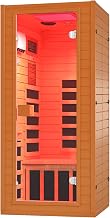
Dry Infrared Sauna Box with 9 Temp Levels and Red Light
The nine-step heat ladder is the standout here, letting you dial in a mild 110–120°F session for evening wind-down or push toward the upper range for post-workout recovery. Crystal heating panels warm quickly, and the red light module is a sensible bonus rather than the main event.
1-2 Person Infrared Sauna with Red Light Therapy and Bluetooth
At 40 by 36 inches, this cabin holds a mid-range setpoint impressively well thanks to its enclosed hardwood shell, and the extra footprint means you’re not pressed against a hot panel. The Bluetooth and radio integration make longer, lower-temperature sessions genuinely pleasant instead of a test of patience.
Homsido Hemlock 1-Person Sauna Room
The ten-minute pre-warm cycle and LCD setpoint control make this the most precise unit on the list — you can program a target temperature and duration and trust it to land there. Low-EMF 1200W panels on 110V mean no electrical work, which matters more than most buyers expect.
2-3 Person Ceramic Corner Sauna
Ceramic emitters run hotter than carbon, so this corner cabin suits anyone who found milder infrared underwhelming. The ultra-large hemlock enclosure retains heat exceptionally well, though I’d start at the lower end of its range and work upward across several weeks.
Infrared Sauna Tent with 3L Steamer
Five-layer insulated fabric is the reason this tent maintains temperature rather than merely reaching it, and the 99-minute timer plus remote means you can adjust heat without breaking your session. The steamer adds humidity, which raises perceived heat considerably — factor that in when choosing a level.
Frequently Asked Questions
What temperature should a beginner start at?
Begin at 110–120°F for 15 minutes. Most people sweat freely in that band once they’ve acclimated, and starting low dramatically reduces the risk of dizziness or a poor first impression.
Is a hotter sauna more effective?
Not reliably. Infrared penetrates tissue regardless of ambient air temperature, so session duration and consistency generally matter more than pushing the thermostat past 150°F.
What temperature is best before bed?
Keep it modest — around 115–125°F, finishing 90 minutes or more before you intend to sleep. The subsequent drop in core temperature is what cues sleep onset, and that rebound needs time to happen.
Do sauna tents get as hot as cabins?
Well-insulated tents reach comparable temperatures but hold them less evenly, particularly around the seams and zipper. Multi-layer fabric closes most of that gap.
Final Thoughts
For precise, repeatable heat control, the Homsido hemlock cabin is the clear pick — programmable setpoints and a fast pre-warm make it the easiest unit to build a consistent routine around. If you want more room and a warmer ceiling, the 2-3 Person Ceramic Corner Sauna delivers genuine intensity, while the 9-level Dry Infrared Sauna Box remains the smartest low-commitment entry point for anyone testing whether infrared belongs in their evenings.