Key takeaways
- Support zoning: Your shoulders and hips need to sink further than your lumbar region. Mattresses advertising 5-zone or 7-zone construction vary coil gauge or foam density along the length of the bed, which keeps the spine neutral instead of hammocked. On a king, zoning matters more than on smaller sizes because the extra width tempts sleepers to shift position frequently.
- Heat management: Core body temperature must drop roughly a degree to initiate and sustain deep sleep. Look for gel infusions, open-cell foam structures, or a hybrid coil layer that allows vertical airflow. Solid memory foam without any cooling strategy will insulate you like a blanket you can’t kick off.
- Height and layer count: A 12-inch profile suits lighter sleepers and platform frames; 14 to 16 inches gives heavier bodies enough transitional foam to avoid bottoming out against the base layer. Taller beds also need deep-pocket sheets, so budget for that.
- Motion isolation: Individually pocketed springs move independently, meaning your partner’s turn doesn’t travel across five feet of mattress to reach you. Interconnected innerspring units, common in bargain-bin kings, transmit almost everything.
- Certifications and trial length: CertiPUR-US confirms the foam was made without ozone depleters, heavy metals, or formaldehyde. A trial period of 100 nights or more matters because your body needs three to four weeks to adapt to a new surface — anything shorter isn’t a real test.
What's inside
A king mattress is the largest sleep surface most households will ever buy, and that scale creates a peculiar problem: the price tag makes people hesitate, then rush. Shoppers spend weeks comparing coil counts and foam densities, lose patience, and end up choosing whatever happens to be discounted that weekend. The result is a bed that technically fits the room but fails the sleeper — too hot at 3 a.m., too soft under the hips, or so lively that one partner’s midnight trip to the kitchen wakes the other.
As someone who spends professional hours on sleep architecture and how surfaces interfere with it, I look at value differently than a spec sheet does. A genuine deal on a king mattress means the construction supports your spine through every position change, sheds body heat instead of trapping it, and holds its shape past the third year. Below you’ll find the models currently offering the strongest ratio of engineering to price, along with the criteria I use to separate real bargains from bulk foam in a nicely printed box.
As an Amazon Associate we earn from qualifying purchases.


🛒 Best Price Today on Amazon
Prime members get fast, free shipping on everything above, plus member-only deals. New members get a 30-day free trial — cancel anytime.
How to Choose a Deal On King Size Mattress (2026)
- Support zoning: Your shoulders and hips need to sink further than your lumbar region. Mattresses advertising 5-zone or 7-zone construction vary coil gauge or foam density along the length of the bed, which keeps the spine neutral instead of hammocked. On a king, zoning matters more than on smaller sizes because the extra width tempts sleepers to shift position frequently.
- Heat management: Core body temperature must drop roughly a degree to initiate and sustain deep sleep. Look for gel infusions, open-cell foam structures, or a hybrid coil layer that allows vertical airflow. Solid memory foam without any cooling strategy will insulate you like a blanket you can’t kick off.
- Height and layer count: A 12-inch profile suits lighter sleepers and platform frames; 14 to 16 inches gives heavier bodies enough transitional foam to avoid bottoming out against the base layer. Taller beds also need deep-pocket sheets, so budget for that.
- Motion isolation: Individually pocketed springs move independently, meaning your partner’s turn doesn’t travel across five feet of mattress to reach you. Interconnected innerspring units, common in bargain-bin kings, transmit almost everything.
- Certifications and trial length: CertiPUR-US confirms the foam was made without ozone depleters, heavy metals, or formaldehyde. A trial period of 100 nights or more matters because your body needs three to four weeks to adapt to a new surface — anything shorter isn’t a real test.
The Best Deal On King Size Mattress (2026)s Reviewed
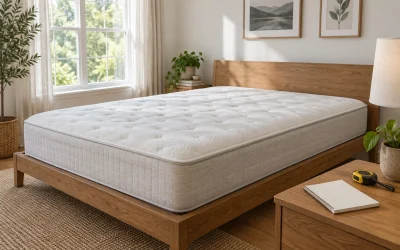
16 Inch Luxury Hybrid King with 7-Zone Support
The tallest option here, and the one I’d point toward couples with mismatched body weights, since seven distinct support zones plus a generous comfort layer accommodate two very different sleepers on one surface. A 365-night trial is unusually confident for this price bracket, giving you a full seasonal cycle to judge its temperature behavior.
12 Inch Cooling Gel Memory Foam Hybrid
A clean, unfussy hybrid: gel-infused foam over pocketed coils, tuned to a medium-firm feel that suits back and combination sleepers well. The slimmer profile keeps it manageable to move and works nicely on bed frames that already sit high off the floor.
Novilla 14 Inch Gel Memory Foam King
All-foam construction with a gel layer aimed squarely at contouring — this one cradles pressure points at the shoulder and hip more distinctly than the hybrids. Best suited to side sleepers who want that enveloping sensation and don’t mind trading a little bounce for it.
EGOHOME 12 Inch Green Tea Memory Foam
The green tea and charcoal infusion is a practical odor-control measure rather than a wellness gimmick, which counts for something in an all-foam bed that will absorb moisture nightly. Fiberglass-free construction is worth noting, since it removes the risk of fiber release if the cover is ever damaged.
14 Inch Hybrid King with Zoned Pocket Springs
Upgraded zoning paired with individually wrapped springs makes this a strong pick for restless sleepers or anyone sharing the bed with a partner who works irregular hours. The medium-firm response strikes a sensible middle ground for households that can’t agree on feel.
Frequently Asked Questions
How long does a mattress in a box take to expand?
Most reach usable firmness within 24 hours and full loft by 72. Unbox it in the room where it will live, keep the space above 65°F, and resist sleeping on it the first night if you can — compressed cells recover more evenly without load.
Is a hybrid better than all-foam for a king?
Generally yes, for two reasons: coils provide edge support across a wider span, and they ventilate. All-foam kings can feel soft toward the perimeter, which effectively shrinks the usable sleep surface you paid for.
What firmness should I choose?
Medium-firm serves the largest share of sleepers because it supports the lumbar curve while still yielding at the shoulder. Dedicated side sleepers may prefer something softer; those with lower back pain typically report better mornings on firmer surfaces.
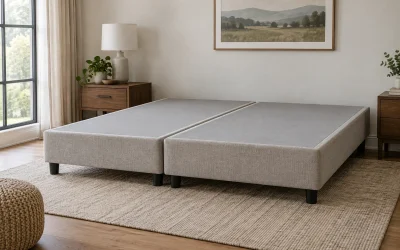
Do I need a box spring?
No. These mattresses require a solid platform or a slatted base with gaps no wider than three inches. A traditional box spring flexes too much and can void the warranty.
Final Thoughts
If you want the most engineering per dollar, the 16 Inch 7-Zone Hybrid earns the top slot on the strength of its zoning and its year-long trial window. Couples sensitive to movement should look hard at the 14 Inch Zoned Hybrid with pocket springs, while side sleepers chasing contour and cooling will likely be happiest with the Novilla 14 Inch gel foam king. Any of the three represents a real deal rather than a discount on the wrong bed.