Key takeaways
- Carbon mass, not just HEPA: HEPA media captures dander and litter dust but is chemically blind to ammonia and mercaptans. Odor control lives entirely in the activated carbon stage, so favor units with a substantial carbon layer rather than a thin fabric wrap dusted with granules.
- Sleep-mode acoustics: Look for a documented low-speed figure in the low-to-mid 20-decibel range. Anything above roughly 35 dB in a bedroom starts competing with your own arousal threshold, and a purifier that you turn off at bedtime is a purifier that does nothing during the eight hours it matters most.
- Air changes per hour for your actual room: Manufacturer square-footage claims usually assume a single air change. For odor, you want four or five per hour, which in practice means choosing a unit rated for roughly three to four times the room you’re treating.
- Ozone: understand what you’re buying: Ozone genuinely destroys odor compounds, but it is a respiratory irritant for both humans and cats and should never run in an occupied or sleeping space. If you choose an ozone-capable device, it belongs in an unoccupied utility area on a timer — or choose an ozone-free model instead.
- Placement and light discipline: Odor plumes rise, so a unit slightly elevated near the box intercepts more than one tucked behind furniture. And check whether the display can be dimmed fully — a bright AQI readout is a small but real source of light pollution at the bedside.
What's inside
Anyone who has ever set up a litter box within earshot of the bedroom knows the particular indignity of being woken at 3 a.m. by ammonia. Sleep science has spent decades focused on light and noise, but olfactory disturbance is the quiet third variable: odor molecules keep the brain’s arousal systems lightly engaged, and a room that smells faintly of a litter box is a room where you surface more often through the night without ever knowing why. Cats, meanwhile, are creatures of habit — moving the box across the house is rarely the clean fix owners hope for.
This guide approaches the problem from a sleep-hygiene standpoint rather than a purely mechanical one. Below you’ll find the two categories of device that actually address litter odor — true HEPA-and-carbon purifiers that move real volumes of air, and small plug-in ionizers designed to sit near the box itself — along with what to look for in noise output, filter chemistry, and nighttime behavior. I’ve flagged where a product genuinely belongs in a bedroom and where it does not.
As an Amazon Associate we earn from qualifying purchases.


How to Choose an Air Purifier For Cat Litter Odor (2026)
- Carbon mass, not just HEPA: HEPA media captures dander and litter dust but is chemically blind to ammonia and mercaptans. Odor control lives entirely in the activated carbon stage, so favor units with a substantial carbon layer rather than a thin fabric wrap dusted with granules.
- Sleep-mode acoustics: Look for a documented low-speed figure in the low-to-mid 20-decibel range. Anything above roughly 35 dB in a bedroom starts competing with your own arousal threshold, and a purifier that you turn off at bedtime is a purifier that does nothing during the eight hours it matters most.
- Air changes per hour for your actual room: Manufacturer square-footage claims usually assume a single air change. For odor, you want four or five per hour, which in practice means choosing a unit rated for roughly three to four times the room you’re treating.
- Ozone: understand what you’re buying: Ozone genuinely destroys odor compounds, but it is a respiratory irritant for both humans and cats and should never run in an occupied or sleeping space. If you choose an ozone-capable device, it belongs in an unoccupied utility area on a timer — or choose an ozone-free model instead.
- Placement and light discipline: Odor plumes rise, so a unit slightly elevated near the box intercepts more than one tucked behind furniture. And check whether the display can be dimmed fully — a bright AQI readout is a small but real source of light pollution at the bedside.
The Best Air Purifier For Cat Litter Odor (2026)s Reviewed
LEVOIT Vital 100S-P
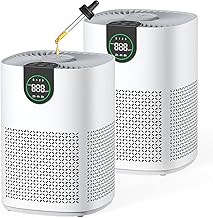
This is the one I recommend most often for bedrooms that share space with a litter box: the sleep mode is quiet enough to disappear beneath ordinary room ambience, and its rated coverage means a typical 250-square-foot bedroom gets a genuinely high turnover rate. The washable pre-filter also matters more than it sounds, since litter dust otherwise chokes the carbon stage within weeks.
KNKA APH4000
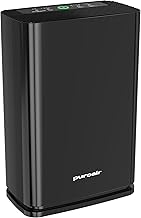
The stronger choice for open-plan homes or a large bedroom-plus-ensuite layout, with headroom to run on a lower, quieter setting while still clearing the room several times an hour. Its pet mode and AQI display are useful for diagnosing when odor actually spikes — usually within thirty minutes of a litter visit.
Cat Litter Deodorizer Plug-In Ionizer (3 Pack)
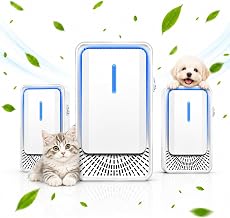
Best understood as a supplement rather than a purifier: these small plug-ins sit directly at the source and take the edge off the localized odor a whole-room unit takes longer to reach. The three-pack lets you cover the litter area, a hallway, and a bathroom without cluttering any single outlet.
Ozone-Free Plug-In Negative Ion Deodorizer
My preferred pick among the compact plug-ins for anywhere a person or cat sleeps, precisely because it forgoes ozone entirely and still offers three circulation modes. Unscented is the right call here — masking fragrances add another volatile compound to a room you’re trying to keep neutral.
Ozone & Negative Ion Deodorizer with Sensor Monitor
The most aggressive odor destroyer on this list and the most situational: the sensor monitor is a genuine safety feature, but ozone output means this belongs in a laundry room, garage, or basement litter station that nobody occupies while it runs. Treat it as a periodic reset for stubborn odor, not a nightly appliance.
Frequently Asked Questions
Can a purifier in the bedroom really improve my sleep?
Indirectly but meaningfully. Reducing airborne dander and ammonia lowers the odds of nasal congestion and micro-arousals, and many owners report the steady low-frequency airflow doubles as effective broadband masking for hallway noise.
Is ozone safe around cats?
No, not in shared air. Cats have proportionally smaller and more sensitive respiratory systems than we do, and ozone is an irritant at concentrations well below what people can smell. Reserve ozone devices for unoccupied rooms.
Should I run the purifier all night or only during the day?
All night, on sleep mode. Odor accumulates most during the hours you’re stationary and breathing the same air for eight uninterrupted hours, so continuous low-speed operation outperforms intermittent high-speed bursts.
How often do filters need replacing with a litter box nearby?
Expect to shorten the manufacturer’s interval by roughly a third. Rinse the pre-filter monthly, and if odor breaks through despite normal airflow, that’s the carbon stage saturating rather than the unit failing.
Final Thoughts
For most bedrooms, the LEVOIT Vital 100S-P is the balanced answer — quiet enough to leave running through the night, with enough carbon to actually neutralize ammonia rather than dilute it. Scale up to the KNKA APH4000 if you’re treating an open-plan space, and pair either with the ozone-free plug-in negative ion deodorizer at the box itself. Combined, that layered approach handles odor at the source and in the room air, which is exactly the arrangement that keeps litter out of your sleep.