Key takeaways
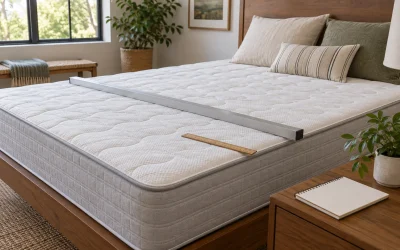
- Slat spacing and support: Modern foam and hybrid mattresses need slats no more than 2.75 inches apart, plus a center support leg on queen and king sizes. Wider gaps cause the mattress to sag between slats, which shows up as lower-back discomfort long before it shows up visually. Confirm this specification before anything else.
- Headboard height and padding depth: If you read, work, or nurse in bed, look for at least 45 inches of headboard height and padding thick enough that you can’t feel the frame beneath it. Wingback designs add lateral enclosure, which many light sleepers find calming and which also blocks stray light from a partner’s lamp.
- Fabric type versus your household: Chenille is soft and visually rich but attracts pet hair and shows water marks. Tight-weave polyester and performance linen resist abrasion and clean more easily. If you have cats, prioritize weave tightness over hand-feel — loose loops are an invitation.
- Joinery and hardware quality: Metal-to-metal bolt connections at the side rails hold their tension far better than screws driven into particleboard. This single detail predicts whether your bed will be silent or squeaky in two years, and it’s worth asking about directly.
- Clearance and profile: Low-profile platforms suit smaller rooms and anyone who dislikes climbing into bed, while taller frames offer under-bed storage. Measure your ceiling height against total stack height — mattress plus frame — so a tall headboard doesn’t crowd the room visually.
What's inside
Sleep hygiene conversations tend to fixate on mattresses, blackout curtains, and magnesium, while the bed frame gets treated as pure decoration. That’s a mistake. The frame is what determines whether your mattress is evenly supported at 3 a.m., whether the headboard creaks when your partner rolls over, and whether the surface behind your head is comfortable enough that reading in bed doesn’t require a wall of pillows. Upholstered beds solve several of these problems at once — fabric absorbs sound instead of reflecting it, padding removes hard edges, and a tall headboard creates the enclosed, cave-like feeling that helps the nervous system downshift. The catch is that quality varies enormously, and photographs reveal almost nothing about slat spacing, foam density, or how a frame behaves in year three.
This guide evaluates the upholstered beds worth your money in 2026, judged on the criteria that actually affect sleep: structural rigidity under load, slat support adequate for foam and hybrid mattresses, fabric durability, headboard height and padding depth, and honest assembly expectations. Below you’ll find the current picks, followed by a buying framework, individual assessments, and answers to the questions that come up most often once the box arrives.
As an Amazon Associate we earn from qualifying purchases.


🛒 Best Price Today on Amazon
Prime members get fast, free shipping on everything above, plus member-only deals. New members get a 30-day free trial — cancel anytime.
How to Choose an Upholstered Bed (2026)
- Slat spacing and support: Modern foam and hybrid mattresses need slats no more than 2.75 inches apart, plus a center support leg on queen and king sizes. Wider gaps cause the mattress to sag between slats, which shows up as lower-back discomfort long before it shows up visually. Confirm this specification before anything else.
- Headboard height and padding depth: If you read, work, or nurse in bed, look for at least 45 inches of headboard height and padding thick enough that you can’t feel the frame beneath it. Wingback designs add lateral enclosure, which many light sleepers find calming and which also blocks stray light from a partner’s lamp.
- Fabric type versus your household: Chenille is soft and visually rich but attracts pet hair and shows water marks. Tight-weave polyester and performance linen resist abrasion and clean more easily. If you have cats, prioritize weave tightness over hand-feel — loose loops are an invitation.
- Joinery and hardware quality: Metal-to-metal bolt connections at the side rails hold their tension far better than screws driven into particleboard. This single detail predicts whether your bed will be silent or squeaky in two years, and it’s worth asking about directly.
- Clearance and profile: Low-profile platforms suit smaller rooms and anyone who dislikes climbing into bed, while taller frames offer under-bed storage. Measure your ceiling height against total stack height — mattress plus frame — so a tall headboard doesn’t crowd the room visually.
The Best Upholstered Beds (2026) Reviewed
AMERLIFE Queen Sleigh Bed with Wingback Headboard
The curved headboard and footboard give this frame genuine presence, and the deep button tufting is hand-applied rather than heat-pressed, so it holds its shape under nightly leaning. The cream chenille is the trade-off: gorgeous in a low-traffic primary bedroom, high-maintenance if pets share the bed.
RECCI AirFrame Queen Upholstered Bed
The 360-degree foam surround is the standout feature here, eliminating every hard edge — a meaningful safety benefit in rooms shared with toddlers or anyone prone to nighttime disorientation. Its low profile suits compact bedrooms, though taller sleepers may find the entry height lower than they prefer.
Martha Stewart Maisie King Wingback Platform Bed
Cushioned siderails on a king frame are unexpectedly practical, softening the spot where you sit to put on shoes and where sheets typically abrade. The wood slat foundation is properly spaced for hybrid mattresses, making this the most complete package for couples who need real width.
SAFAVIEH Couture Jollie Queen Bed
The taupe-green chenille reads as considered rather than trend-chasing, and the construction reflects Couture-line standards in frame weight and upholstery tension. It’s the pick for anyone who wants the bed to anchor the room’s palette instead of disappearing into it.
koorlian Queen Bed with 51″ Wingback Headboard
At 51 inches, this headboard delivers the enclosed feeling that taller frames are prized for, at a notably accessible price and with assembly simple enough for one person. Fabric quality is good rather than exceptional, so treat it as a smart value play rather than an heirloom.
Frequently Asked Questions
Do upholstered beds attract dust mites or bed bugs?
Fabric frames hold slightly more dust than metal, but bed bugs are drawn to hosts, not upholstery. Vacuum the headboard seams monthly with a brush attachment and you’ve addressed the practical concern entirely.
Can I skip the box spring?
Yes. Every bed here uses a slat foundation designed to support the mattress directly. Adding a box spring raises the height awkwardly and provides no additional benefit.
How do I clean fabric upholstery?
Blot spills immediately, then spot-clean with a barely damp cloth and mild soap, working from the outside of the mark inward. Check the manufacturer’s code first — some chenilles are solvent-clean only, and water will leave rings.
Will an upholstered bed reduce noise?
Modestly, yes. Padded surfaces absorb rather than reflect sound, and cushioned rails mean no metal-on-metal contact. The larger benefit is the absence of the creak that develops in bolted hardwood frames.
Final Thoughts
For most buyers, the Martha Stewart Maisie offers the best balance of build quality, cushioned detailing, and mattress support at king size. Couples wanting design impact should look to the SAFAVIEH Jollie, while the RECCI AirFrame remains the smartest choice for compact rooms and households where soft edges matter most.