Key takeaways
- Check the sewn-in care label first, since some cases specify dry cleaning.
- For washable silk, use cool water and a mild detergent formulated for delicate fabrics.
- Close the zipper or fasten the envelope before washing, and use a mesh laundry bag.
- Wash separately from towels, denim, hook-and-loop fasteners, and garments with rough hardware.
- Do not use bleach, fabric softener, optical brighteners, or high heat.
- Press water out gently rather than twisting the fabric.
- Air-dry flat or hang indoors away from direct sunlight; avoid a tumble dryer unless the label explicitly permits it.
- Rotate two or three cases so each one has time to dry and recover between uses.
The best silk pillowcases for most sleepers are 22–25 momme, 100% long-strand mulberry silk, with a hidden zipper or envelope closure and a size that fits your pillow without excess fabric.
That combination gives you a useful balance of smoothness, durability, breathability, and price. Lighter 19–22 momme cases can suit hot sleepers or a tighter budget, while 25–30 momme silk feels more substantial and may last longer with careful washing. The right choice also depends on whether your priority is reducing morning hair friction, limiting facial creasing, staying cool, or buying a case that can withstand frequent laundering.
Our top picks
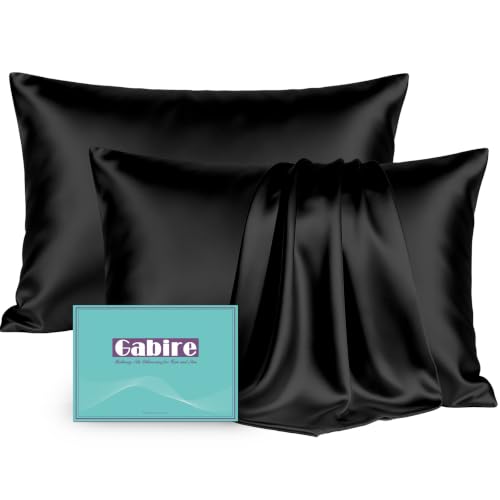
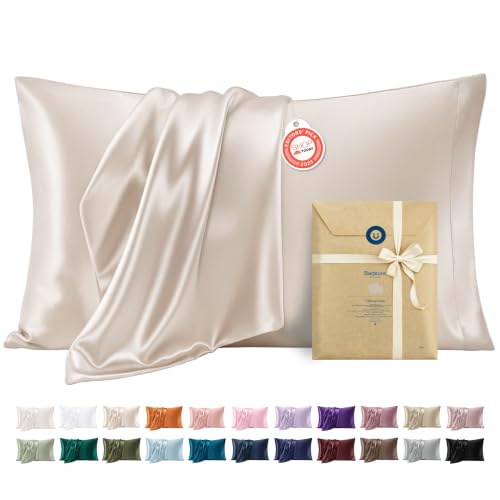
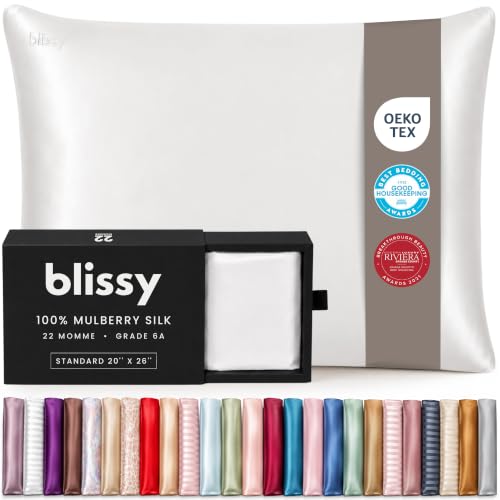

As an Amazon Associate we earn from qualifying purchases at no extra cost to you. Ratings are shown as listed on Amazon.
Best silk pillowcases by sleeping situation
| Situation | Recommended specification | Why it fits | Typical market range |
|---|---|---|---|
| Dry, curly, textured, or easily tangled hair | 22–25 momme, long-strand mulberry silk, envelope or concealed zipper | Creates a smooth surface with enough weight to resist early wear | Usually $40–$100 per case |
| Hot sleeper or warm bedroom | 19–22 momme silk with a breathable weave | Lightweight silk tends to feel cooler and dries faster after washing | Usually $25–$70 per case |
| Frequent washing | 25–30 momme, tightly finished seams, concealed zipper | Extra material helps compensate for repeated handling and laundering | Usually $60–$130 per case |
| Children, pets, or rough daily use | 22–25 momme with reinforced seams and a secure closure | Less likely to shift or snag than an unfastened open-end case | Usually $40–$100 per case |
| Luxury feel and longest potential service life | 25–30 momme long-strand mulberry silk | Denser fabric feels richer and generally tolerates wear better | Usually $70–$160 per case |
Silk grade: what you are actually buying
“Silk grade” can refer to the type of silk, the quality of the fibers, or a seller’s own labeling system. For a pillowcase, the most useful specifications are fiber content and strand length.
Mulberry silk
Mulberry silk is produced by silkworms fed a controlled diet, usually on mulberry leaves. It is commonly associated with consistent, smooth fibers and is the most widely recommended option for bedding. Look for wording such as “100% mulberry silk,” rather than a vague claim that a case is merely “silky.”
Long-strand or long-fiber silk
Long-strand silk can be woven into a smoother, more uniform fabric with fewer exposed fiber ends. This may reduce roughness and snagging, but “long-strand” is not a substitute for checking the actual fiber content. A case made from a silk blend or polyester satin can feel smooth while having different breathability, durability, and care characteristics.
Charmeuse silk
Charmeuse describes a satin weave, not a separate species of silk. One side is typically glossy and slippery, while the reverse is more matte. It is a popular construction for pillowcases because the smooth face allows hair and skin to move with less drag.
Silk pillowcases may help reduce friction-related hair tangling and the appearance of sleep creases, but they cannot prevent breakage caused by chemical processing, tight hairstyles, heat, or dehydration. They also do not replace a gentle cleanser, moisturizer, or hair-care routine.
Momme weight: the most useful durability comparison
Momme, written as “mm,” measures the weight and density of silk fabric. It is not the same as thread count, and a higher number does not automatically mean a softer or cooler pillowcase.
| Momme | Feel and performance | Best for | Trade-off |
|---|---|---|---|
| 16–19 momme | Light, smooth, and often less expensive | Occasional use, hot rooms, or limited budgets | More vulnerable to thinning, snags, and seam wear |
| 22 momme | Balanced weight, softness, and breathability | Most everyday sleepers | May cost more than lightweight silk |
| 25 momme | Denser, more substantial, and generally more durable | Nightly use and frequent rotation | Can feel warmer and take longer to dry |
| 30 momme | Heavy luxury fabric with a notably rich hand | Long-term bedding investment | Highest price and less airy feel |
For a single pillowcase used every night, 22–25 momme is usually the practical middle ground. If the price difference between 22 and 25 momme is small, the heavier option may be worthwhile. However, stitching, washing habits, and exposure to rough jewelry or dry skin can affect lifespan as much as momme weight.
Closure comparison: zipper, envelope, or open end?
Concealed zipper
A hidden zipper keeps the pillow inside the case and prevents the fabric from sliding off during sleep. It is a strong choice for restless sleepers, children, and adjustable pillows. Check that the zipper is covered by a fabric flap and does not sit directly under your cheek. Zippers can snag if pulled forcefully or if the pillow is overstuffed.
Envelope closure
An envelope case folds one end of the fabric over the pillow. It has no hard hardware against the face and is easy to wash, but a shallow flap may allow the pillow to work its way out. An overlap of roughly 6–10 inches is more secure than a minimal fold.
Open-end closure
Open-end cases are usually the least expensive and simplest to put on. They can shift during the night and may expose part of the pillow. They are acceptable for decorative or occasional use, but less convenient for everyday sleeping.
Choose the correct pillow size
Measure the pillow itself rather than relying only on the label. A case that is too large bunches under your face; one that is too small stresses the seams and closure.
| Common pillow size | Approximate pillow dimensions | Case size to look for |
|---|---|---|
| Standard | 20 × 26 inches | 20 × 26 inches or a close-fitting standard case |
| Queen | 20 × 30 inches | 20 × 30 inches |
| King | 20 × 36 inches | 20 × 36 inches |
| Body pillow | Approximately 20 × 54 inches | Match the manufacturer’s stated body-pillow dimensions |
Allow only a small amount of extra room. For example, a case that is 1–2 inches wider than the pillow may be manageable, while several inches of excess fabric can create folds that undermine the smooth surface. Deep or unusually full pillows may need a case with a gusset or a slightly larger finished dimension.
Wash care that protects silk
- Check the sewn-in care label first, since some cases specify dry cleaning.
- For washable silk, use cool water and a mild detergent formulated for delicate fabrics.
- Close the zipper or fasten the envelope before washing, and use a mesh laundry bag.
- Wash separately from towels, denim, hook-and-loop fasteners, and garments with rough hardware.
- Do not use bleach, fabric softener, optical brighteners, or high heat.
- Press water out gently rather than twisting the fabric.
- Air-dry flat or hang indoors away from direct sunlight; avoid a tumble dryer unless the label explicitly permits it.
- Rotate two or three cases so each one has time to dry and recover between uses.
Skin oils, hair products, and skincare ingredients can gradually discolor silk even when the fabric remains intact. Washing once a week is a reasonable starting point for regular use, with more frequent washing if you apply leave-in products or have sensitive, acne-prone skin.
What to inspect before buying
Read the specification panel for “100% silk,” momme weight, finished dimensions, and care instructions. Look closely at product photographs for even stitching, clean seam edges, and a closure that is not exposed on the sleeping surface. Be cautious of unusually low prices for very high momme weights, unclear fiber descriptions, or claims that confuse satin weave with silk fiber.
For the best overall balance, choose a 22–25 momme, 100% long-strand mulberry silk case in your exact pillow size, with a concealed zipper if you move during sleep or an envelope closure if you prefer a softer, hardware-free feel. That specification is durable enough for nightly use without paying the premium or accepting the extra warmth of the heaviest silk.