Key takeaways
- Rated capacity with hardware to match: Treat the headline number as a starting point, then check what supports it — a five-star steel or reinforced nylon base, a Class 4 gas cylinder, and a metal seat frame rather than moulded plastic. A 650 lb rating on a plastic base is marketing; the same rating on welded steel is engineering.
- Usable seat width, not overall width: Measure the space between the armrests, since that’s the dimension your hips actually occupy. Anything under 20 inches of clear seating will pinch, and lateral pressure on the outer thighs is a common contributor to evening tingling and leg restlessness.
- Cushion architecture over cushion thickness: Pocket-spring seats distribute load across independent coils and resist the bowl-shaped collapse that high-density foam develops after a few months. A collapsed seat rotates the pelvis backward, flattens the lumbar curve, and loads the discs you’d rather protect before bedtime.
- Adjustable lumbar plus genuine recline: Static “good posture” is still static. Look for height-adjustable lumbar support paired with a tilt lock that opens the hip angle past 100 degrees, so you can unload the spine periodically instead of holding one position all day.
- Casters and floor contact: Rubber or PU-coated wheels roll quietly, spare hard flooring, and reduce the micro-jolts that make you tense your shoulders. Dual-wheel casters spread the load better under higher body weights and resist seizing.
What's inside
Most people shopping for a heavy-duty desk chair are solving a daytime problem: the seat pan sags after six weeks, the armrests wobble, the gas cylinder sinks by lunchtime. But in my work with clients on sleep quality, the chair almost always turns up in the case history. Eight hours of compressed hips, restricted circulation through the back of the thighs, and a low back braced against unsupportive foam doesn’t stop mattering at 5 p.m. It shows up as the ache that keeps you shifting at 2 a.m., the leg restlessness that delays sleep onset, and the “tired but wired” fatigue that no amount of caffeine timing fixes. Seating is a recovery variable, not just a productivity one.
The trouble is that the big-and-tall category is thick with inflated numbers. A chair stamped 500 lbs may be tested at a fraction of that, in a lab condition that bears no resemblance to a full workday plus a lean-back and a swivel. This guide covers what the weight rating actually needs to be backed by, how seat geometry and cushion construction affect nighttime comfort, and five heavy-duty chairs that hold up under real, sustained daily use.
As an Amazon Associate we earn from qualifying purchases.


How to Choose an Office Chair For Fat People (2026)
- Rated capacity with hardware to match: Treat the headline number as a starting point, then check what supports it — a five-star steel or reinforced nylon base, a Class 4 gas cylinder, and a metal seat frame rather than moulded plastic. A 650 lb rating on a plastic base is marketing; the same rating on welded steel is engineering.
- Usable seat width, not overall width: Measure the space between the armrests, since that’s the dimension your hips actually occupy. Anything under 20 inches of clear seating will pinch, and lateral pressure on the outer thighs is a common contributor to evening tingling and leg restlessness.
- Cushion architecture over cushion thickness: Pocket-spring seats distribute load across independent coils and resist the bowl-shaped collapse that high-density foam develops after a few months. A collapsed seat rotates the pelvis backward, flattens the lumbar curve, and loads the discs you’d rather protect before bedtime.
- Adjustable lumbar plus genuine recline: Static “good posture” is still static. Look for height-adjustable lumbar support paired with a tilt lock that opens the hip angle past 100 degrees, so you can unload the spine periodically instead of holding one position all day.
- Casters and floor contact: Rubber or PU-coated wheels roll quietly, spare hard flooring, and reduce the micro-jolts that make you tense your shoulders. Dual-wheel casters spread the load better under higher body weights and resist seizing.
The Best Office Chairs For Fat People (2026) Reviewed
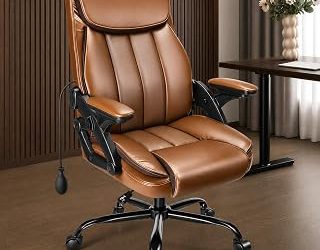
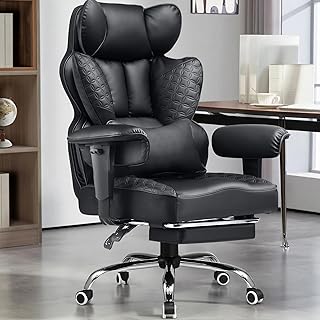
650lbs Big and Tall Executive Chair
The highest capacity here, with padded leather upholstery, adjustable lumbar support, and construction aimed squarely at eight-hour daily use rather than occasional sitting. If you’ve broken chairs before, start with the headroom this one gives you.
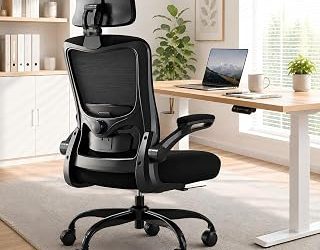
600LBS Heavy Duty Chair with 5D Flip Arms
The 5D flip-up armrests are the standout feature — being able to change arm position and height throughout the day meaningfully reduces trapezius tension, which is one of the more reliable predictors of a stiff neck at bedtime. Pocket-spring cushioning and dual rubber wheels round out a genuinely well-specified package.
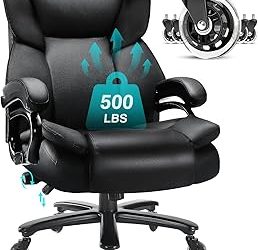
500lbs High Back Executive Chair with Pocket Spring Cushion
A conventional high-back executive design done properly: pocket-spring seat, adjustable lumbar, and quiet rubber casters. It’s the sensible default for anyone who wants supportive geometry without a gaming-chair aesthetic in the room.
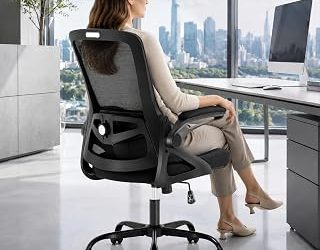
YFO Big and Tall Office Chair 500LBS
The mesh option in this lineup, and the one I’d point warm sleepers toward — thermal load accumulates through the afternoon, and a breathable back reduces the heat retention that leaves you overheated into the evening. The extra-wide seat and 2D arms keep it comfortable for full workdays.
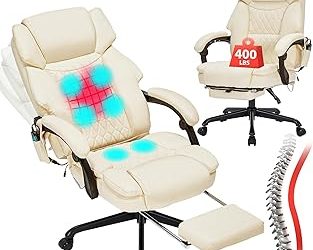
GTPLAYER Big and Tall Gaming Chair 400lbs
The retractable footrest is the reason to consider it: brief periods with the legs elevated help venous return and take pressure off the lower back during long sessions. The saddle-shaped cushion and pocket-spring lumbar support make it a comfortable pick for evening use, though its 400 lb rating is the lowest here.
Frequently Asked Questions
Is the advertised weight capacity reliable?
Ratings vary in rigour between brands, so buy with margin. Choosing a chair rated well above your body weight means the components operate inside their comfortable range rather than at their limit, which is what determines how long the cylinder and base survive.
Mesh or padded upholstery?
Mesh breathes and suits warm rooms or anyone who runs hot; padded leather distributes load more evenly and tends to feel more supportive over long sessions at higher body weights. Both work — pick for your thermal comfort, since overheating during the day carries into a hotter, more fragmented night.
Can a desk chair genuinely affect my sleep?
Indirectly but consistently. Sustained hip flexion and lumbar loading produce musculoskeletal discomfort that surfaces once you’re horizontal and still, and pain-related awakenings are among the most common causes of fragmented sleep in desk workers.
How often should a heavy-duty chair be replaced?
A well-built one should give three to five years of daily use. Replace it sooner if the seat has developed a permanent hollow, the cylinder drifts downward, or the base creaks under load — all signs it’s no longer supporting you as designed.
Final Thoughts
For maximum structural margin, the 650lbs Big and Tall Executive Chair is the most confident buy in this group. The 600LBS chair with 5D flip arms offers the best adjustability for anyone whose shoulders and neck take the brunt of the workday, while the YFO Big and Tall 500LBS is the one I’d recommend to warm sleepers who want breathability without giving up seat width or support.