Key takeaways
- Measure before you shop: A true short queen is 60″ x 75″, but coach builders take liberties. Measure the deck itself — not the old mattress, which may have compressed or been trimmed — and note any wheel wells, angled corners, or wall-mounted nightstands that eat into the footprint.
- Match the profile to your rig: Eight to ten inches suits most walkaround beds and slide-outs. Go thicker only if you have clearance for bedding, a lift-up storage hatch, and headroom above; bunks and cab-over beds usually cap out around six inches.
- Prioritize cabin-safe materials: In a space this small, off-gassing lingers. Look for CertiPUR-US and OEKO-TEX certification, and specifically for fiberglass-free construction so a torn cover during a tight installation never becomes a contamination problem.
- Plan for heat and humidity: Core body temperature has to fall for deep sleep to consolidate. Gel infusions, open-cell foams, and breathable knit covers help — but pair them with a slatted platform or ventilation mat so condensation can’t collect underneath.
- Choose firmness for two, not one: Medium to medium-firm keeps side sleepers’ shoulders and hips cradled while preventing the lumbar sag heavier sleepers feel on plush foam. Strong motion isolation matters more in a narrow bed than it does at home.
What's inside
A short queen sounds like a minor compromise — five inches trimmed off a standard queen — but inside a coach it changes almost everything. The platform is usually plywood or slats sitting directly over storage or outside air, the cabin is sealed tight, humidity swings hard between a desert afternoon and a mountain morning, and the factory mattress is often two or three inches of low-density foam that bottoms out under your hips before the first season ends. Layer that over travel fatigue, altitude shifts, and an unfamiliar sleep environment, and you get shallow, fragmented rest in the exact place you went looking for it.
This guide approaches RV bedding the way I’d assess any sleep environment: thermal regulation first, spinal alignment second, air quality and long-term resilience close behind. Below are the standout RV short queen mattresses for 2026, followed by a practical framework for measuring your deck, picking a profile your rig can actually carry, and reading the certifications that genuinely matter in a small, poorly ventilated space. A few adjacent sizes are included for bunks and short king platforms.
As an Amazon Associate we earn from qualifying purchases.


🛒 Best Price Today on Amazon
Prime members get fast, free shipping on everything above, plus member-only deals. New members get a 30-day free trial — cancel anytime.
How to Choose an RV Short Queen Mattress (2026)
- Measure before you shop: A true short queen is 60″ x 75″, but coach builders take liberties. Measure the deck itself — not the old mattress, which may have compressed or been trimmed — and note any wheel wells, angled corners, or wall-mounted nightstands that eat into the footprint.
- Match the profile to your rig: Eight to ten inches suits most walkaround beds and slide-outs. Go thicker only if you have clearance for bedding, a lift-up storage hatch, and headroom above; bunks and cab-over beds usually cap out around six inches.
- Prioritize cabin-safe materials: In a space this small, off-gassing lingers. Look for CertiPUR-US and OEKO-TEX certification, and specifically for fiberglass-free construction so a torn cover during a tight installation never becomes a contamination problem.
- Plan for heat and humidity: Core body temperature has to fall for deep sleep to consolidate. Gel infusions, open-cell foams, and breathable knit covers help — but pair them with a slatted platform or ventilation mat so condensation can’t collect underneath.
- Choose firmness for two, not one: Medium to medium-firm keeps side sleepers’ shoulders and hips cradled while preventing the lumbar sag heavier sleepers feel on plush foam. Strong motion isolation matters more in a narrow bed than it does at home.
The Best RV Short Queen Mattresses (2026) Reviewed
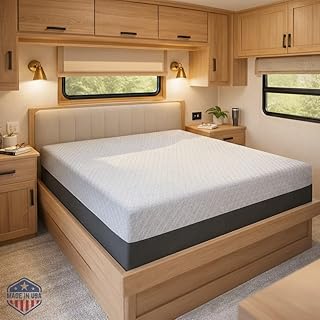
Celestial Sleep 10″ RV Short Queen
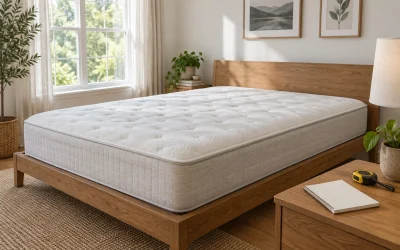
This is the most complete package for full-time and long-season travelers: a US-made 10″ cooling memory foam build with CertiPUR-US, OEKO-TEX, and fiberglass-free certification, tuned to a true medium that suits mixed-position couples. The extra profile gives side sleepers meaningful shoulder relief without overwhelming a standard walkaround platform.
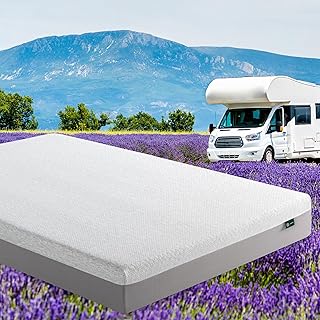
Zinus 8″ Short Queen Ultima
At eight inches, the Ultima is the smart pick for slide-out beds and rigs where storage hatch clearance is tight, and its medium-firm feel resists the hip sag that plagues thinner foam. Breathable airflow foam plus dual certification makes it a reliable, low-fuss upgrade over almost any OEM mattress.
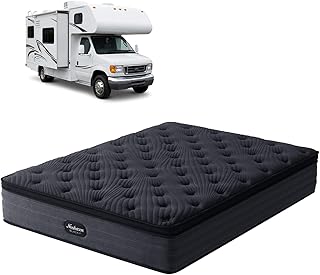
12″ Cooling Gel Memory Foam Hybrid Short Queen
The hybrid construction adds coil support and edge stability that all-foam beds can’t match, which pays off if you sit on the edge to dress in a narrow aisle. Reserve it for coaches with real vertical clearance — twelve inches plus bedding stacks up fast — and expect excellent motion isolation and a cooler surface than standard memory foam.
ESHINE 10″ Short King RV Mattress
Larger fifth wheels and Class A coaches increasingly ship with short king decks, and this shock-absorbing 10″ foam build is purpose-designed for them. Pressure relief is genuinely good for the price, and the added width helps light sleepers who wake to a partner shifting on rough overnight parking.
Dreamfoam Copperflex Essential 6″
A well-executed low-profile option for bunks, cab-over beds, and dinette conversions where six inches is the ceiling. The gel memory foam and stain-protected cover handle kids, pets, and damp gear better than most budget bunk foam, and the Arizona-made construction holds its shape season after season.
Frequently Asked Questions
What are the exact dimensions of an RV short queen?
Standard short queen is 60 inches wide by 75 inches long — the same width as a residential queen, but five inches shorter. Some manufacturers use 60″ x 74″ or 60″ x 76″, so always verify against your own platform.
Can I put a regular queen mattress in my RV?
Rarely without consequences. The extra five inches typically blocks a slide-out, a closet door, or a bathroom entry, and forcing it creates compression ridges that ruin support and encourage mold at the folded edge.
How thick should an RV mattress be?
Eight to ten inches is the sweet spot for most main beds — enough foam for genuine pressure relief without stealing headroom or exceeding your cargo carrying capacity. Bunks and cab-over spaces generally need six inches or less.
How do I stop moisture building up underneath?
Warm bodies over a cold platform produce condensation. Use a ventilated underlay or slatted base, lift the mattress periodically to let the deck dry, and run a small dehumidifier in cool, damp climates.
Final Thoughts
For most travelers, the Celestial Sleep 10″ is the best all-round investment — certified materials, real cooling performance, and a balanced medium feel that holds up to full-time use. Choose the Zinus 8″ Ultima if clearance or budget is the constraint, and the 12″ cooling gel hybrid if your rig has the headroom and you want residential-grade support and edge stability on the road.