Key takeaways
- Sealed H13-grade HEPA: Mold spores generally fall between 1 and 20 microns and dust mite allergen fragments are smaller still, so true HEPA media is non-negotiable. Just as important is a gasketed housing — air that leaks around a filter never gets cleaned.
- Real carbon weight, not a mesh: That earthy basement odor comes from microbial VOCs, which HEPA cannot touch. Look for a granulated or pelletized carbon stage rather than a thin carbon-dusted screen.
- Coverage rated for four air changes per hour: Manufacturers often quote square footage at a single air change. For a bedroom, halve the headline number and you will be close to a purifier that actually turns the room over four to five times hourly.
- A genuinely quiet low setting: Anything above roughly 30 dB starts fragmenting light sleep for sensitive sleepers. Prioritize models with a measured sleep mode and a display that dims or shuts off completely.
- Filter access and running costs: A washable pre-filter you can vacuum monthly extends HEPA life considerably, which matters more in humid, dust-heavy homes where filters load faster than the manual suggests.
What's inside
Mold and dust behave differently at night. Bedroom air sits still for hours, humidity climbs as you sleep and breathe, and the fibers shed by bedding, carpet, and curtains settle into a fine layer that gets kicked back up every time you roll over. If you have a damp closet, a north-facing wall, or a basement bedroom, spore counts often peak in exactly the room where you spend a third of your life. The result is familiar to anyone who has tracked their own sleep: a stuffy nose around 3 a.m., a dry cough on waking, and a sleep score that never quite explains itself.
An air purifier will not fix a moisture problem, but it is the single most effective way to lower your overnight exposure to airborne spores and settled dust that becomes airborne again. This guide looks at the machines worth putting next to a bed in 2026 — judged on sealed HEPA filtration, carbon capacity for that musty basement smell, verified coverage for real room sizes, and the thing most reviews skip entirely: how loud they actually are at the setting you will run them on all night.
As an Amazon Associate we earn from qualifying purchases.


How to Choose an Air Purifier For Mold And Dust (2026)
- Sealed H13-grade HEPA: Mold spores generally fall between 1 and 20 microns and dust mite allergen fragments are smaller still, so true HEPA media is non-negotiable. Just as important is a gasketed housing — air that leaks around a filter never gets cleaned.
- Real carbon weight, not a mesh: That earthy basement odor comes from microbial VOCs, which HEPA cannot touch. Look for a granulated or pelletized carbon stage rather than a thin carbon-dusted screen.
- Coverage rated for four air changes per hour: Manufacturers often quote square footage at a single air change. For a bedroom, halve the headline number and you will be close to a purifier that actually turns the room over four to five times hourly.
- A genuinely quiet low setting: Anything above roughly 30 dB starts fragmenting light sleep for sensitive sleepers. Prioritize models with a measured sleep mode and a display that dims or shuts off completely.
- Filter access and running costs: A washable pre-filter you can vacuum monthly extends HEPA life considerably, which matters more in humid, dust-heavy homes where filters load faster than the manual suggests.
The Best Air Purifiers For Mold And Dust (2026) Reviewed
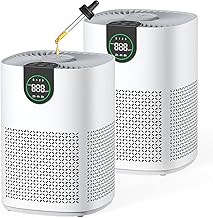
LEVOIT Core 300-P
The Core 300-P remains the benchmark for small and medium bedrooms, pairing an H13 True HEPA filter with a 24 dB sleep mode that genuinely disappears into the background of a quiet room. AHAM-verified performance and a compact cylindrical footprint make it the easiest recommendation for anyone who wants clean air on a nightstand without a whirring appliance in their peripheral vision.
COWAY Airmega Mighty2
The next generation of the long-serving AP-1512HH, the Mighty2 covers up to 1,800 square feet with IEST-certified HEPA plus a substantial active carbon layer — the combination that handles mold odor rather than merely filtering the spores. Its auto mode is well calibrated, ramping down quickly once particulate levels drop, which is what you want in an open-plan bedroom or a large master suite.
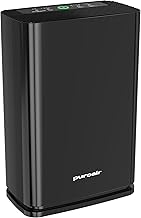
PuroAir 400
Built for genuinely large rooms up to 2,000 square feet, the PuroAir 400 leans on a dense CarbonTech filter that outperforms thin carbon wraps on musty, persistent odors. The onboard air quality sensor plus a quiet sleep mode means it can run hard while you are out and drop to a whisper when you turn in.
Alen 35i
The 35i is the choice for people who want evidence, not vibes — app control with logged air quality data lets you see whether your bedroom actually improves overnight. Fitted with the Ultimate filter, it targets mold, VOCs, and smoke alongside standard dust and dander across 1,400 square feet.
KNKA APH4000
An AHAM-verified performer that clears up to 1,695 square feet in an hour, the APH4000 offers a washable pre-filter, a live AQI display, and a dedicated pet mode for dander-heavy households. Available in white or black, it is the value pick that does not compromise on sealed filtration or a usable sleep setting.
Frequently Asked Questions
Will an air purifier remove mold growing on my walls?
No. Purifiers capture spores already floating in the air; they cannot kill a colony on drywall or grout. Address the moisture source, keep relative humidity between 30 and 50 percent, and treat the purifier as exposure control rather than remediation.
Where should I place the unit in a bedroom?
Roughly six to eight feet from the bed, pulled at least a foot off the wall, with nothing blocking the intake. Avoid aiming the outlet directly at your face — the airflow dries out nasal passages and can undo the benefit.
Should I run it all night or only before bed?
Run it continuously. Particulate levels rebound within an hour of switching off, and a steady low setting maintains a cleaner baseline than short bursts on high — with the added benefit of consistent white noise.
How often do filters need replacing in a damp home?
Expect six to twelve months for HEPA, shorter in humid or high-dust environments. Vacuum the pre-filter monthly; a loaded pre-filter is the most common reason a purifier suddenly seems louder and less effective.
Final Thoughts
For most bedrooms, the COWAY Airmega Mighty2 is the strongest all-round performer, combining serious carbon capacity with a well-judged auto mode. Smaller rooms are better served by the LEVOIT Core 300-P, which is quiet enough to forget about entirely, while the Alen 35i earns its place for anyone who wants app-logged proof that their air is actually improving night after night.