Key takeaways
- Carbon mass over HEPA marketing: HEPA media traps dander and hair fragments but is essentially blind to smell, which is gas-phase chemistry. Look for a genuine activated-carbon stage with real depth or pellet weight — a thin carbon-dusted mesh saturates within weeks in a pet home.
- Air changes, not headline coverage: A “2,600 sq ft” rating typically means one weak air change per hour. For odor control while you sleep, aim for four to five changes hourly, which means choosing a unit rated for roughly three times your actual room size.
- Decibels at the speed you’ll really use: A 22 dB sleep mode means little if that setting barely moves air. Check noise at medium speed, and favor broad, low-frequency airflow over high-pitched motor whine, which the sleeping brain flags far more readily.
- Light discipline: Air-quality displays are an underrated source of bedroom light pollution. Insist on full dimming or auto-off; a blue PM2.5 readout glowing at head height works against melatonin timing all night.
- Washable stages and running costs: Pet homes clog pre-filters fast. A washable pre-filter or long-life sealed cartridge keeps airflow stable between replacements and prevents the gradual decline that convinces owners their purifier “stopped working.”
What's inside
Pet odor is usually treated as a hospitality problem — something you notice when guests arrive. After years of auditing bedrooms, I’d argue it’s a sleep problem first. A closed door turns a 12-by-14-foot room into a sealed box you breathe for seven to nine hours, and the ammonia drifting from a litter tray, the sebum-rich dander shed by a dog on the rug, and the volatile fatty acids trapped in a duvet don’t dissipate overnight. They concentrate. The result is rarely dramatic: low-grade nasal congestion, a 4 a.m. dry throat, and a room that smells stale before you’ve had coffee.
This guide evaluates pet-odor purification the way I’d assess any bedroom intervention. Does the unit move enough air for the space, does it address gas-phase odor rather than particles alone, and can it do both without becoming a noise or light source that costs you more sleep than it saves? Below are the models worth shortlisting in 2026, plus a buying framework and answers to the questions that surface most often.
As an Amazon Associate we earn from qualifying purchases.


How to Choose an Air Purifier for Pet Odor (2026)
- Carbon mass over HEPA marketing: HEPA media traps dander and hair fragments but is essentially blind to smell, which is gas-phase chemistry. Look for a genuine activated-carbon stage with real depth or pellet weight — a thin carbon-dusted mesh saturates within weeks in a pet home.
- Air changes, not headline coverage: A “2,600 sq ft” rating typically means one weak air change per hour. For odor control while you sleep, aim for four to five changes hourly, which means choosing a unit rated for roughly three times your actual room size.
- Decibels at the speed you’ll really use: A 22 dB sleep mode means little if that setting barely moves air. Check noise at medium speed, and favor broad, low-frequency airflow over high-pitched motor whine, which the sleeping brain flags far more readily.
- Light discipline: Air-quality displays are an underrated source of bedroom light pollution. Insist on full dimming or auto-off; a blue PM2.5 readout glowing at head height works against melatonin timing all night.
- Washable stages and running costs: Pet homes clog pre-filters fast. A washable pre-filter or long-life sealed cartridge keeps airflow stable between replacements and prevents the gradual decline that convinces owners their purifier “stopped working.”
The Best Air Purifiers for Pet Odor (2026) Reviewed
Shark NeverChange HP152
Shark’s sealed five-year filter design eliminates the biggest failure point in pet households — the owner who never swaps a saturated carbon stage — and its odor-neutralizing layer handles litter and wet-dog notes convincingly. The pick if you want to install a unit in the bedroom and genuinely forget about it.
WINIX 5510
The 5510 retains what made the 5500-2 a specialist favorite, a thick replaceable deodorization carbon filter sitting behind true HEPA, and adds app control with a more responsive auto mode. For persistent, embedded odor rather than occasional flare-ups, it’s the most serious gas-phase performer here.
uahpet Pet Air Purifier
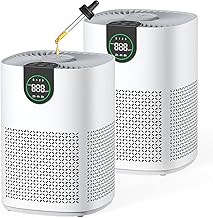
Built around pet biology, with an H13 HEPA stage, a washable pre-filter sized for hair instead of fine dust, and a monitor that shows exactly how much the litter tray spikes the room. Coverage to 2,100 sq ft lets it hold a bedroom at a high air-change rate on a quiet mid setting.
VOOPNU DH-JH12
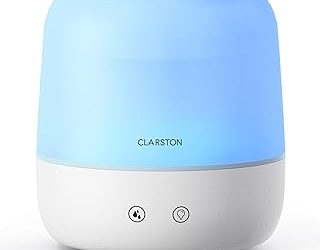
A compact 360-degree-intake unit whose 22 dB low speed and simple timer make it the most bedside-friendly option on this list, with an aroma pad if you prefer a controlled scent to a masked one. Treat it as a personal-zone purifier for one sleeper, not an open-plan fix.
HAP607
Rated to 2,600 sq ft with washable filters, turbo mode for post-grooming cleanups, and a 22 dB sleep setting, this is the volume option: run it hard in the evening, then drop it low with the display off at bedtime. Washable stages keep multi-pet running costs sensible.
Frequently Asked Questions
Can an air purifier completely eliminate litter box odor?
No appliance outpaces an unscooped tray. A purifier with substantial carbon removes the airborne fraction and stops odor migrating into bedding and curtains, but source control — daily scooping, and siting the tray away from bedrooms — does the heavy lifting.
Should I leave it running all night?
Yes, ideally on medium rather than the lowest setting. Continuous operation prevents the overnight buildup responsible for morning congestion, and steady airflow tends to mask intermittent household noise rather than add to it.
Where should I position it in a bedroom?
Two to three feet from a wall, at least six feet from your head, and never boxed in behind curtains or furniture. Slight elevation helps in dog households, since dander resuspends at floor level every time someone walks past.
Are ionizers safe to run around pets?
Filtration-only operation is the safer default. Ozone-generating devices don’t belong in occupied rooms at all, and while modern ionizers are low-output, birds and small mammals are unusually sensitive — leave the toggle off and let carbon do the work.
Final Thoughts
For most pet-sharing bedrooms, the WINIX 5510 is the strongest all-rounder thanks to its deep deodorization carbon and dependable auto mode, while the Shark NeverChange HP152 is the smarter buy if filter maintenance is your weak point. Light sleepers in smaller rooms should look closely at the VOOPNU DH-JH12 — quiet, unobtrusive, and easy to live with at 2 a.m.